A product may leave production in perfect condition, but its quality can still be compromised before it reaches its destination. Whether transporting fresh seafood, pharmaceuticals, biological specimens or temperature-sensitive cosmetics, maintaining stable temperatures throughout transit is essential to protecting product integrity.
Australia’s climate and long freight distances create unique challenges for businesses managing temperature-controlled deliveries. Exposure to heat during transport, warehouse storage and last-mile distribution can affect product quality, reduce shelf life and increase the risk of spoilage or non-compliance.
The Livingstone Foam Cooler Box provides a practical insulation solution that helps minimise temperature fluctuations during transport. When paired with suitable cooling media, these insulated foam cooler boxes support reliable cold-chain packaging across healthcare, laboratories, food service and commercial industries. Explore the Livingstone Foam Cooler Box Range to find insulated packaging designed to protect temperature-sensitive products throughout transit.
What is a foam cooler box and how does it work?
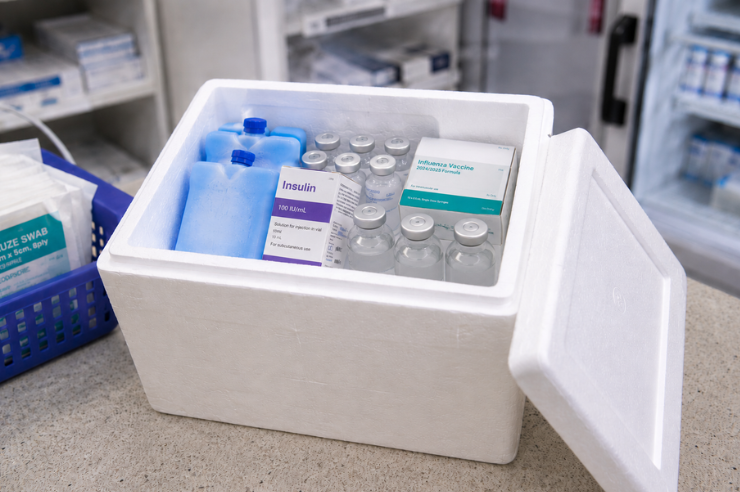
A foam cooler box is an insulated container manufactured from expanded polystyrene (EPS), a lightweight material designed to slow heat transfer. Its closed-cell structure traps air within the foam, creating an effective thermal barrier that helps maintain more stable internal temperatures during transport.
Unlike standard cardboard cartons, an EPS cooler provides insulation that reduces the rate at which external heat enters the package. Combined with gel ice packs or phase change materials, a foam cooler box with lid small helps support temperature-controlled transport without requiring external power or specialised refrigeration equipment.
Lightweight, portable and durable, foam cooler boxes are widely used for cold-chain packaging where reliable insulation and cost-effective transport are equally important.
Why is temperature control challenging during transport in Australia?
Australia’s geography presents unique cold-chain challenges. Products often travel long distances through freight vehicles, warehouses and distribution centres before reaching customers.
During warmer months, temperatures inside delivery vehicles may rise well above ambient conditions. Without appropriate insulation, food, pharmaceuticals, laboratory specimens and other temperature-sensitive products may be exposed to conditions that affect their quality, safety or performance.
Using insulated packaging helps reduce temperature fluctuations during transit, supporting product quality while helping businesses minimise waste, protect customer satisfaction and meet applicable storage or transport requirements.
How does EPS insulation protect temperature-sensitive products?
Expanded polystyrene is recognised for its excellent insulating properties. Rather than actively cooling the contents, EPS slows the transfer of heat between the outside environment and the products inside the container.
Its closed-cell structure contains thousands of tiny air pockets that act as an insulating barrier, helping cooling media such as gel ice packs remain effective for longer periods.
Key benefits of EPS insulation include:
- Slows heat transfer during transport
- Lightweight construction for easier handling
- Good impact resistance during freight
- Supports passive cold-chain packaging
- Cost-effective thermal protection for temperature-sensitive shipments
These qualities make EPS one of the most widely used insulation materials across healthcare, food distribution, laboratories and commercial logistics.
Which products benefit from insulated foam packaging?
Many industries depend on insulated packaging to help protect products from excessive temperature fluctuations during storage and transport.
Healthcare and laboratory transport
Healthcare providers, pathology services and diagnostic laboratories frequently require insulated foam box small specimen transport solutions for biological specimens, diagnostic samples and other temperature-sensitive materials. Appropriate insulated packaging helps support sample integrity throughout transport before testing or analysis.
Food and beverage distribution
Food manufacturers, seafood suppliers, dairies, butchers and meal delivery businesses commonly use insulated foam packaging for chilled products such as:
- Fresh seafood
- Dairy products
- Meat and poultry
- Ready-to-eat meals
- Fresh produce
- Specialty cheeses
Cosmetics and specialty products
Natural skincare products, cosmetics, chocolates, confectionery, candles and wax-based products may also benefit from insulated packaging that helps reduce exposure to excessive heat throughout the delivery process.
What should you look for when choosing a foam cooler box?
Selecting insulated packaging involves more than simply choosing the largest available box. The most suitable solution should match the product, cooling media and expected transport conditions.
Choose the right size
Selecting the correct box size helps minimise unnecessary air space, allowing cooling media to perform more efficiently.
A foam cooler box with lid small is well suited to compact shipments such as pharmaceuticals, diagnostic specimens, gourmet foods and specialty retail products requiring dependable temperature control without excessive packaging volume.
The Livingstone Foam Cooler Box Range includes multiple sizes to support different transport requirements, helping businesses choose packaging that best suits their products and delivery needs.
Ensure the lid fits securely
A well-fitting lid plays an important role in maintaining insulation performance by reducing warm air entering the container during transport.
Secure-fitting lids also help keep contents protected throughout handling and freight without requiring excessive additional packaging.
Look for high-density EPS construction
High-density EPS provides improved insulation and greater durability than lower-density alternatives. Strong, fully fused walls help resist cracking, minimise thermal leakage and maintain structural integrity during transport.
How can businesses improve cold-chain packaging performance?
Even high-quality insulated packaging performs best when combined with good packing practices.
Businesses can improve temperature-controlled transport by:
- Pre-cooling products where appropriate before packing
- Using gel ice packs or phase change materials suited to the required temperature range
- Minimising unnecessary air space inside the cooler box
- Positioning coolant to maximise temperature stability during transit
- Placing the foam cooler inside an outer carton for additional freight protection
- Clearly labelling temperature-sensitive shipments where appropriate
- Reviewing packaging performance across different transport routes and seasonal conditions
For regulated industries, packaging systems should also be validated against applicable organisational procedures and industry requirements.
Protecting product quality from dispatch to delivery
Temperature-controlled packaging continues protecting products long after manufacturing is complete. A well-designed foam cooler box helps minimise temperature fluctuations throughout transport, reducing the risk of spoilage while supporting product quality, regulatory compliance and customer confidence.
Whether transporting fresh food, pharmaceuticals, laboratory specimens or temperature-sensitive consumer products, selecting insulated packaging that matches the shipment requirements contributes to more reliable cold-chain performance from dispatch to delivery.
Businesses searching for the best price foam cooler boxes Australia should consider more than the initial purchase price. Insulation performance, durability, product fit and transport requirements all contribute to protecting valuable goods while reducing unnecessary losses.
Explore the Livingstone Foam Cooler Box Range to discover insulated packaging solutions suitable for healthcare, laboratories, food service, workplace safety and commercial logistics. The right packaging helps ensure the care invested in producing a product continues throughout every stage of its journey.
References
Australian Food and Grocery Council 2024, Cold Chain Guidelines for the Australian Grocery Supply Chain, AFGC, viewed June 2026,
https://www.afgc.org.au/resources/cold-chain-guidelines.
Food Standards Australia New Zealand 2024, Temperature Control Requirements, FSANZ, viewed June 2026,
https://www.foodstandards.gov.au/consumer/safety/faqfoodsafety/pages/whyistemperaturecon5812.aspx.
SpecialChem 2026, Expanded Polystyrene (EPS Foam): Uses, Structure and Properties, SpecialChem, viewed June 2026,
https://www.specialchem.com/plastics/guide/expanded-polystyrene-eps-foam-insulation.
Standards Australia 2023, AS 4659.1 Guidelines for the Transport of Time and Temperature Sensitive Foodstuffs, Standards Australia, viewed June 2026,
https://www.standards.org.au.