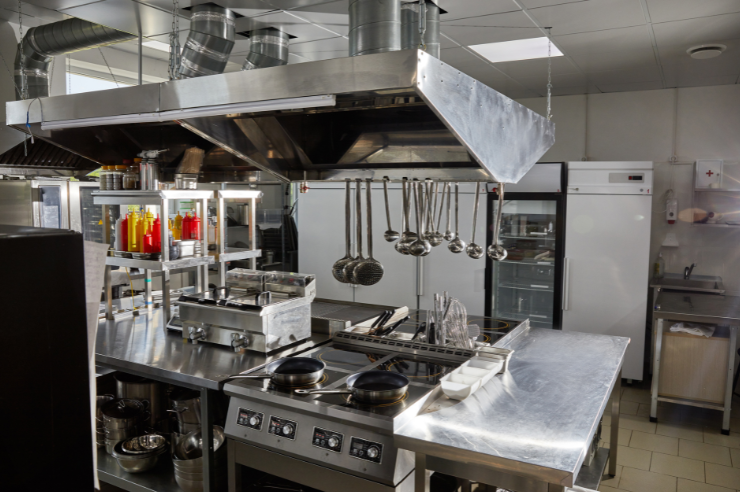
A busy kitchen depends on equipment that works when you need it. Whether you run a café, restaurant, catering business, school canteen, or aged care kitchen, every appliance and tool plays an important role. But here’s a simple question – when was the last time you checked if your kitchen equipment was still doing its job properly?
If you’re looking for reliable kitchen supplies, commercial kitchen equipment, and everyday kitchen items, Livingstone International offers a wide range of quality products for Australian businesses. Choosing dependable equipment from a trusted kitchen supply store helps your kitchen stay productive every day.
Let’s look at the signs that tell you it may be time to upgrade your kitchen equipment.
1. Your Equipment Breaks Down More Often
Every piece of equipment needs maintenance. But if you’re calling for repairs every few weeks, that’s a clear warning sign.
Think about how much time your kitchen loses every time an oven, mixer, dishwasher, or refrigerator stops working. Your staff may have to change their workflow, delay orders, or even stop service until the problem is fixed.
Ask yourself:
- Are repair bills becoming more frequent?
- Does the same machine keep causing problems?
- Are you worried it could fail during busy hours?
If the answer is yes, replacing the equipment is often the smarter choice.
2. Energy Bills Keep Going Up
Older commercial kitchen equipment usually uses more electricity or gas than newer models.
Even if the equipment still works, it may no longer be energy efficient. That means you’re paying more every month just to keep your kitchen running.
Modern equipment is designed to use less energy while delivering the same or even better performance. Over time, those savings can make a big difference.
If your utility bills have increased without a clear reason, your old kitchen equipment could be part of the problem.
3. Food Quality Is No Longer Consistent
Your customers expect the same quality every time they order.
Old equipment can make that difficult.
For example:
- Ovens may not heat evenly.
- Refrigerators may struggle to keep food at the right temperature.
- Mixers may not work as smoothly as before.
- Fryers may take longer to reach the correct temperature.
These small issues can affect the taste, texture, and appearance of your food.
Keeping food at safe temperatures is also important. Food businesses in Australia should follow food safety guidelines provided by Food Standards Australia New Zealand (FSANZ), which explains safe food handling and temperature control for commercial kitchens.
4. Repairs Cost More Than the Equipment Is Worth
Repairing equipment once or twice is normal.
But what happens when repair costs keep adding up?
Sometimes businesses spend hundreds or even thousands of dollars repairing equipment that is already close to the end of its life.
Instead of putting more money into old machines, it may be better to invest in new equipment that comes with better performance and warranty support.
A new purchase may seem expensive at first, but it can reduce future repair costs and improve daily operations.
5. Your Kitchen Is Slowing Down
Speed matters in every commercial kitchen.
If your equipment takes longer to heat, cool, wash, or prepare food, your whole team feels the impact. Staff may spend extra time waiting instead of serving customers.
Some common signs include:
- Ovens taking too long to reach temperature
- Dishwashers running longer cycles
- Refrigerators cooling more slowly
- Food processors or mixers working at a slower pace
When equipment slows down, customer wait times often increase as well. Replacing outdated equipment can help your team work faster and reduce stress during busy service periods.
6. It Is Difficult to Find Replacement Parts
As equipment gets older, manufacturers may stop making replacement parts.
This means even a small fault could leave a machine out of service for days or weeks while you search for parts. In some cases, the parts may no longer be available at all.
If repairs are becoming difficult because parts are hard to find, replacing the equipment is usually the better long-term decision.
7. Equipment No Longer Meets Safety Standards
Safety should always come first.
Old equipment can become unsafe because of worn electrical parts, damaged seals, broken handles, faulty thermostats, or uneven heating.
These problems increase the risk of accidents and may also affect food safety.
If your staff have started reporting safety concerns, don’t ignore them. Replacing unsafe equipment protects both your employees and your customers.
Conclusion
Replacing kitchen equipment isn’t just about getting something new. It’s about keeping your business running safely, efficiently, and without unnecessary interruptions. If you’re noticing frequent repairs, higher energy bills, slower performance, or inconsistent food quality, it may be the right time to make a change.
Choosing quality equipment today can help you avoid bigger problems tomorrow. It also gives your team the tools they need to work with confidence and serve customers more efficiently.
Livingstone International is a trusted Australian supplier of kitchen supplies, commercial kitchen equipment, kitchen items, and wholesale kitchen supplies for businesses across many industries. Whether you’re replacing one piece of equipment or upgrading your entire kitchen, you’ll find reliable products that support your daily operations and help your business perform at its best.
Frequently Asked Questions
1. How do I know when it’s time to replace commercial kitchen equipment?
If your equipment breaks down often, needs costly repairs, uses more energy, or affects food quality, it’s probably time to replace it. New equipment can improve efficiency and help your kitchen run more smoothly.
2. Is it better to repair or replace old commercial kitchen equipment?
It depends on the repair cost and the equipment’s condition. If repairs are becoming frequent or expensive, replacing the equipment is often the better long-term investment for your business.
3. Why should I buy from a trusted kitchen supply store?
A reliable kitchen supply store offers quality products that are built for commercial use. This helps you get durable equipment, dependable performance, and better value over time.
4. What are the benefits of buying wholesale kitchen supplies?
Buying wholesale kitchen supplies can reduce costs, keep essential products in stock, and save time by ordering everything you need from one supplier.
5. How often should commercial kitchen equipment be replaced?
There is no fixed timeline because every kitchen is different. Regular maintenance can extend the life of equipment, but once performance drops or repair costs increase, replacement should be considered.
6. Where can I buy quality kitchen supplies in Australia?
Livingstone International offers a wide range of kitchen supplies, commercial kitchen equipment, and everyday kitchen items for cafes, restaurants, catering businesses, healthcare facilities, and other commercial kitchens across Australia.