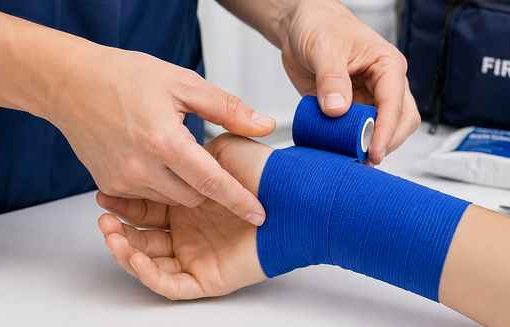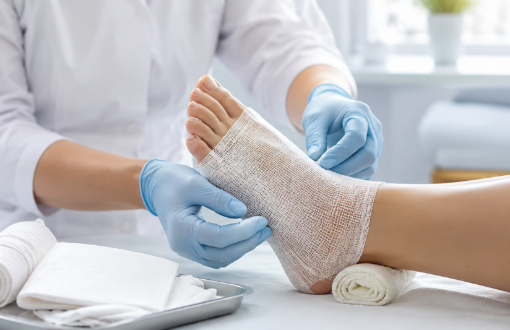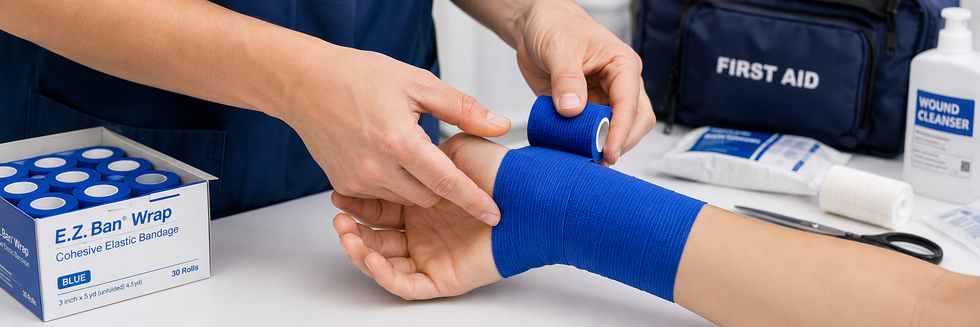
When an injury happens, the first response is often about providing simple support while deciding what happens next. A person may need an injured arm held still, a dressing secured or temporary protection while waiting for further care. In these situations, a versatile first aid item can make a significant difference.
A triangular bandage is one of the most adaptable supplies found in first aid kits. Its simple fabric design allows it to be folded and positioned for different uses, from creating an arm sling to securing dressings or providing temporary support.

Livingstone Triangular Bandage provides a traditional fabric triangular bandage format designed for first aid environments requiring a reliable and flexible support option.
For organisations reviewing first aid and wound-care supplies, Livingstone’s Pharmacy Wound Care Collection includes products used across injury management, dressing care and everyday clinical applications.
Understanding what triangular bandages can do, when to use them and what features matter helps workplaces, healthcare facilities and community organisations build more practical first aid supplies.
What happens if you need to support an injured arm without a ready-made sling?
A triangular bandage can be folded and positioned to create a temporary arm sling when a commercial sling is unavailable. It provides adjustable support for an injured arm or shoulder while helping reduce unnecessary movement before further medical assessment.
A first aid kit does not always contain a purpose-made sling, but a triangular bandage can provide a flexible alternative when temporary arm support is needed.
By folding and tying the fabric correctly, the bandage can form a sling that supports the weight of the arm and helps keep the injured area in a more stable position.
Common situations where this may be useful include:
- Suspected arm or wrist injuries
- Shoulder support after an injury
- Transporting someone who requires temporary support
- Securing an injured limb while awaiting medical care
A sling created with a triangular bandage should not replace professional assessment where serious injury is suspected. Pain, deformity, loss of movement, numbness or circulation concerns require appropriate medical attention.
How does a triangular bandage become an arm sling?
A triangular bandage becomes an arm sling by positioning the fabric beneath the injured arm and securing the ends around the neck or shoulder area. The goal is to support the limb while maintaining a comfortable position without creating unnecessary pressure.
Creating an arm sling is one of the most recognised uses of a triangular bandage because the shape naturally allows the fabric to cradle the arm.
A basic application involves:
- Placing one point of the triangle near the elbow
- Supporting the arm across the fabric
- Bringing the ends together around the neck
- Adjusting the height and tension
- Securing the knot safely
The sling should support the arm without pulling on the injured area. Fingers should remain visible where possible so circulation can be checked during use.
A correctly positioned sling helps limit movement, but it is important to remember that first aid support is temporary. The underlying injury still requires assessment according to its severity.
When should you use a triangular bandage in first aid care?
A triangular bandage can be used when temporary support, dressing retention or basic injury management is required. It is commonly included in first aid kits because its adaptable design allows it to assist with different situations rather than only one specific purpose.
Triangular bandages are useful because they are not limited to a single application.
They may be used for:
- Creating arm slings
- Supporting injured joints
- Holding dressings in place
- Providing temporary padding
- Assisting with general first aid care
Workplaces, schools, sporting facilities and community organisations often include triangular bandages because they provide multiple options during unexpected situations.
However, they are not designed to replace specialised medical products. A triangular bandage is a support tool that forms part of a broader first aid response, alongside appropriate dressings, cleaning supplies and emergency procedures.
Who uses triangular bandages and where are they commonly kept?
Triangular bandages are used by first aiders, workplaces, healthcare facilities, schools, sporting organisations and community groups. They are commonly stored in first aid kits because their compact design provides multiple uses during injury management.
The versatility of a triangular bandage makes it suitable for many environments.
Common locations include:
- Workplace first aid stations
- Healthcare facilities
- Schools and childcare environments
- Sporting clubs
- Community centres
- Emergency response kits
For organisations, selecting first aid supplies should reflect the types of incidents that may occur within their environment.
A construction workplace may have different first aid needs compared with a childcare centre or healthcare facility. The same triangular bandage can serve different purposes depending on the situation and the training of the person applying it.
What is the difference between a calico triangular bandage and a non-woven arm sling bandage?
A calico triangular bandage is a traditional fabric option designed for repeated first aid applications, while a non-woven arm sling bandage is generally a lightweight disposable alternative. The choice depends on workplace preference, storage requirements and whether reusable or single-use supplies are preferred.
Material selection affects how a bandage performs in different environments.
A calico triangular bandage offers a familiar fabric format often used in general first aid kits. Its durability and versatility make it suitable for organisations that require a traditional reusable-style option.
A non-woven arm sling bandage may be considered when a disposable format is preferred, particularly in settings where single-use supplies are part of standard procedures.
When comparing options, consider:
- Intended frequency of use
- Storage conditions
- Workplace procedures
- Material preferences
- Expected emergency scenarios
The most suitable option is the one that matches the environment where it will be used.
What features should you consider before you buy triangular bandages online?
Before you buy triangular bandages online, consider the material, dimensions, quantity, intended application and storage requirements. Choosing the correct format helps ensure first aid supplies are suitable for the people, environments and situations where they may be required.
Purchasing first aid products requires more than comparing price.
Important considerations include:
- Bandage dimensions
- Fabric quality
- Ease of folding and tying
- Quantity required
- Compatibility with existing first aid supplies
- Storage space available
How do you choose the right triangular bandage for your first aid supplies?
The right triangular bandage depends on how it will be used, where it will be stored and the types of injuries it may need to assist with. A versatile, appropriately sized bandage can become a valuable part of workplace, healthcare and community first aid preparation.
A good first aid supply strategy starts with understanding the environment.
Livingstone’s Calico Triangular Bandage provides a practical fabric option for organisations requiring a flexible support product for first aid applications. Its triangular design allows it to be adapted for arm slings, dressing retention and temporary injury support.
For workplaces, healthcare facilities, schools and community organisations, choosing first aid products is about having reliable tools available when they are needed.
A triangular bandage remains one of the simplest and most adaptable items in a first aid kit. By selecting the right size, material and format, organisations can build supplies that are practical, accessible and ready for a range of situations.
References
Australian Red Cross n.d., First aid resources, Australian Red Cross, viewed 21 August 2026, .
Healthdirect Australia 2025, First aid: treating injuries, Healthdirect Australia, viewed 21 August 2026.
Safe Work Australia n.d., First aid in the workplace, Safe Work Australia, viewed 21 August 2026, .
St John Ambulance Australia n.d., First aid information and resources, St John Ambulance Australia, viewed 21 August 2026.