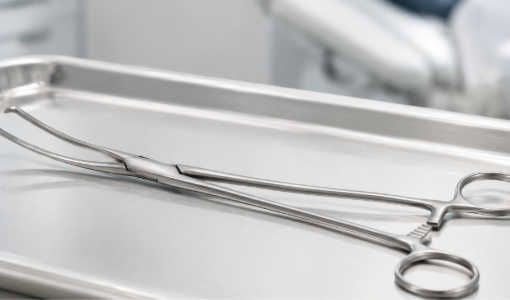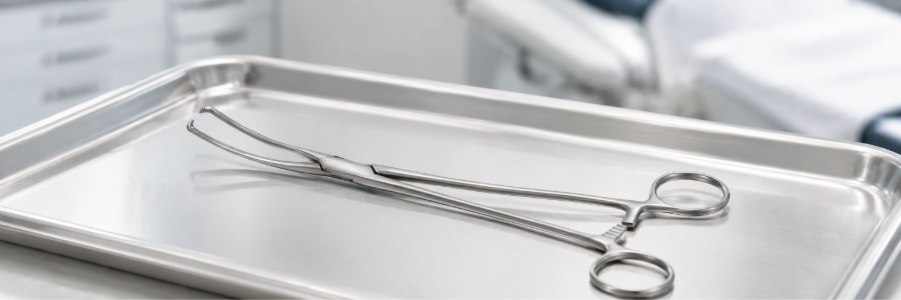
Selecting the right dissecting forceps is essential for achieving precision, efficiency and atraumatic tissue handling during surgical and clinical procedures. While straight and curved Potts-Smith dissecting forceps are designed for similar purposes, their tip configuration makes each better suited to specific applications. Understanding when to use each instrument helps surgeons, nurses, veterinarians, dental professionals and healthcare facilities improve procedural accuracy while reducing unnecessary tissue trauma.
For healthcare providers looking for dependable surgical instruments, Livingstone offers both straight Potts-Smith dissecting forceps and curved Potts-Smith dissecting forceps, designed for reliable tissue handling across a wide range of surgical procedures. Each configuration supports specific clinical applications, allowing healthcare professionals to select the most suitable instrument for the task.

What is the difference between straight and curved Potts-Smith dissecting forceps?
Straight Potts-Smith dissecting forceps provide direct access to superficial tissues, while curved models improve visibility and manoeuvrability in deeper or confined surgical fields. The choice depends on tissue location, access requirements and the level of precision needed during the procedure.
Although both instruments are designed for grasping and manipulating tissue, the orientation of their jaws changes how they perform during surgery.
Straight forceps align directly with the handle, providing a clear and predictable working angle for procedures performed on exposed tissue. They are particularly effective when the surgical site is easily accessible.
Curved dissecting forceps feature angled jaws that allow clinicians to approach tissue from the side. This improves visibility by keeping the hand outside the direct line of sight while providing greater access around delicate anatomical structures.
When should straight Potts-Smith dissecting forceps be used?
Straight Potts-Smith dissecting forceps are recommended for superficial procedures where tissues are fully exposed. Their direct alignment provides excellent control for grasping skin, fascia, sutures and dressings during routine surgical and clinical procedures. Straight forceps are commonly selected because they provide precise tactile feedback and predictable movement, making them suitable for procedures requiring controlled tissue handling.
Typical applications include:
- Skin closure
- Minor surgical procedures
- Wound dressing changes
- Suture handling and removal
- General tissue manipulation
- Veterinary and dental procedures
The Livingstone Potts-Smith Forceps with a tungsten carbide gold handle provide enhanced grip durability, making them well suited to healthcare environments where instruments undergo repeated sterilisation and frequent clinical use.
When should curved Potts-Smith dissecting forceps be used?
Curved Potts-Smith dissecting forceps are ideal when deeper access, improved visibility or angled tissue manipulation is required. Their curved jaws allow clinicians to work around surrounding structures while maintaining precision and reducing obstruction within the operative field. Curved forceps are particularly valuable during procedures where direct access is limited.
Common applications include:
- Surgical dissection
- Deep wound exploration
- Soft tissue manipulation
- General surgical procedures
- Working within narrow anatomical spaces
- Veterinary surgery
The curved profile allows clinicians to approach tissue from multiple angles while maintaining a clear view of the operative site. This often improves precision and reduces unnecessary hand movement during longer procedures.
Which Potts-Smith dissecting forceps provide better tissue control?
Neither design is universally superior. Straight forceps offer excellent control on exposed tissue, while curved forceps provide improved access and visibility within deeper surgical fields. Selecting the correct instrument depends on the procedure rather than the instrument itself.
The effectiveness of dissecting forceps depends on how well the instrument matches the clinical application.
Straight forceps excel when the clinician requires direct control over superficial tissue.
Curved forceps become advantageous when tissue lies beneath surrounding structures or when approaching from an angle provides better visibility.
For this reason, most hospitals and surgical facilities include both straight and curved dissecting forceps within standard surgical instrument sets.
What features should you consider when choosing Potts-Smith dissecting forceps?
The most important considerations include jaw configuration, tooth pattern, instrument length, material quality and intended application. Selecting the correct combination improves precision, instrument longevity and procedural efficiency across a wide variety of healthcare settings.
Several design features influence clinical performance.
Does jaw design affect surgical precision?
Yes. Straight jaws provide direct access and predictable movement, while curved jaws improve visual access and manoeuvrability around anatomical structures. The correct jaw design supports greater precision throughout surgical procedures.
The choice between straight and curved jaws should be based on the surgical field rather than personal preference. Many clinicians alternate between both styles during a single procedure.
Why do tooth configuration and grip matter?
A secure grip helps stabilise tissue while minimising slippage during manipulation. Appropriate tooth configuration allows clinicians to grasp tissue confidently while reducing unnecessary trauma during surgical procedures.
Potts-Smith dissecting forceps commonly feature a 1 × 2 tooth configuration, providing a secure grip on skin and connective tissue while requiring less gripping force from the operator.
Why is stainless steel important for surgical instruments?
High-quality stainless steel provides corrosion resistance, maintains structural integrity after repeated sterilisation and supports long-term clinical performance. Premium materials help healthcare facilities maximise instrument lifespan and reliability.
Many premium dissecting forceps also incorporate tungsten carbide inserts to improve grip performance and wear resistance, particularly in high-volume operating theatres and procedure rooms.
Which Potts-Smith dissecting forceps should you choose?
Choose straight Potts-Smith dissecting forceps for superficial tissue handling and curved models for deeper or restricted surgical sites. Healthcare professionals often keep both designs available because each performs best under different clinical conditions.
Rather than replacing one another, straight and curved Potts-Smith dissecting forceps complement each other.
Healthcare facilities, hospitals, day surgeries, veterinary clinics and dental practices benefit from stocking both styles to accommodate varying procedures and anatomical challenges.
Selecting the correct instrument improves clinician confidence, procedural efficiency and tissue handling while supporting better patient outcomes.
References
- Agency for Clinical Innovation 2023, Surgical instrumentation and operating theatre resources, NSW Government.
- Australian Commission on Safety and Quality in Health Care 2021, National Safety and Quality Health Service Standards (2nd ed.)
- Royal Australasian College of Surgeons 2024, Resources for surgical practice.