A clear working field is essential during many dental procedures. Saliva, water from dental equipment, treatment debris and other fluids can quickly accumulate inside the mouth, making it more difficult for clinicians to see and access the area being treated. Effective dental suction helps remove these materials throughout treatment, supporting visibility, moisture control and a more organised clinical workflow.
For practices reviewing chairside evacuation supplies, Livingstone Evacuator Vented Suction Tips provides a practical option for removing saliva, water and debris during suitable dental procedures. Dental teams can also explore the broader Livingstone dental evacuation tips collection when comparing evacuation products for different clinical requirements.
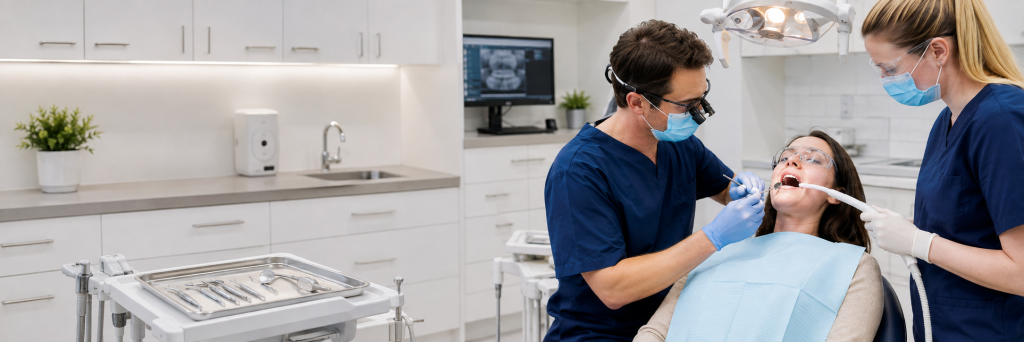
Different forms of suction can be selected according to the procedure and the amount of fluid being generated. For treatments that produce larger quantities of water or debris, vented suction tips connected to a high-volume evacuation system can form an important part of chairside fluid management.
What does dental suction do during treatment?
Dental suction removes accumulated oral fluids and treatment-related material from the working area. Depending on the procedure, this can include saliva, irrigation water, blood, tooth particles, polishing material and restorative debris. Keeping these materials under control gives the clinician a more consistent view of the treatment site and can reduce the need to stop repeatedly to clear the mouth.
The suction device also supports the dental assistant in four-handed dentistry. While the operator concentrates on the procedure, the assistant can reposition suction as needed, manage fluid before it pools and help keep instruments from competing for the same limited space. This coordinated approach can make the appointment feel more structured for the clinical team and the patient.
Why is a clear working field important in dental care?
Dentistry often involves precise work in a small space. Moisture or pooled fluid can obscure tooth surfaces, preparation margins and soft-tissue landmarks. Removing fluid close to the point where it is generated helps the clinician see the treatment area more clearly and maintain access as the procedure progresses.
A clear field is useful during restorative treatment, crown preparation, examinations, preventive procedures and other appointments where close visual access matters. Moisture management can also be important when dental materials have technique-sensitive handling requirements, although the level of isolation needed will depend on the procedure.
Where do vented suction tips fit into dental care?
Vented suction tips are used as part of dental evacuation systems when stronger removal of fluid and debris is required. Their practical role is to give the dental team a point of suction that can be positioned near the treatment site while maintaining an opening for airflow.
The Livingstone evacuator tips referenced in this article are supplied as 14.7 cm white tips in packs of 100. When connected to compatible evacuation equipment, dental evacuator suction tips can be positioned close to the area producing spray, saliva or debris. This close positioning is important because efficient evacuation generally depends on capturing material before it spreads around the mouth or treatment zone.
How does dental suction support infection prevention and workplace safety?
Dental suction should be viewed as one element within a broader infection prevention system. The Australian Dental Association states that dental teams should use practical measures and routine work practices that reduce infectious agents in the clinical environment and minimise opportunities for transmission. Suction contributes to this broader approach by helping manage fluids and contaminants at the source during treatment.
Safe Work Australia also emphasises the hierarchy of control when managing biological hazards in the workplace. Engineering controls can form part of risk management where they are reasonably practicable. In dentistry, appropriate evacuation equipment may sit alongside other controls such as personal protective equipment, hand hygiene, instrument reprocessing, environmental cleaning and safe clinical procedures.
What should dental practices consider when selecting suction tips?
Dental practices should consider equipment compatibility, tip dimensions, handling, access, disposal requirements and the procedures routinely performed. One suction tip may not suit every clinical application.
Stock planning is also important because disposable evacuation products are routine clinical consumables. Practices looking to buy dental suction tips online should review expected appointment volumes and product compatibility rather than relying on pack size or price alone. Maintaining appropriate stock levels can help avoid interruptions to chairside preparation and daily workflow.
How can dental p use suction more effectively?
Effective suction depends on positioning and communication. The tip should remove fluid without blocking the dentist’s view, interfering with instruments or pressing unnecessarily against soft tissue, and it should be repositioned as the treatment area changes.
Team familiarity also matters. Consistent chairside routines can help assistants anticipate when more evacuation is needed, while clear communication allows quick adjustment when the operator changes
References
- Australian Dental Association (n.d.) Policy Statement 6.1: Infection Prevention and Control, Australian Dental Association, viewed 18 August 2026.
- Safe Work Australia (n.d.) Biological Hazards: Control Measures, Safe Work Australia, viewed 18 August 2026.