What makes butterfly wound closures different from a standard dressing?
Not every cut needs stitches. And not every first aid kit has the right tool to close the ones that don’t. Butterfly wound closures fill the gap between a standard adhesive dressing and a clinical suture, offering a reliable, non-invasive method for closing minor lacerations on the spot. For anyone responsible for stocking or managing a workplace first aid kit, understanding exactly what butterfly wound closures are, how they are constructed, and when they are appropriate is essential practical knowledge.
Product Overview: Livingstone Butterfly Wound Closure
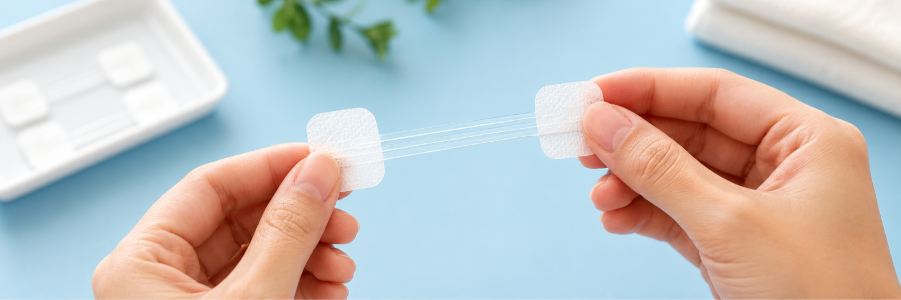
The Livingstone Butterfly Wound Closure is a sterile, single-use wound closure strip designed to draw the edges of minor lacerations together and hold them in apposition while the skin heals. Each strip measures 46mm in total length and 10mm in width, with an adhesive surface on each end and a non-stick centre that bridges the wound without adhering to the wound bed.
Key product specifications at a glance:
- Dimensions: 46 x 10mm
- Non-stick centre: bridges the wound without adhering to the wound surface
- Sterile: individually packaged to maintain sterility until point of use
- Packaging: recyclable plastic, supporting responsible disposal in high-use workplace settings
- Pack size: 10 pieces per pack, suitable for bulk buy wound care supplies programmes
Understanding the Design: Why the Butterfly Shape Works
The butterfly shape of these wound closure strips is not aesthetic. Every dimension serves a mechanical purpose.
Wide Adhesive Ends
The wider adhesive ends provide a larger surface area of contact with the intact skin on either side of the wound. More adhesive surface area means greater grip strength and resistance to the natural tension forces that pull wound edges apart during movement.
Non-Stick Centre
The narrowed, non-stick centre bridges the wound itself without making adhesive contact with the wound bed. Closures that allow adhesive to contact the open wound can cause the strip to bond to newly forming tissue. When removed, this tears away delicate healing cells, causes unnecessary pain, and risks reopening the wound. The non-stick centre on the Livingstone Butterfly Wound Closure eliminates this risk entirely.
Strip Length at 46mm
At 46mm total length, each strip provides enough reach to anchor securely on both sides of typical minor lacerations while generating meaningful inward tension on the wound edges. The 46mm length is calibrated for the most common minor laceration sizes encountered in first aid settings.
Educational Guide: When Are Butterfly Wound Closures the Right Choice?
Knowing when to reach for a butterfly wound closure and when to escalate to professional care is one of the most important decisions a first aider makes at a wound scene.
Use Butterfly Wound Closures When the Wound Is:
- Clean and free of embedded debris after thorough irrigation
- Shallow, not penetrating beyond the skin surface into fat or deeper tissue
- Under approximately 2 to 2.5cm in length
- Has straight or gently curved edges that come together without tension when manually approximated
- No longer actively bleeding after five minutes of firm, direct pressure
- Located in an area not subject to high skin tension, such as the forearm, scalp, or forehead
Refer to Medical Care When the Wound Is:
- Deep, gaping, or exposing underlying tissue, fat, or structures beneath the skin
- Over a joint or bony prominence where skin tension will pull the closure apart
- Caused by a bite, puncture, or contaminated object with elevated infection risk
- Continuing to bleed despite sustained direct pressure
- Showing signs of infection: spreading redness, warmth, swelling, or discharge at the wound site
- Located on the face, hands, or genitals where scarring outcomes or functional implications require professional assessment
Step-by-Step: How to Apply Wound Closure Strips Correctly
Correct application technique determines whether a butterfly wound closure holds for days or fails within hours. Follow these steps in order.
Step 1: Control Bleeding and Clean the Wound
Apply firm, direct pressure with a clean dressing until bleeding has fully stopped. No closure strip will adhere to an actively bleeding surface. Once bleeding is controlled, irrigate the wound thoroughly with clean water or sterile saline to remove any debris, dirt, or foreign material. Pat the wound and a 3 to 4cm margin of surrounding skin completely dry before proceeding.
Step 2: Approximate the Wound Edges
Use a gloved finger to gently bring the wound edges together and assess whether they meet cleanly without significant tension. If the edges pull apart from the moment pressure is released, the wound may require sutures rather than adhesive closure.
Step 3: Apply Strips Perpendicular to the Wound
Peel the backing from the first butterfly wound closure and anchor one adhesive end firmly to the skin on one side of the wound. Pull the strip across the wound, drawing the edges together, and press the opposite adhesive to end down firmly. Apply subsequent strips at approximately 3mm intervals along the wound length. For wounds longer than 2cm, apply the first strip at the midpoint and work outward in each direction.
Step 4: Cover and Monitor
Cover the applied closures with a sterile non-adherent dressing or transparent film dressing to protect them from contamination and moisture. Monitor the wound daily for signs of infection, closure lifting, or wound edge separation. Allow the closures to fall away naturally after five to ten days as the wound heals.
Stocking Butterfly Wound Closures for Workplace First Aid
Safe Work Australia’s Model Code of Practice: First Aid in the Workplace advises that first aid kit contents should reflect the hazards present in the workplace. For any environment where lacerations are a realistic injury risk, butterfly wound closures are an appropriate and recommended supply.
The Livingstone Butterfly Wound Closure is available in packs of 10. For a complete range of sterile wound care dressings and closure options, explore the Livingstone Wound Care Dressings Collection.
Frequently Asked Questions
What is the difference between butterfly wound closures and steri-strips?
Steri-Strip is a branded product name for a straight wound closure strip, while butterfly wound closure describes a specific shape with wider adhesive ends and a narrowed centre. The butterfly shape generates stronger inward tension on wound edges due to its wider adhesive ends. In practice, the two terms are often used interchangeably in first aid settings.
How long do butterfly wound closures stay on?
Butterfly wound closures should remain in place for five to ten days, or until they begin to detach naturally as the wound heals. Avoid removing them prematurely. Once the wound edges have fully healed, the closures can be gently peeled back parallel to the skin surface from both ends toward the centre.
Can butterfly wound closures be used on children?
Yes. Butterfly wound closures are widely used for minor paediatric lacerations as a gentler, needle-free alternative to sutures. Children often find the application process significantly less distressing than suturing, and the non-stick centre reduces pain on removal.
A Small Strip with a Precise Purpose
Butterfly wound closures are a purpose-engineered first aid product. Every feature, the adhesive end width, the non-stick centre, the strip length, and the sterile packaging, exists to address a specific clinical challenge in wound closure. Understanding those features makes it easier to choose the right product, apply it correctly, and know when it is and is not the appropriate tool for the wound at hand.
For workplace first aid rooms and anyone managing bulk buy wound care supplies, the Livingstone International Butterfly Wound Closure offers a reliable, well-specified option that is ready to perform exactly when it is needed.
References
Cleveland Clinic 2024, Steri-strip (butterfly bandage), Cleveland Clinic, viewed June 2026.
Nuvo Med Surg 2025, Butterfly bandages: what they are and how to use them, Nuvo Med Surg, viewed June 2026.
The First Aid Shop Australia 2024, Mastering butterfly stitches: a comprehensive guide for effective minor wound closure, The First Aid Shop Australia, viewed June 2026.
Safe Work Australia 2024, First aid in the workplace, Safe Work Australia, viewed June 2026.