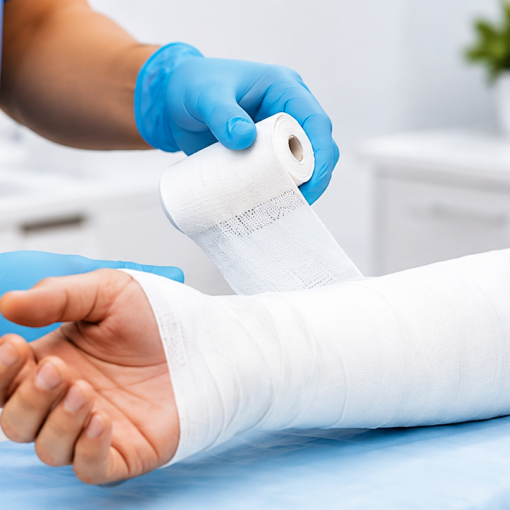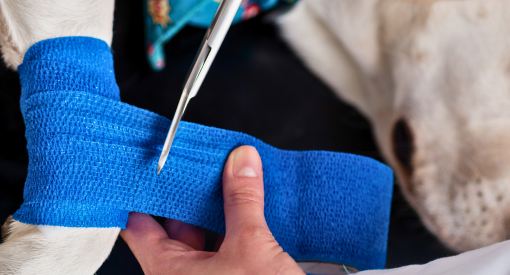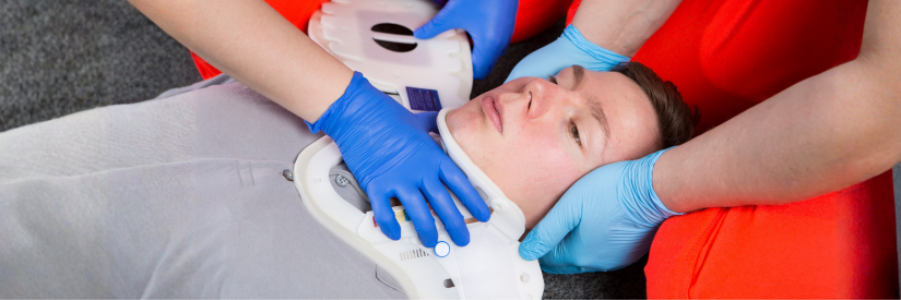
A bandage can stay firmly in place without glue sticking directly to the skin. That is the practical idea behind cohesive wrapping, a format used when a flexible layer needs to conform around a small joint, limb or dressing while gripping to itself.
A cohesive bandage can be useful in first aid, clinical care, physiotherapy, veterinary work and workplace kits, but application still matters. Tension, width and the condition being managed all affect whether a wrap is appropriate. For smaller areas, the E.Z. Ban Cohesive Elastic Bandage provides a compact self-adhesive option. Workplaces comparing this type of consumable can also review Livingstone’s Wound Care Collection for related bandages and dressing supplies.
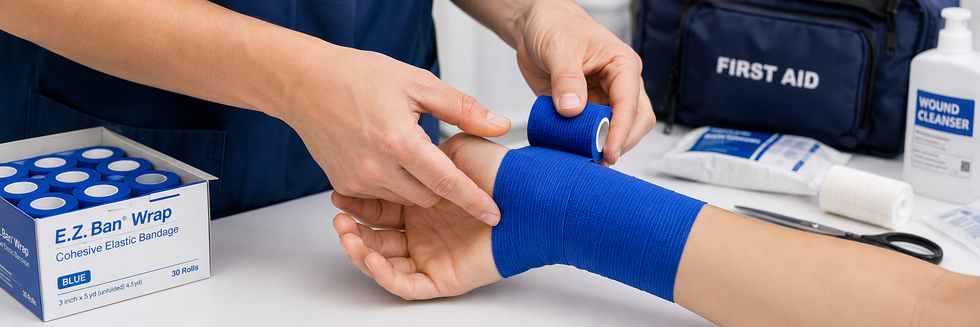
The key is to treat cohesive wrapping as a tool, not a diagnosis. A supportive wrap may help with selected tasks, but significant pain, swelling, circulation changes or suspected serious injury require appropriate assessment.
What is a cohesive bandage and how is it different from adhesive tape?
A cohesive bandage is an elastic wrap that holds to itself as layers overlap, rather than relying on adhesive contact with skin. It can provide light support, retain suitable dressings and conform around smaller body areas, but its elasticity means application tension still needs careful control.
A cohesive bandage is an elastic wrap designed to hold to itself as overlapping layers are applied. This differs from conventional adhesive tape, which relies on adhesive contact with skin or another surface.
Because cohesive material conforms around contours, it can be useful when a wrap needs to remain neat during movement. Depending on the task, it may provide light support, help retain a suitable dressing or form a protective outer layer.
The overlapping structure also reduces reliance on clips or separate fasteners. However, cohesive does not mean pressure-free. Elastic material can still become restrictive if stretched too firmly, so controlled application remains essential.
When should a cohesive bandage be used for sprains and strains?
A cohesive bandage may be used for selected sprains and strains when compression or support is appropriate. It should be firm without restricting circulation, and it should not replace medical assessment when pain is severe, movement is significantly limited or a fracture or dislocation is possible.
Cohesive bandages may be used for selected sprains or strains when compression or support is appropriate, but wrapping should not replace assessment. Australian first aid guidance includes compression as one part of early care for many soft-tissue injuries.
A bandage should feel firm without restricting circulation. More significant pain, deformity, numbness, inability to use the injured area or concern about a fracture warrants medical review.
Width matters too. A narrow 2.5 cm wrap may suit smaller areas better than broad ankle or limb compression. If the injury is difficult to identify as a sprain, strain, fracture or dislocation, seek appropriate assessment rather than relying on the bandage alone.
Which cohesive bandage width should you choose?
Choose cohesive bandage width according to the body part, required coverage and purpose of the wrap. Narrow widths can suit smaller areas, while broader bandages are usually better for larger joints or limbs. Using the wrong width can create uneven coverage or unnecessary layers.
Bandage width should match the body part and the purpose of the wrap. Narrow cohesive bandages are easier to position around compact areas, while wider versions distribute coverage across larger joints or limbs.
A 2.5 cm cohesive bandage may be practical for selected finger, hand or other small-area applications, or for retaining an appropriate dressing where narrow wrapping is preferred.
Before choosing a width, consider:
- The area that needs coverage
- Whether the goal is support, dressing retention or protection
- How much overlap will be required
- Whether repeated layers could create excess pressure
- Whether the person has circulation or sensation concerns
Keeping several widths available is often more practical than expecting one size to suit every task.
How do you apply a cohesive bandage without making it too tight?
Apply a cohesive bandage with smooth, even overlap and only enough tension to achieve the intended support. Check exposed fingers or toes for normal colour and warmth, and monitor for numbness, tingling or worsening discomfort. Loosen or remove the wrap if circulation appears affected.
Apply cohesive elastic bandage with controlled, even tension and regular overlap. Avoid stretching the material to its limit simply because the roll allows it.
Keep each turn smooth. Wrinkles, sharp folds and highly stretched sections can create localised pressure points. Once the wrap is in place, reassess the area rather than assuming a neat appearance means the pressure is correct.
When fingers or toes remain exposed, check their colour and warmth and ask about numbness, tingling or increasing discomfort. If circulation appears affected, loosen or remove the wrap and reassess. Extra attention may be required for people with impaired sensation or circulation who may not recognise excessive pressure quickly.
What mistakes should you avoid when using cohesive elastic bandages?
Common cohesive bandage mistakes include excessive tension, unsuitable width, inconsistent overlap, failure to monitor circulation and using a wrap where medical assessment is needed. Product materials should also be checked because some cohesive elastic bandages contain natural latex, which can cause reactions in susceptible people.
Common mistakes include pulling the bandage too tightly, choosing an unsuitable width, wrapping an injury that needs medical assessment and leaving the area unmonitored after application.
Material composition also matters. The safety data for the E.Z. Ban bandage family identifies natural latex, which may cause skin irritation or allergic reactions in susceptible people. Workplaces should check latex-allergy requirements before selecting or applying the product.
Another mistake is using cohesive wrap as the primary dressing over an open wound without confirming that the intended procedure allows it. Appropriate wound dressings and local protocols should guide direct wound contact, with cohesive bandage used only in a suitable role around them.
What should you check before you buy cohesive bandages online?
Before buying cohesive bandages online, compare width, stretched length, material composition, pack quantity and intended use. Healthcare and workplace buyers should also review latex-allergy requirements, expected usage and the range of sizes needed so purchasing reflects actual procedures rather than box quantity alone.
Before you buy cohesive bandages online, compare width, stretched length, pack quantity, material composition and intended use. Healthcare and workplace buyers should consider which sizes are genuinely used and whether latex-containing products fit local policies.
Useful procurement checks include expected usage, other widths required, storage, latex-allergy procedures and staff familiarity with safe wrapping. Bulk purchasing works best when the product matches the tasks performed, not simply because the box quantity is economical.
How do you choose the right cohesive bandage for your workplace?
Choose a cohesive bandage by matching its width, elasticity and material composition to the application. Safe use also depends on controlled tension, circulation checks and appropriate clinical judgement. Workplaces benefit from stocking several suitable widths rather than expecting one roll size to cover every first aid or care task.
The right cohesive bandage combines an appropriate width, controlled elasticity and a material profile suited to the person and task. Narrow rolls can be useful for smaller areas, while larger joints may require broader coverage. Whatever the size, correct tension and circulation checks remain essential.
The E.Z. Ban Wrap Cohesive Elastic Bandage, Blue, 2.5 cm x 2 metres stretching to 4.5 metres offers a compact self-adhesive format for workplaces that regularly use narrow cohesive wrapping. It can sit alongside other wound-care and first aid supplies rather than replacing them.
For hospitals, medical centres, physiotherapy practices, aged care, veterinary settings and workplace first aid rooms, the practical takeaway is simple: match the wrap to the application. Choose the width deliberately, check material sensitivities, apply only the pressure required and reassess after wrapping. A bandage that stays in position is useful only when it is also applied safely.
References
Australasian Society of Clinical Immunology and Allergy 2025, Latex allergy, ASCIA, viewed 17 August 2026.
Healthdirect Australia 2025, Sprained wrist, Healthdirect Australia, viewed 17 August 2026.
Healthdirect Australia n.d., Sprains and strains, Healthdirect Australia, viewed 17 August 2026.
St John Ambulance Australia n.d., Sprain and strain, St John Ambulance Australia, viewed 17 August 2026.