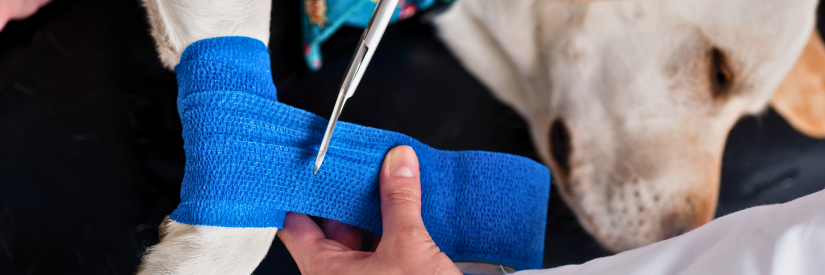
Proper bandaging helps protect the affected area, secure appropriate dressings, manage wound fluid, and reduce exposure to further contamination. In veterinary care, these functions become particularly important because patients may walk, run, scratch, lick or otherwise interfere with a dressing after it has been applied.
A cohesive bandage provides a practical outer layer within a properly designed bandaging system. For veterinary practices, equine facilities, livestock operations, wildlife organisations and other animal-care environments, products such as the E.Z. Ban Wrap Cohesive Elastic Bandage can support routine wound-management requirements. Professionals comparing other formats can also explore Livingstone’s Veterinary Wound Care and Management Bandages.
What is the Importance of Bandaging?
A bandage is not simply material wrapped around an injury. Effective veterinary bandaging is usually a system in which different layers perform different functions.
Depending on the wound and treatment plan, this may include a primary dressing placed over the wound, padding for protection, and an outer bandage that helps stabilise the complete dressing.
For exudative wounds, a layered bandaging approach can help support effective wound management. An absorbent, low-adherent dressing may be placed over the wound, followed by protective padding and a cohesive bandage to help stabilise the dressing. When applied appropriately, this type of bandaging can also help protect the wound from drying out, environmental contamination, and exposure to flies.
This highlights an important point for veterinary wound care: the outer layer may be applied last, but its job is far from secondary.
Why Should Bandages Be Treated as a Complete System?
Each component needs to work with the others. A suitable primary dressing may help manage the wound surface, padding can provide cushioning, while the cohesive outer layer helps keep these materials positioned.
Simply wrapping a wound more tightly does not create a better dressing. The materials, positioning, tension, and ongoing monitoring all influence how successfully a veterinary bandage performs.
How Does Self-Cohesion Help in Practical Settings?
A cohesive outer layer can help maintain the arrangement of the dressing as an animal move. Because the material adheres to itself, veterinary professionals can create a continuous wrap around an appropriate anatomical area without relying solely on conventional adhesive tape.
This can be useful across different animal-care environments, including:
- Companion animal veterinary clinics
- Equine practices and horse-care facilities
- Livestock and agricultural operations
- Wildlife rescue and rehabilitation
- Zoos and animal sanctuaries
- Breeding facilities
- Veterinary teaching and research environments
The application method and bandage width still need to be selected according to the species, wound location, clinical objective, and professional treatment plan.
Can Incorrect Bandaging Cause Problems?
Yes. One of the most important considerations when working with an elastic cohesive bandage is controlling tension.
Elasticity allows a bandage to conform around an anatomical area, but excessive stretching during application can make the finished dressing constrictive.
Bandages should be applied with enough tension to stay secure without becoming restrictive. Excessive pressure may reduce circulation, affect surrounding tissue and interfere with the healing process. For wounds requiring pressure to help control bleeding, the goal is to apply firms, even support while avoiding unnecessary constriction.
This is why “secure” and “tight” should never be treated as interchangeable terms.
What Should Be Considered After a Bandage Is Applied?
Bandage care continues after application. Veterinary teams and animal carers should regularly check the dressing for movement, moisture, contamination, swelling or other signs that it may need reassessment.
Bandages should be kept clean and dry, and replaced when wound fluid reaches the outer layers of the dressing, commonly known as strike-through. Regular monitoring helps maintain the integrity of the bandage and supports appropriate wound management.
Animal behaviour should also be observed. Persistent chewing, licking or interference with the bandage may compromise the dressing or indicate discomfort that requires further assessment.
How Can E.Z. Ban Wrap Support Veterinary Wound Care Preparation?
Having the correct wound-care materials available before treatment can help veterinary teams work more efficiently and consistently.
E.Z. Ban Wrap combines elasticity with a self-adhering design, allowing it to function as an outer layer when cohesive bandaging is appropriate. Its lightweight, porous, and hand-tearable construction also makes it practical for inclusion alongside primary dressings, padding and other wound-management consumables.
For veterinary clinics and procurement teams, maintaining multiple bandage types and widths can also support the variety of patients encountered in practice rather than relying on a single dressing configuration for every situation.
What Is the Key to Effective Veterinary Bandaging?
Effective wound care depends on more than covering an injury. The dressing needs to suit the wound, remain appropriately positioned, and be monitored throughout the healing process.
A cohesive bandage can play an important role in the stabilising outer layer of that system. When correctly selected and applied with appropriate tension, it can help keep other dressing components organised while accommodating the realities of animal movement.
For veterinary professionals, animal-care facilities and organisations reviewing their wound-management supplies, the E.Z. Ban Wrap Cohesive Elastic Bandage offers different size options for consideration alongside other dressing and bandaging materials.
Ultimately, proper bandaging is not about how firmly a wound can be wrapped. It is about creating a dressing system that protects the wound while respecting the needs of the animal underneath it.
References
Department of Planning, Industry and Environment 2021, Guidelines for the Initial Treatment and Care of Rescued Macropods, NSW Government, viewed 27 August 2026.
NSW Department of Education 2026, Bumblefoot/Plantar Pododermatitis, NSW Department of Education, viewed 27 August 2026.
Livingstone International n.d., E.Z. Ban Wrap Cohesive Elastic Bandage, 2.5cm x 2 Metres Stretch to 4.5 Metres, Tan, Livingstone International Pty Ltd, viewed 27 August 2026.
Fresinider 2025, Vet Wrap for Dogs and Cats: Why Cohesive Bandage Is the Best Choice, Fresinider, viewed 27 August 2026.
Borghese, I 2020, Cohesive Bandage Can Be Used for Traction and to Reduce Scuffing, Vital Vet, viewed 27 August 2026.
AUPCON 2026, Why Are Cohesive Support Bandages So Popular in Veterinary Care?, AUPCON, viewed 27 August 2026.