Modern restorative dentistry relies on precision at every stage of treatment. From applying bonding agents to placing desensitisers and sealants, clinicians require accurate delivery of materials to achieve predictable outcomes while minimising waste. Even small inconsistencies during application can affect restoration longevity, bond strength and overall clinical efficiency.
Disposable microbrush applicators have become an essential chairside accessory because they allow controlled placement of small amounts of dental materials exactly where they are needed. Their flexible design, lint-free fibres and single-use construction make them suitable for a wide variety of restorative, cosmetic and preventive procedures.
Whether working in a general dental practice, specialist clinic or dental laboratory, using high-quality microbrush applicators can improve workflow while supporting infection prevention and material efficiency. Livingstone Microbrush Applicator Brushes are designed to deliver precise application in confined treatment areas, with a fine, flexible tip that enables accurate placement while helping reduce material waste.
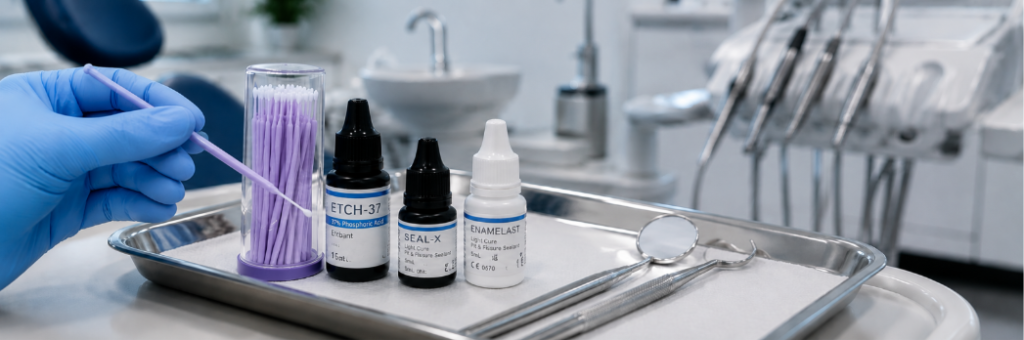
Suitable for applying bonding agents, etchants, cavity liners, desensitisers, haemostatic agents, sealants and other restorative materials, they provide a practical solution for everyday clinical procedures. Practices looking to replenish chairside supplies can explore the Livingstone Purple Microbrush Applicator or browse the complete Dental Brush Applicators Collection to find applicators suited to a wide range of restorative and cosmetic treatments.
Why Is Precise Material Placement Important?
Modern restorative materials are formulated to perform under controlled application techniques.
Applying too much material may result in:
- Increased material waste
- Excess clean-up
- Difficulty achieving ideal restoration contours
- Reduced visibility within the operative field
Applying too little material may compromise:
- Bond strength
- Surface coverage
- Clinical effectiveness
- Long-term restoration performance
Using a super fine tip microbrush applicator enables clinicians to place only the required amount exactly where it is needed.
Which Dental Procedures Use Microbrush Applicators?
Microbrushes are used throughout restorative and preventive dentistry.
Bonding Agents
- Accurate placement of adhesive systems helps create a consistent bonding layer while reducing pooling.
- Microbrushes allow clinicians to apply thin, controlled coatings to enamel and dentine before light curing.
Etchants
- Phosphoric acid etchants require careful application to specific tooth surfaces.
- Disposable applicators provide improved control when treating small areas without affecting adjacent tissues.
Cavity Liners
- When protecting deep cavity preparations, precise placement of cavity liners is essential.
- The fine applicator tip allows materials to be distributed evenly while avoiding unnecessary bulk.
Desensitisers
- Many desensitising agents require localised application to exposed dentine.
- Microbrush applicators help place these solutions accurately while reducing product waste.
Haemostatic Agents
- During restorative procedures involving gingival tissues, haemostatic agents must often be applied carefully around the preparation margin.
- A bendable microbrush provides excellent access while maintaining clinician control.
Pit and Fissure Sealants
- Sealant placement requires clean, accurate application to deep fissures.
- Disposable applicators assist clinicians in distributing sealants evenly before curing.
How Do Disposable Microbrushes Support Infection Control?
Single-use dental accessories remain an important component of infection prevention protocols.
Disposable microbrush applicators help minimise the risk of cross-contamination by eliminating the need for reprocessing.
Benefits include:
- One applicator per patient
- Reduced handling after use
- No cleaning or sterilisation required
- Consistent clinical performance
Practices can also reduce the likelihood of contaminating product bottles by dispensing materials into disposable mixing we
How Do Microbrushes Help Reduce Material Waste?
Many restorative materials represent a significant investment for dental practices.
Because microbrushes transfer only a small amount of material at a time, clinicians can apply products more efficiently.
This controlled application helps reduce:
- Excess adhesive use
- Wasted etchant
- Unnecessary sealant consumption
- Over-application of medicaments
Improved material efficiency contributes to lower operating costs while maintaining high clinical standards.
Frequently Asked Questions
Are microbrush applicators disposable?
Yes. They are designed for single-patient use and should be discarded after each procedure.
What materials can be applied using a microbrush?
Microbrushes are commonly used for bonding agents, etchants, desensitisers, cavity liners, haemostatic agents and sealants.
Why are fine-tip applicators preferred?
Fine applicators provide greater accuracy, allowing clinicians to place materials precisely while reducing waste.
Where can I buy microbrush applicators online?
Dental practices can conveniently buy microbrush applicators online through reputable dental suppliers offering products suitable for restorative and cosmetic dentistry.
Conclusion
Precision is fundamental to successful restorative dentistry. Selecting the right disposable accessories can improve both clinical efficiency and treatment consistency.
Livingstone microbrush applicators provide controlled application for a wide range of dental materials while supporting infection prevention and reducing material waste. Their flexible, disposable design makes them a valuable addition to everyday restorative workflows, helping clinicians achieve predictable outcomes across a variety of procedures.
Whether applying bonding agents, cavity liners or sealants, a quality microbrush remains one of the simplest tools for improving precision in modern dental practice.
References
Australian Dental Association (ADA) 2024, Infection Prevention and Control Guidelines, Australian Dental Association.
Australian Commission on Safety and Quality in Health Care 2021, National Safety and Quality Health Service Standards User Guide for Dental Practices, ACSQHC.