What Does a Cardboard Splint Actually Do?
A splint is a rigid or semi-rigid support applied to an injured limb to prevent movement, reduce pain, and protect against further damage before definitive medical care is available. In first aid settings, immobilisation is one of the most important early interventions for fractures, dislocations, and severe sprains. Moving an unsupported fractured limb carries real risk: it can cause additional tissue damage, worsen the fracture position, increase swelling, and intensify pain for the injured person.
Cardboard Splints achieve immobilisation through structural rigidity combined with a degree of flexibility that allows them to be shaped to the natural contours of the limb. They are not definitive treatments. They are a bridge, holding the injury stable until the patient reaches an emergency department.

Why Cardboard? Is It Really a Legitimate Medical Tool?
The scepticism is understandable. Cardboard feels too simple for something that matters this much. But that simplicity is precisely what makes it effective. Emergency room physicians and paramedics have long endorsed cardboard as a practical, accessible splinting material. Many EMTs carry cardboard splints as a matter of routine because the material is easy to use, immediately mouldable, and provides reliable stabilisation for transport.
Commercially produced cardboard splints take this principle further. They are manufactured to consistent dimensions, often feature a waterproof or waxed coating to resist moisture, and are designed with scored fold lines that make shaping to a limb fast and straightforward. Unlike improvised alternatives, a purpose-built cardboard splint gives first aiders a reliable, repeatable result every time.
Cardboard Splints for First Aid: Key Advantages Over Other Types
Why choose a cardboard splint over a malleable or inflatable option?
Each splint type has its place, but cardboard offers a combination of benefits that no other material quite matches:
- Cost-effective for high-volume use: Cardboard splints are significantly more affordable than malleable aluminium or vacuum splints, making them practical for stocking in bulk across large workplaces, schools, and sporting clubs.
- Disposable and single-use: Eliminates any risk of cross-contamination between patients, a particular advantage in clinical settings.
- Lightweight and compact: Cardboard splints take up minimal space in a first aid kit and add almost no weight, which is critical for portable or remote-area kits.
- No straps required: Standard bandages or medical tape are sufficient to secure a cardboard splint, meaning no additional components are needed.
- Radiolucent: Cardboard does not obstruct X-ray imaging, which means it does not need to be removed before radiographs are taken in an emergency department.
Why Size Matters: The Case for a Large Cardboard Splint
Splint sizing is one of the most overlooked aspects of first aid kit management. A splint that does not extend adequately above and below the injury site fails to achieve proper immobilisation. For lower limb injuries involving the tibia, fibula, or ankle, and for larger upper limb injuries in adults, a standard-sized splint is frequently insufficient.
The Livingstone Cardboard Splint Large measures 32 x 78.4 cm, providing the length required to span the full extent of a leg or large arm injury in an adult. This is not a detail to overlook. A splint must extend beyond the joints on either side of the fracture site to be effective. An undersized splint applied to a lower leg injury, for example, will not control movement at the knee or ankle, undermining the entire purpose of the intervention.
Where Are Cardboard Splints Used in Practice?
Workplace and remote area first aid
Australian workplaces with a high risk of musculoskeletal injury, including construction sites, warehouses, farming operations, and mining environments, benefit enormously from having correctly sized cardboard splints on hand. When a worker sustains a suspected fracture and ambulance response time is measured in tens of minutes rather than seconds, a well-applied splint can determine the difference between a manageable injury and a complication.
Veterinary orthopaedics and animal care
Cardboard splints are also a staple in veterinary orthopaedic care. For limb fractures in dogs, cats, and small to medium-sized animals, a large cardboard splint provides rapid, effective temporary immobilisation during triage, stabilisation, and transport. The disposable nature of cardboard is particularly valued in clinical settings where infection control between animal patients is a priority. Browse the full range of veterinary orthopaedic splints at Livingstone for the full range available for clinical use.
Sports and community events
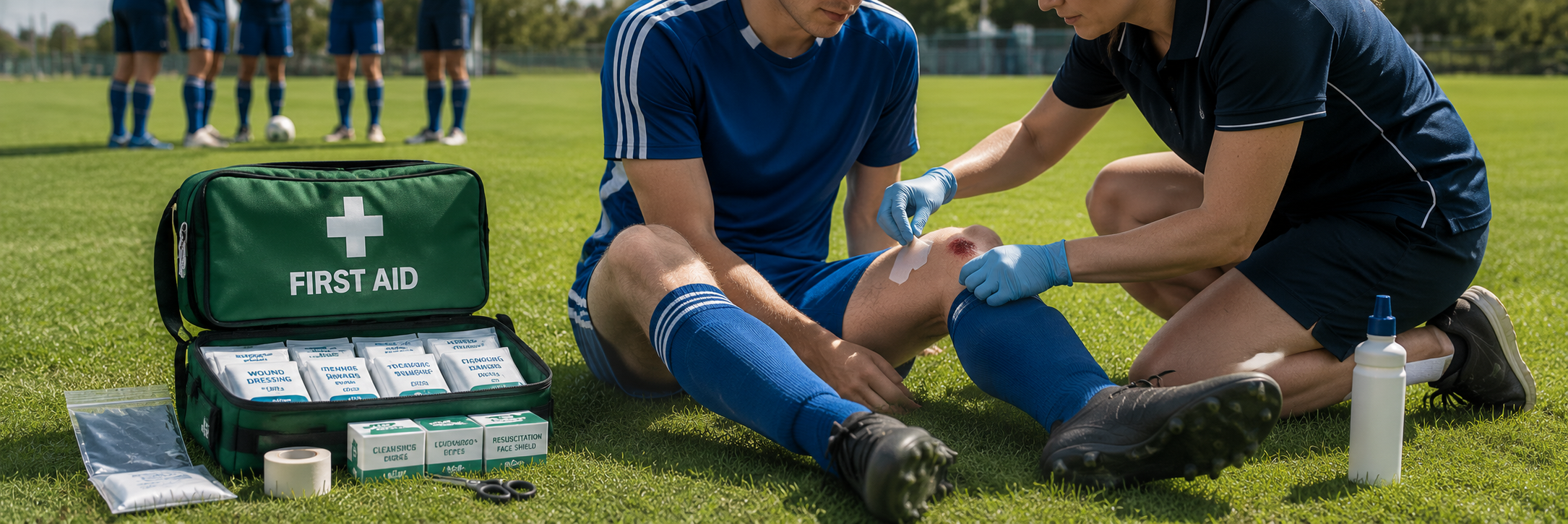
Event first aiders, sports trainers, and school nurses regularly encounter limb injuries that require temporary immobilisation. A large cardboard splint is ideal for these environments: it is inexpensive enough to stock in quantity, requires no specialist training beyond standard first aid competency, and is immediately deployable without assembly.
How to Apply a Cardboard Splint: First Aid Best Practice
Applying a cardboard splint correctly is a core first aid skill. Follow these steps as a guide:
- Follow DRSABCD and ensure scene safety before approaching the injured person.
- Avoid moving the limb unnecessarily. Support the injury in the position found unless it is life-threatening to do so.
- Position the splint so it extends above and below the injured joint or fracture site.
- Pad any gaps between the splint and limb to minimise pressure points and increase comfort.
- Secure with bandages or medical tape. The fit should be firm but not constrictive.
- Check circulation every 15 minutes. Assess for pulse, sensation, and movement distal to the splint.
- Arrange transfer to an emergency department for definitive assessment and imaging.
Frequently Asked Questions
Can a cardboard splint be used for a suspected fracture before an X-ray?
Yes. Cardboard splints are commonly applied before imaging because they are radiolucent, meaning they do not interfere with X-ray or other diagnostic imaging. In many emergency departments and veterinary clinics, the splint is left in place until imaging confirms the injury, reducing unnecessary movement of the limb.
What is the difference between a small and large cardboard splint?
Size determines which injuries a splint can adequately cover. Smaller splints are suited to wrist, hand, and forearm injuries in adults or limb injuries in children and small animals. A large cardboard splint such as the Livingstone SPLINTBRDL at 32 x 78.4 cm is designed for full lower leg, femur, and large upper limb injuries in adults, as well as orthopaedic use in larger animals.
Underestimated, Indispensable, and Always Worth Stocking
The cardboard splint has survived decades of medical and technological advancement for a simple reason: it does exactly what it needs to do, when it needs to do it, without complication. For first aid coordinators, veterinary clinics, and workplace safety managers reviewing their kit contents, the Livingstone Cardboard splint large for emergency first aid is one of those items that costs little but is worth considerably more in the moment it is needed.
References
Australia Wide First Aid 2024, Immobilisation techniques, Australia Wide First Aid, viewed July 2026.
LFA First Response 2025, What is a splint? Their role in injury treatment, LFA First Response, viewed July 2026.
Madsen, T 2019, ‘Health hack: Use cardboard and a T-shirt to help with a broken bone‘, University of Utah Health, The Scope Health Library, viewed July 2026.