Whether you are testing grape juice in a winery, checking fruit ripeness in the field, or introducing students to refractometry in a school laboratory, a Brix refractometer offers a fast and reliable way to measure sugar concentration in a liquid sample. For beginners, the scale and terminology can seem unfamiliar at first. This guide breaks down exactly how a Brix refractometer works, how to prepare and calibrate it, and how to take and interpret an accurate reading every time.
What Is a Brix Refractometer and How Does It Work?
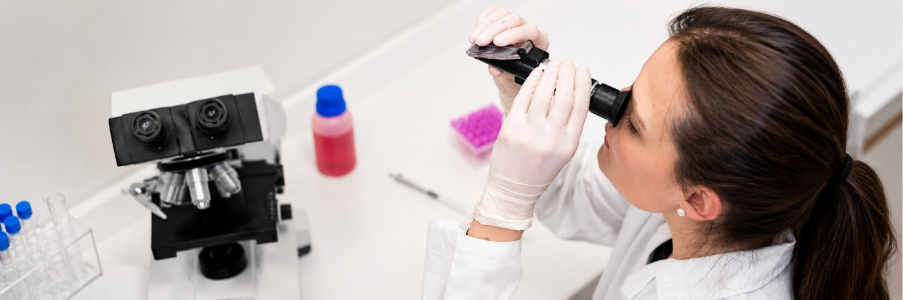
A refractometer measures the concentration of dissolved solids in a liquid, mainly sugars, by assessing how light bends as it passes through the sample. This bending, known as refraction, changes depending on how much is dissolved in the liquid. The result is displayed as a percentage on the Brix scale (°Bx), where a reading of 20 °Bx indicates roughly 20 grams of dissolved solids per 100 grams of solution.
Analogue vs Digital Models
Analog refractometers use a handheld eyepiece, where the reading is taken by lining up a light and dark boundary against a printed scale. Digital models display the Brix value directly on a screen and often include automatic temperature compensation, which removes much of the guesswork for beginners while still relying on the same optical principle.
How Do You Prepare a Refractometer Before Reading?
Calibrating With Distilled Water
Before every session, place two or three drops of distilled or deionised water on the prism and close the cover plate. On an analogue unit, the boundary line should sit exactly on zero. On a digital unit, press the calibration or zero button. If the reading drifts from zero, adjust the calibration screw (analogue) or recalibrate through the device menu (digital) before continuing.
Cleaning the Prism Surface
Residue from a previous sample is one of the most common causes of an inaccurate reading. Wipe the prism with a soft, lint-free cloth and a few drops of distilled water, then dry it completely before applying a new sample.
How Do You Take a Brix Reading Step by Step?
Step 1: Apply the Sample
Place two or three drops of the liquid sample directly onto the centre of the prism, using a pipette or dropper for consistency.
Step 2: Close the Cover Plate
Lower the daylight plate gently so the sample spreads evenly across the prism without trapping air bubbles or leaving dry patches, both of which distort the reading.
Step 3: Read the Scale
For an analogue refractometer, hold the unit toward natural light or a lamp and look through the eyepiece. Note where the sharp boundary between the light and dark fields crosses the scale, reading to the nearest 0.1 °Bx. For a digital model, simply record the value shown on the display once it stabilises.
Step 4: Record and Clean
Record the reading along with the sample type and temperature if not automatically compensated, then clean the prism immediately to prevent residue from affecting the next test.
How Do You Interpret Brix Results?
A Brix reading on its own indicates sweetness or concentration, but it does not describe acidity, flavour balance or fermentation risk. For a fuller picture, many laboratories and producers pair Brix readings with a pH meter to assess acidity alongside sugar content, since the two measurements together give a far more reliable indication of ripeness, quality and stability than either does alone.
Target Brix ranges vary widely by product. Wine grapes are typically harvested between 19 and 25 °Bx depending on the style being produced, while soft drinks, juices and confectionery each have their own expected ranges, so results should always be interpreted against the relevant industry or product benchmark.
What Common Mistakes Affect Brix Readings?
Temperature Fluctuations
Refractive index changes with temperature, so a sample straight from a fridge or a warm field will read differently to one at room temperature. Automatic temperature compensation reduces this risk, but samples should still be tested at a reasonably consistent temperature wherever possible.
Air Bubbles and Residue
Bubbles, dry spots or leftover residue on the prism scatter light unpredictably and produce an unreliable reading. Always inspect the sample layer before reading and clean the prism between every test.
Skipping Calibration
A refractometer that has not been zeroed recently can drift over time, particularly with frequent field use. Recalibrating with distilled water before each session, and periodically checking against a certified reference standard, is the most effective way to catch this early. This approach is reflected in the Australian wine industry’s endorsed procedure for Brix and Baume measurement, which stresses consistent calibration and sampling technique to keep results comparable across laboratories (Australian Grape and Wine, 2021).
FAQ:
What does a Brix reading actually measure?
A Brix reading measures the total dissolved solids in a liquid, expressed as a percentage by weight. Sugar is usually the largest contributor, though the reading also includes small amounts of acids, salts and other dissolved compounds.
Can a refractometer measure pH?
No. A refractometer measures refractive index and reports it as Brix, while pH is a separate measurement of acidity taken with a calibrated pH meter and electrode. The two instruments are often used together rather than interchangeably.
How often should a Brix refractometer be calibrated?
A refractometer should be zeroed with distilled water before every testing session and checked against a certified reference solution periodically to confirm ongoing accuracy, particularly in laboratories operating under formal quality or accreditation requirements (Department of Industry, Science and Resources, n.d.).
References
- Australian Grape and Wine (2021) Industry-endorsed standard procedure for measurement of °Brix (or °Baume) in grape juice. Adelaide: Australian Grape and Wine.
- Australian Wine Research Institute (n.d.) Measurement of total soluble solids (TSS) of grapes and must. Adelaide: AWRI.
- Department of Industry, Science and Resources (n.d.) National Association of Testing Authorities, Australia. Canberra: Australian Government.