Vinyl and nitrile examination gloves are both widely used across clinics, aged care facilities and general workplaces, with each material offering different advantages depending on the task. This guide compares their fit, durability, barrier protection and cost considerations to help determine when vinyl or nitrile may be the more suitable choice. Livingstone stocks vinyl and nitrile examination gloves to suit a range of clinical and workplace applications.
What’s the Difference Between Vinyl and Nitrile Glove Materials?

Vinyl gloves are made from polyvinyl chloride (PVC), while nitrile gloves are made from synthetic rubber. Both are latex free materials, but they differ in flexibility, fit and durability depending on the application. The ratio of resin to plasticiser determines the glove’s final strength and stretch, giving manufacturers a way to balance cost, comfort and durability for different tasks.
A higher resin content produces a firmer, more puncture-resistant glove, while additional plasticiser softens the material for easier donning. Because vinyl is a synthetic plastic rather than a rubber compound, it is naturally latex free, making it a reliable choice for facilities managing latex-sensitive staff or patients without needing to source rubber-based alternatives.
What Are the Benefits of Vinyl and Nitrile Gloves?
Vinyl gloves offer a lower cost per unit, quick and easy donning, and dependable barrier protection for short, low-risk tasks. Nitrile gloves offer greater durability, flexibility and resistance to chemicals and punctures, making them suitable for higher-risk tasks.
They suit high-turnover environments where gloves are changed frequently, such as general examinations, food-adjacent duties and routine hygiene work. Nitrile is often preferred when tasks involve prolonged wear, fine motor control, or exposure to blood, body fluids or chemicals.
Their loose, relaxed fit also makes them comfortable for extended periods of light handling, and their transparency allows for easy visual inspection of tears before use. For practices managing tight consumables budgets, vinyl offers an economical way to maintain consistent glove supply across high-volume, low-chemical-exposure tasks without compromising basic hygiene standards.
How Does Nitrile Compare to Vinyl in Material and Fit?
Nitrile gloves are made from synthetic rubber and stretch to fit the hand more closely than vinyl, offering greater dexterity for longer procedures. Vinyl remains looser fitting and less elastic, which is fine for brief tasks but less suited to prolonged, high-dexterity clinical work.
This fit difference affects more than comfort. A snugger nitrile glove reduces bunching around the fingers and wrist, which can matter during procedures requiring fine motor control. Vinyl’s relaxed fit, however, makes it faster to put on and take off repeatedly, a genuine advantage in fast-paced, high-turnover settings.
When Should You Choose Vinyl Gloves Over Nitrile?
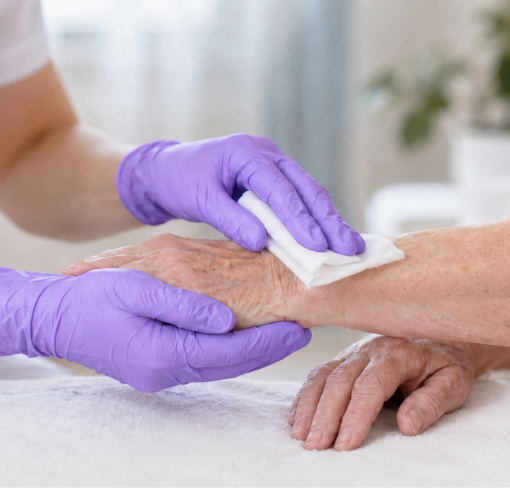
Vinyl gloves are the better choice for short, dry, low-risk tasks where gloves are changed often and chemical exposure is minimal. This includes general consultations, reception and administrative duties, food handling and cleaning tasks that do not involve blood, body fluids or harsh chemicals.
Nitrile becomes the safer option once a task involves puncture risk, cytotoxic drugs, strong disinfectants or prolonged contact with blood or body fluids, where vinyl’s plasticisers can be extracted and weaken the glove. Matching glove material to task risk, rather than defaulting to one type, keeps both cost and safety in balance.
Are Vinyl Gloves Suitable for Clinical Use in Australia?
Vinyl gloves are generally not recommended for clinical care involving blood or body fluids in Australian healthcare settings. Guidance from Victorian health authorities states that gloves used in healthcare, aged care and supported accommodation must be medical grade and comply with AS/NZS 4011 and ISO 11193 (Owen, 2024).
Vinyl remains appropriate for lower-risk clinical contact, such as brief non-invasive examinations, where rapid glove changes and cost control take priority over extended chemical resistance. For any task involving exposure to blood, body fluids, mucous membranes or non-intact skin, nitrile is the preferred material under current Australian infection control guidance.
Are Vinyl Gloves Cost Effective for High-Volume Use?
Vinyl gloves have a lower upfront cost per unit than nitrile, making them a practical option for high-volume, low-risk tasks with frequent glove changes. Facilities working through large quantities of gloves each day often find vinyl the more budget-friendly choice for general duties.
Where tasks involve chemical exposure or longer wear, nitrile can still work out more cost effective overall because its durability reduces mid-task replacements. Facilities typically get the best value by stocking both materials and matching each to the appropriate task rather than relying on a single glove type across every area.
What Standards Should Vinyl Examination Gloves Meet in Australia?
Vinyl examination gloves supplied for medical use in Australia should comply with AS/NZS 4011 and ASTM D5250, the standard specific to medical-grade vinyl gloves. Checking packaging for these markings confirms the product has passed recognised barrier and quality testing before reaching clinical settings.
The Therapeutic Goods Administration also notes that examination gloves should be powder free to avoid reactions with alcohol-based hand rubs (Therapeutic Goods Administration, 2026). Buyers should check product listings for the relevant Australian Standard, AQL rating and material composition before ordering vinyl gloves in bulk for clinical or general workplace use.
Which Glove Should You Choose?
Vinyl gloves suit short, low-risk, high-turnover tasks where cost and speed matter most, while nitrile is better reserved for clinical procedures, chemical handling and any contact with blood or body fluids. Stocking both materials and matching each to task risk protects staff, patients and budgets alike.
References
- Victorian Department of Health 2024, Personal protective equipment (PPE), viewed 17 August 2026, https://www.health.vic.gov.au/covid-19-infection-prevention-control-guidelines/personal-protective-equipment-ppe
- Safe Work Australia 2024, Personal protective equipment (PPE) – WHS duties, viewed 17 August 2026, https://www.safeworkaustralia.gov.au/safety-topic/managing-health-and-safety/personal-protective-equipment-ppe/whs-duties
- Australian Government Department of Health 2026, Personal protective equipment for health professionals, viewed 17 August 2026, https://www.tga.gov.au/resources/explore-topic/covid-19/covid-19-personal-protective-equipment/personal-protective-equipment-health-professionals