Choosing the right bin liner starts with five factors: bin capacity and dimensions, waste type, expected load and required bag strength, collection frequency, and any colour or transparency requirements. Effective waste management also affects workplace hygiene, staff routines, purchasing consistency and collection efficiency. Australian offices, healthcare practices, laboratories, schools, hospitality venues and other commercial facilities can support a clearer system by pairing pedal step bins with suitable bin liners and waste bags for each waste stream and collection service. Hands-free pedal operation can support hygienic disposal in shared areas, while correctly selected liners help staff follow the wider waste system consistently.
What Does Sustainable Waste Management Mean for Businesses?
Sustainable waste management means reducing avoidable waste, separating recoverable materials and managing remaining waste through appropriate collection and disposal pathways. For businesses, the aim is a practical system that staff can follow consistently while supporting hygiene, efficiency and environmental objectives.
The NSW Environment Protection Authority (EPA) waste hierarchy prioritises avoidance and reduction, followed by resource recovery, with disposal as the final step. In practice, businesses can apply this by identifying their main waste streams and providing suitable bins, liners, signage and collection arrangements.
Why Do Bin Liners and Waste Bags Matter in a Business Waste System?
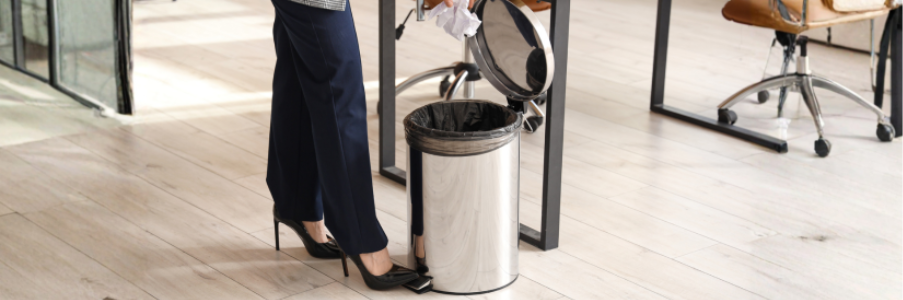
Bin liners and waste bags help contain waste between the point of disposal and collection. The correct size, strength and intended application can reduce bag failures, improve handling and support clearer segregation. Their role is practical rather than standalone: liners work best when they are matched with suitable bins, clear labels and collection procedures that employees and contractors understand.
How Can the Right Liner Support Waste Segregation?
The right liner can make a waste station easier to use consistently by reinforcing the site’s existing segregation system. Where colour coding or transparent liners are used, they should align with the organisation’s signage and waste contractor requirements rather than relying on a single assumed colour standard. Consistency across nearby waste stations also helps reduce uncertainty for staff and visitors.
The NSW EPA’s better practice guidance for commercial and industrial facilities supports well-planned waste and recycling systems with clear storage and collection arrangements. Businesses can apply this principle by making each stream easy to identify and by checking whether contamination is occurring in high-use areas such as kitchens, staff rooms, laboratories and shared workspaces.
What Role Do Bin Liners Play in Workplace Hygiene?
Suitable liners support routine hygiene by containing wet, messy or heavier waste until collection and by reducing direct contact with the bin interior. Businesses should select bags that suit the expected load and change them often enough to prevent overfilling, leakage or odour. Pedal step bins can further support hands-free disposal where reducing hand contact with bin lids is useful.
Healthcare and laboratory environments require additional care because they may manage clinical, chemical or other regulated waste alongside general rubbish. Sharps should not be placed in ordinary waste bags and require dedicated sharps containers. Businesses should follow their site procedures, applicable requirements and waste contractor instructions when selecting containment for specialised waste streams.
What Types of Waste Bags Should Australian Businesses Consider?
Businesses should choose waste bags according to the waste stream, bin dimensions, expected load and collection method rather than using one liner type everywhere. General waste, recycling, food organics and heavier commercial waste can place different demands on a bag, so procurement teams should match specifications to the actual application and confirm any service-specific requirements before standardising products.
General Waste and Recycling Liners
General waste liners should fit the bin securely and provide enough strength for the type of rubbish being collected. Lightweight office waste may need less resistance than waste from kitchens, cleaning areas or busy commercial facilities. Recycling liners should also suit the collection system, with colour or transparency selected according to site signage and the requirements of the receiving service.
Compostable and Biodegradable Bin Liners
Compostable and biodegradable are not interchangeable terms. Compostable liners may suit businesses with a dedicated food organics or composting service, but only where the receiving service accepts them. Businesses should confirm collection-provider requirements before changing liners so the bag supports the intended waste stream rather than contributing to contamination.
Heavy-Duty and Specialised Waste Liners
Heavy-duty liners can be useful where waste is dense, wet or places greater stress on the bag during handling. They may suit commercial kitchens, cleaning operations, warehouses and other higher-volume settings. Healthcare and laboratory sites may require separate products for regulated waste, so heavier construction alone should not be considered proof that a liner is suitable for clinical, chemical or other specialised disposal.
How Do You Choose the Right Bin Liner for Your Business?
When choosing a bin liner, businesses should consider five main factors: bin capacity and dimensions, waste type, expected load and required bag strength, collection frequency, and any colour or transparency requirements. The liner should fit securely without excessive material, while its strength should match the contents and handling conditions. Where possible, confirm compatibility with the waste contractor before ordering in volume.
For businesses with multiple departments or sites, standardising suitable liner specifications can simplify purchasing, stock control and staff training. A practical approach is to identify the main waste streams, map where they are generated, assign the appropriate bin and liner to each area, and review high-volume locations separately. This keeps standardisation useful without forcing one product into every application.
What Are the Business Benefits of a Structured Waste Management System?
A structured waste management system can support cleaner waste areas, clearer staff routines and more predictable purchasing. When bins, liners, labels and collection arrangements work together, employees can identify the correct disposal point more easily and facilities teams can monitor problems such as overfilling, leakage or contamination. Standard product specifications may also reduce unnecessary variation across departments or locations.
The broader benefit is consistency. Businesses can review waste volumes, adjust collection frequency and update liner specifications as operations change rather than treating waste bags as a one-size-fits-all purchase. Review your main waste streams, bin sizes and collection requirements, then explore Livingstone’s range of bin liners and waste bags to find suitable options for your workplace.
References
NSW Environment Protection Authority 2012, Better Practice Guidelines for Waste Management and Recycling in Commercial and Industrial Facilities, NSW Government, Sydney, accessed 21 August 2026, https://www.epa.nsw.gov.au/sites/default/files/120960-comm-ind.pdf.
NSW Environment Protection Authority 2022, The Waste Hierarchy, NSW Government, Sydney, accessed 21 August 2026, https://www.epa.nsw.gov.au/Your-environment/Recycling-and-reuse/warr-strategy/The-waste-hierarchy.