Effective cleaning and disinfecting depend on using the right equipment, product and sequence for the task. Livingstone’s mop and bucket kit and hospital-grade disinfectant can support surface-cleaning routines when used according to product directions and the requirements of the area being cleaned.
What Is the Difference Between Cleaning and Disinfecting?
Cleaning removes dirt, dust, organic matter and other soil from a surface using appropriate cleaning products and mechanical action, while disinfecting uses a suitable chemical product to reduce or inactivate microorganisms. The two processes serve different purposes and may be used together where the cleaning procedure requires both.
Visible soil and organic matter can reduce the effectiveness of some disinfectants, so surfaces may need to be cleaned before disinfection according to the product directions and level of contamination. Higher-risk settings or surfaces may also require disinfection in addition to routine cleaning as part of the applicable infection-control procedure.
Why Is Cleaning Often Required Before Disinfecting?
Cleaning is often required before disinfection because dirt, grease, body substances and other organic material can interfere with a disinfectant’s performance. Whether a separate cleaning step is required depends on the product label, level of soiling, and procedure being followed.
Where pre-cleaning is required, visible soil should be removed using an appropriate cleaning method before the disinfectant is applied. Some products combine cleaning and disinfecting functions, so staff should follow the manufacturer’s directions rather than assuming every procedure requires the same two-step process.
What Makes a Disinfectant Hospital-Grade in Australia?
Hospital-grade disinfectants in Australia are hard-surface disinfectants intended for use in hospitals or similar settings and must meet applicable Therapeutic Goods Administration requirements. How a disinfectant is regulated depends on its intended use, performance claims and the microorganisms it claims to act against.
Hospital-grade disinfectants making specific claims, such as activity against viruses, spores, tuberculosis, mycobacteria or fungi, require inclusion on the Australian Register of Therapeutic Goods before supply. Hospital-grade disinfectants without these specific claims may be exempt from ARTG inclusion but must still meet the applicable regulatory requirements.
Businesses should therefore check the product label, directions for use, and any relevant ARTG information to confirm the disinfectant’s intended application and claims.
What Is Contact Time and Why Does It Matter for Disinfectants?
Contact time is the period a disinfectant must remain on a surface, as specified in the product directions, to achieve its stated disinfecting claims. Where the directions require the surface to remain wet, the specified wet-contact time should be maintained.
Contact times vary between products and according to the claims being made, so there is no single duration that applies to every disinfectant. Applying too little product, removing it before the required time or using it differently from the labelled directions may reduce its effectiveness.
How Do Mops Affect the Effectiveness of Cleaning and Disinfecting?
Mops can influence cleaning outcomes because poorly maintained or heavily soiled equipment may redistribute dirt and microorganisms rather than remove them effectively. Clean equipment, appropriate cleaning solution and correct mop handling help prepare surfaces for any disinfection step that follows.
Reusing heavily soiled cleaning solutions or equipment across different areas can also transfer contamination. Solution-change frequency and mop handling should therefore follow the facility’s cleaning procedure, considering the level of soiling, area being cleaned, and cleaning system in use.
How Can Colour Coding Help Separate Mops Between Cleaning Areas?
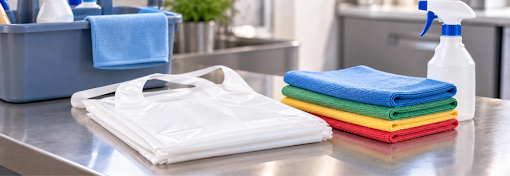
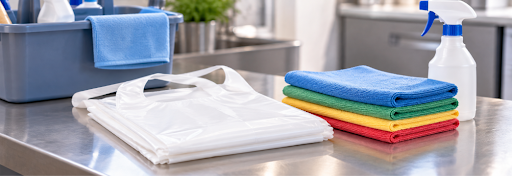
Colour coding can help keep reusable mops and other cleaning equipment assigned to designated areas, reducing the chance of equipment being transferred between incompatible cleaning zones. The exact colour scheme should follow the facility’s environmental-cleaning procedures rather than being assumed to apply universally.
Mops, buckets and cloths should also be managed according to the facility’s cleaning procedures and manufacturer instructions. Clear labelling, staff training, and consistent application of the chosen system help maintain separation between cleaning areas.
How Often Should Mop Heads Be Replaced or Laundered?
Reusable mop heads should be cleaned, laundered, or replaced according to the manufacturer’s instructions and the facility’s environmental-cleaning procedure. Mop heads that remain visibly soiled, become damaged or no longer perform effectively should be removed from service.
Reusable mop heads should also be dried and stored in a way that reduces the chance of remaining damp or becoming contaminated before their next use. Facilities with frequent cleaning schedules may keep multiple mop heads available, so clean equipment is ready when required.
What Standards Apply to Cleaning and Disinfecting in Australian Healthcare?
Australian healthcare cleaning and disinfection practices are guided by national infection-prevention recommendations together with applicable accreditation, regulatory and organisational requirements. Healthcare facilities should use a risk-based approach that reflects their services, patient population, and likelihood of infection transmission.
The Australian Guidelines for the Prevention and Control of Infection in Healthcare provide evidence-based recommendations for healthcare settings, including standard and transmission-based precautions. The guidance is intended to be applied according to the risks and circumstances of the individual healthcare setting rather than through one identical procedure for every organisation.
References