Instrument tray sleeves create a disposable barrier between dental trays and clinical surfaces, helping reduce cross-contamination and support efficient operatory turnover. Correctly sized sleeves protect trays from contamination while complementing established cleaning, disinfection and instrument reprocessing procedures.
Every dental procedure begins long before treatment starts. Behind the scenes, clinicians and dental assistants prepare instruments, organise workstations and implement infection prevention measures that help protect both patients and staff throughout every appointment.
During routine procedures, instrument trays move between sterilisation areas, treatment rooms and clinical work surfaces. Even when validated cleaning and sterilisation procedures are followed, trays remain high-touch items that can contribute to cross-contamination if appropriate barrier protection is not used.
Using Livingstone Instrument Tray Sleeves alongside effective hand hygiene, environmental cleaning and instrument reprocessing provides an additional protective barrier between reusable trays and clinical work surfaces. Designed to fit standard dental trays, instrument tray sleeves 10.5 x 14 inch help support efficient operatory workflows while reinforcing consistent infection prevention practices. Explore the complete Dental Infection Control Barriers collection for practical barrier solutions designed for busy dental clinics.
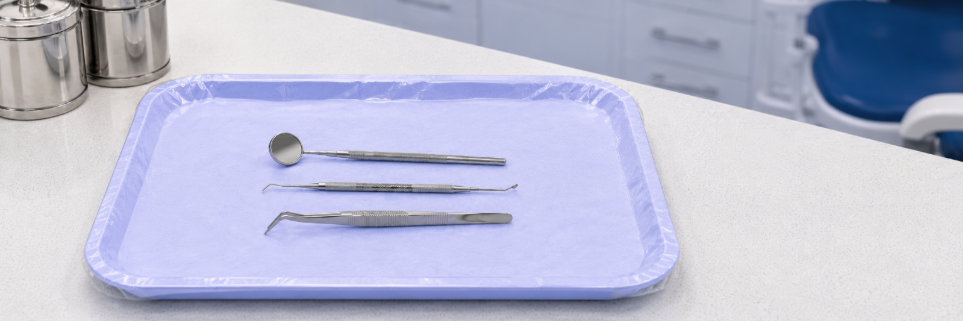
Supporting Infection Control with Instrument Tray Sleeves
Instrument tray sleeves create a disposable barrier between reusable trays and clinical surfaces, helping reduce cross-contamination during dental procedures. Using Livingstone instrument tray sleeves supports infection prevention by protecting trays from splatter, aerosols and contaminants while improving consistency across everyday clinical workflows.
Dental procedures routinely generate aerosols, saliva, blood and other biological contaminants that may settle on instruments, trays and surrounding work surfaces.
Although reusable trays undergo validated cleaning and reprocessing, adding a disposable barrier provides another layer of protection during patient treatment.
Rather than replacing established infection prevention procedures, tray sleeves complement existing protocols by reducing direct contamination of reusable tray surfaces throughout the appointment.
How do instrument tray sleeves help reduce cross-contamination?
Instrument tray sleeves help reduce cross-contamination by preventing direct contact between reusable trays and contaminated instruments or clinical surfaces. Removing and replacing the sleeve after every patient helps minimise contamination while supporting validated infection prevention protocols.
During treatment, trays come into contact with contaminated instruments, gloves and work surfaces multiple times.
Using disposable tray sleeves helps:
- Protect reusable tray surfaces from contamination
- Reduce handling of contaminated trays
- Support cleaner operatory workstations
- Minimise environmental contamination during procedures
Once treatment is complete, the sleeve is removed and discarded before the tray enters the standard reprocessing workflow.
This simple process supports safer instrument handling while reducing opportunities for cross-contamination between appointments.
Why should dental clinics use instrument tray sleeves 10.5 x 14 inch?
Instrument tray sleeves 10.5 x 14 inch are designed to fit standard dental trays, providing consistent coverage that helps improve barrier protection and simplifies infection prevention procedures across multiple operatories.
Correctly fitting sleeves remain securely positioned throughout treatment while protecting the tray beneath.
Using standardised sleeve sizes also allows practices to implement consistent infection prevention protocols across every treatment room.
Maintaining the same barrier system throughout the practice reduces variation and makes staff training easier.
How do Livingstone instrument tray sleeves improve operatory workflow?
Livingstone instrument tray sleeves help improve operatory efficiency by reducing tray cleaning between patients and allowing staff to prepare treatment rooms more quickly without compromising infection prevention standards.
Preparation and turnover are important parts of every appointment.
After each procedure, clinicians can:
- Remove the contaminated sleeve
- Dispose of it appropriately
- Inspect the reusable tray
- Apply a fresh sleeve before the next patient
This process reduces unnecessary cleaning of tray surfaces while supporting efficient patient turnover during busy clinical sessions.
Small workflow improvements like these help practices maintain productivity while continuing to prioritise patient safety.
What infection prevention practices should every dental clinic follow?
Effective infection prevention relies on multiple procedures working together. Instrument tray sleeves provide additional protection when combined with hand hygiene, personal protective equipment, environmental cleaning and validated instrument reprocessing.
Apply disposable barriers before every procedure
Fit a clean instrument tray sleeve during operatory set-up before placing sterile instruments onto the tray.
Replace sleeves between patients
Instrument tray sleeves are designed for single-patient use and should be removed immediately after treatment.
Continue validated instrument reprocessing
Tray sleeves protect reusable trays but do not replace cleaning, disinfection and sterilisation of reusable dental instruments.
Follow documented infection prevention protocols
Consistent procedures help maintain high standards of infection prevention while supporting regulatory compliance.
Why does operatory organisation support better infection control?
Well-organised treatment rooms encourage consistent infection prevention by making barrier products readily available whenever they are needed. Accessible supplies help reduce unnecessary movement and improve workflow efficiency throughout the clinical day.
Keeping disposable barrier products close to the treatment area encourages routine use during every procedure.
Practices that standardise products such as Livingstone instrument tray sleeves often find it easier to maintain consistent infection prevention routines while reducing preparation time between appointments.
Simple organisational improvements contribute to safer and more efficient clinical workflows without increasing staff workload.
What should you consider before you buy instrument tray sleeves online?
Before you buy instrument tray sleeves online, confirm that the sleeve dimensions match your practice’s standard trays, evaluate material quality and choose products designed to support validated infection prevention procedures.
When selecting disposable tray sleeves, consider:
- Tray compatibility
- Sleeve dimensions
- Material durability
- Ease of application
- Bulk packaging options
- Reliable supply for high-volume practices
Choosing appropriately sized instrument tray sleeves 10.5 x 14 inch helps reduce movement during procedures while supporting consistent barrier protection.
Supporting safer dental clinics every day
Infection prevention depends on consistent everyday practices rather than a single product. Hand hygiene, validated instrument reprocessing, environmental cleaning and appropriate barrier protection all contribute to reducing cross-contamination within the dental operatory.
Livingstone instrument tray sleeves provide a practical disposable barrier that helps protect reusable trays while supporting efficient operatory workflows. When combined with documented infection prevention procedures and appropriate clinical protocols, instrument tray sleeves 10.5 x 14 inch help dental teams maintain cleaner, safer and better organised treatment environments.
Explore the Livingstone Dental Infection Control Barriers collection for practical infection prevention solutions designed to support modern dental practices.
References
Australian Dental Association 2024, Guidelines for Infection Prevention and Control, 5th ed., Australian Dental Association, Sydney.
National Health and Medical Research Council (NHMRC) & Australian Commission on Safety and Quality in Health Care (ACSQHC) 2019, Australian Guidelines for the Prevention and Control of Infection in Healthcare.