When something gets into your eye, you need to act quickly. Dust, dirt, small particles and some substances can cause discomfort and irritation. Having an appropriate eyewash solution available can make first-aid response easier when it is needed.
A Saline 0.9 Percent Sodium Chloride Eyewash and Irrigation Solution is designed for eye irrigation and other suitable irrigation needs. It provides a sterile saline option that can be kept in first-aid areas, healthcare settings and workplaces where quick access to an irrigation solution matters.
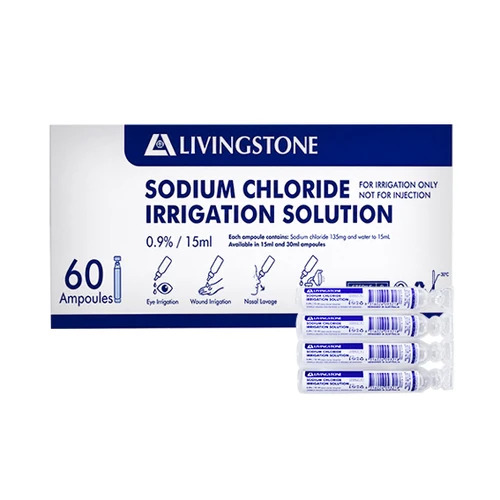
For organisations that regularly manage medical and first-aid supplies, Livingstone International provides a range of products for healthcare and workplace needs. Its 0.9% sodium chloride solution is supplied in sterile 15 mL ampoules, with 60 ampoules in a box.
What Is 0.9% Sodium Chloride Solution Used For?
The main reason this type of saline is kept on hand is irrigation.
Eye irrigation involves flushing the eye to help remove unwanted material or substances from its surface. A sterile saline solution can be used for suitable irrigation purposes according to the product instructions and the situation.
Common situations may include exposure to:
- Dust
- Loose particles
- Dirt
- Other minor irritants
- Substances that need to be flushed from the eye
The correct response depends on what has entered the eye. A simple particle and a chemical exposure should not be treated in exactly the same way.
For example, the Australian Government’s clinical guidelines for chemical exposure state that affected eyes should be irrigated for at least 15 minutes following significant chemical exposure, with further assessment where needed.
Why Keep Saline for Eye Irrigation in a First-Aid Area?
Eye problems can happen without warning. A person working in a workshop may get dust in their eye. Someone in a laboratory may experience an accidental splash. Even routine workplace activities can sometimes result in eye exposure.
This is why access matters.
Keeping an appropriate Saline eyewash solution in an accessible first-aid area means staff do not have to search for a suitable product when an eye needs flushing.
The solution should be stored where people know how to find it. In workplaces with higher eye-exposure risks, eyewash facilities and first-aid arrangements should also match the relevant workplace safety requirements.
How Does Saline Help With Eye Irrigation?
The purpose of irrigation is to flush the eye rather than simply wipe the surface.
A saline solution provides liquid that can be directed across the eye to help wash away unwanted material. This can be more suitable than trying to remove a particle by rubbing the eye.
Rubbing can make an irritated eye feel worse and may cause additional discomfort.
If something is stuck in the eye or the eye has been exposed to a harmful substance, the situation needs to be assessed carefully. Saline should not be viewed as a treatment for an eye injury itself.
The immediate aim of irrigation is to flush the eye when appropriate. Further medical assessment may still be required.
When Should You Seek Medical Attention?
Not every eye irritation needs the same response.
If the irritation continues after flushing, the person has ongoing pain, vision changes, significant redness or another concerning symptom, medical assessment is important.
Chemical exposure requires particular care. Do not delay irrigation while trying to work out exactly what happened. The Australian Government’s clinical guidance recommends eye irrigation for significant chemical exposures and ophthalmological review when symptoms continue after irrigation.
If the exposure is serious or you are unsure what to do, seek urgent medical advice.
The important point is that eyewash is part of first response. It does not replace professional treatment when an eye injury is serious.
Why Are Individual Ampoules Useful?
Packaging is one of the practical features worth considering when choosing an irrigation solution.
The Livingstone product comes in 15 mL sterile ampoules, with 60 ampoules per box. Individual ampoules can be useful because you can open one when required instead of opening a larger container.
This format can work well in first-aid cupboards, treatment areas and other places where smaller quantities are more convenient.
It can also make stock management easier. Staff can see how many unopened units are available and replace supplies as they are used.
Most importantly, check the packaging before use. Do not use an ampoule if it is damaged or otherwise unsuitable.
What Are the Benefits of a 15 mL Format?
A 15 mL ampoule offers a relatively small quantity for an individual use.
That can be useful when you need a compact product for a first-aid kit or treatment area. It avoids the need to store a large bottle when smaller amounts are more practical.
The format can also make it easier to distribute supplies across different areas of a workplace.
For example, instead of keeping one large container in a central room, an organisation may be able to keep suitable quantities in first-aid locations according to its needs and procedures.
Saline Solution for Eye Irrigation in the Workplace
Some workplaces have a greater chance of eye exposure than others.
Workshops, laboratories, manufacturing areas, construction sites and cleaning environments may involve dust, particles or substances that can affect the eyes.
In these settings, first-aid planning should consider the actual risks present at the workplace.
Simply keeping a bottle of saline in a cupboard is not enough if workers cannot access it quickly. Staff should know where eyewash supplies are kept and what their workplace procedures require.
Where chemical risks are present, the workplace should also follow the relevant safety procedures for those substances.
What Should You Check Before Buying Sodium Chloride Eyewash?
Choosing an irrigation product should involve more than checking the price.
Check the concentration
The product should clearly state the sodium chloride concentration. The Livingstone product is a 0.9% sodium chloride solution.
Check whether it is sterile
If your procedure requires a sterile product, make sure the packaging and product specifications clearly state that it is sterile.
Check the container size
Consider how much solution you are likely to need and whether individual ampoules are suitable for your first-aid arrangements.
Check the quantity
The Livingstone product contains 60 sterile 15 mL ampoules per box. This may be useful for workplaces that need multiple units available.
Check the intended use
Do not assume that every saline product has the same purpose. Read the product information and follow the manufacturer’s directions.
What Should You Avoid When Using Eyewash?
A few simple mistakes can make an eye emergency harder to manage.
Do not rub the eye. If a particle is causing irritation, rubbing may increase discomfort.
Do not use a damaged ampoule. Check the packaging before opening.
Do not reuse opened single-use packaging. Follow the product instructions for disposal after use.
Do not delay professional care when symptoms are serious. Saline can support irrigation, but it is not a substitute for medical assessment.
Do not assume every eye exposure is minor. Chemical exposures and injuries involving vision changes need prompt attention.
Where Can 0.9% Sodium Chloride Solution Be Kept?
The best location depends on your workplace.
First-aid rooms, medical treatment areas, clinics and workplace emergency stations are common places where suitable irrigation supplies may be kept.
The key is accessibility. Staff should not have to spend several minutes looking for the product during an eye exposure.
It is also worth checking supplies during routine first-aid inspections. Look at expiry dates, packaging condition and the number of units remaining.
A simple stock check can prevent an empty first-aid cabinet when an eyewash product is needed.
Why Choose Livingstone Saline?
The Livingstone Saline 0.9 Percent Sodium Chloride Eyewash and Irrigation Solution is supplied as sterile 15 mL ampoules. Each box contains 60 ampoules, giving workplaces a compact way to keep individual units available.
The smaller format can be useful for first-aid and healthcare supply management where sealed units are preferred.
For organisations purchasing healthcare consumables regularly, checking pack size and product specifications before ordering can also make stock planning easier.
Conclusion
A suitable saline solution can be an important part of an eye-irrigation and first-aid setup. Its main value is providing a ready-to-use sterile solution for appropriate irrigation tasks when an eye needs flushing.
The Saline 0.9 Percent Sodium Chloride Eyewash and Irrigation Solution from Livingstone International comes in sterile 15 mL ampoules, with 60 units supplied per box. This compact format can make it easier for healthcare providers and workplaces to keep individual units available.
Choose your eyewash supplies according to the risks in your environment, follow the product instructions and make sure staff know where the supplies are kept. For serious eye injuries or chemical exposures, prompt medical assessment remains important.
FAQs
1. What is 0.9% sodium chloride eyewash used for?
It is used for suitable eye irrigation tasks, such as flushing unwanted particles or certain irritants from the eye. Follow product directions and seek medical care when required.
2. Why is saline used for eye irrigation?
Saline provides a sterile liquid that can be used to flush the eye. It can help remove unwanted material without relying on rubbing or wiping the eye.
3. How much solution is in each Livingstone ampoule?
The Livingstone product is supplied in 15 mL sterile ampoules. Each box contains 60 ampoules, making the format suitable for keeping multiple units available.
4. Can saline replace medical treatment for an eye injury?
No. Saline may support immediate irrigation, but it does not replace professional assessment. Persistent pain, vision changes or serious exposure requires appropriate medical attention.
5. How should saline ampoules be stored?
Keep the ampoules according to the manufacturer’s storage instructions and protect the packaging from damage. Check the packaging before use and do not use damaged units.
6. Can saline be used after chemical exposure to the eye?
Eye irrigation is an important first response to chemical exposure. Australian Government guidance recommends irrigation for significant exposures, followed by medical assessment when symptoms persist.