When breathing becomes difficult, every breath matters. Whether someone is experiencing an asthma flare-up, a chronic obstructive pulmonary disease (COPD) exacerbation or another respiratory condition, the priority is delivering prescribed medication to the lungs effectively.
While inhalers and spacers are suitable for many respiratory treatments, nebulisers continue to play an important role for patients who cannot use handheld devices correctly or who require a different delivery method under medical guidance. For pharmacies and healthcare providers, having access to reliable respiratory accessories is equally important. The Livingstone Adult Jet Nebuliser Mask Set is one option designed for use with compatible nebuliser systems in clinical and prescribed home care settings. It forms part of Livingstone’s Pharmacy Protection & Safety collection, which includes a wide range of products used to support respiratory care, infection prevention and everyday pharmacy operations.
Understanding when nebulisers are appropriate, how they work and how to maintain them correctly enables pharmacy teams to answer common questions confidently while helping patients use prescribed equipment safely and effectively.
Why are nebulisers still used when inhalers are effective?
Most people with asthma can use a puffer and spacer effectively, but nebulisers remain useful when inhalers are unsuitable. They may be prescribed for patients with coordination difficulties, physical or cognitive limitations, specific respiratory conditions or a need for supplemental oxygen during treatment.
For many years, nebulisers were commonly viewed as a stronger or more effective option than inhalers. Current Australian asthma guidance indicates that a puffer used with a spacer can work just as well as a nebuliser for many people experiencing asthma symptoms.
Puffers and spacers are generally faster, easier to transport and simpler to use outside a clinical setting. However, device selection should always reflect the patient’s condition, prescribed medication and ability to use the equipment correctly.
A clinician may recommend nebulised therapy when:
- the patient cannot coordinate inhaler technique
- physical weakness or reduced dexterity affects device use
- cognitive impairment makes inhaler instructions difficult to follow
- the prescribed medicine is intended for nebulised delivery
- supplemental oxygen is required during treatment
- a hospital, aged care or home care plan specifies nebuliser use.
Nebulisers do not replace inhalers. They provide another delivery option when normal inhaler use is impractical or clinically unsuitable.
What is an adult jet nebuliser mask set?
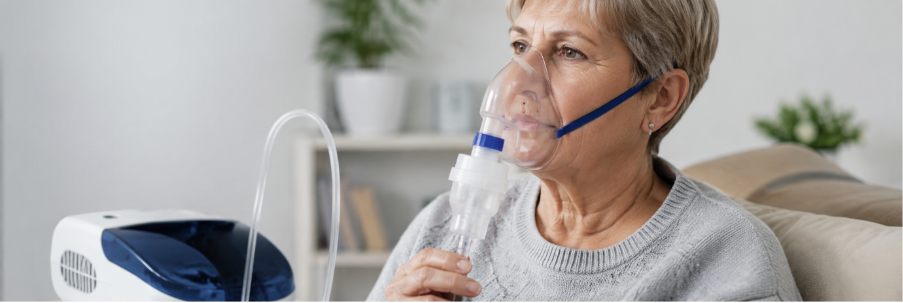
An adult jet nebuliser mask set delivers prescribed liquid medication as a fine mist that can be inhaled through the nose and mouth. It usually includes a face mask, medication cup and tubing that connects to a compatible compressor or gas source.
A jet nebuliser uses compressed air to pass through liquid medication inside the cup. This process creates an aerosol that the patient breathes in over several minutes.
Unlike a metered-dose inhaler, a nebuliser does not require the patient to press the device and inhale at the correct moment. The person can breathe normally while wearing the mask, which may be helpful when they are tired, short of breath or unable to follow coordinated inhaler steps.
The mask should fit securely over the nose and mouth without causing unnecessary pressure. A poor fit may allow more aerosol to escape into the surrounding air and reduce the amount available for inhalation.
Who may need an adult jet nebuliser mask set?
Adult nebuliser mask sets are used in hospitals, medical centres, aged care facilities, community care and prescribed home treatment. They are intended for adults who have been assessed as requiring medication through a compatible nebuliser system.
Potential users may include:
- Adults receiving prescribed nebulised bronchodilators
- People experiencing COPD exacerbations
- Older adults with limited coordination or hand strength
- Patients with physical or cognitive conditions that affect inhaler use
- Hospital inpatients receiving respiratory treatment
- Aged care residents with an established respiratory management plan
- Patients whose doctor has prescribed nebulised therapy at home
A nebuliser should not be used simply because it appears more powerful than an inhaler. The medication, dose, delivery device and treatment frequency should be determined by an appropriate healthcare practitioner.
Pharmacy staff should encourage patients and carers to follow their written treatment plan and seek medical advice if symptoms worsen or treatment is not providing the expected relief.
How should a nebuliser mask set be used safely?
A nebuliser mask should be assembled, used and maintained according to the product instructions and the patient’s treatment plan. Correct positioning and regular cleaning help maintain reliable aerosol delivery and reduce contamination risks.
During treatment, the patient should usually sit upright and place the mask securely over the nose and mouth. The medication cup should remain upright to maintain consistent mist production.
General use considerations include:
- wash or sanitise hands before handling the equipment
- check that all parts are connected securely
- add only the prescribed medication
- keep the medication cup upright
- breathe normally through the mask
- complete the prescribed treatment
- seek medical advice if unusual symptoms occur.
Nebuliser accessories should never be shared between patients because sharing masks, cups or tubing can increase the risk of cross-contamination.
How should nebuliser masks and cups be cleaned?
Reusable nebuliser components should be cleaned and dried according to the manufacturer’s instructions. Proper maintenance reduces contamination risks and helps ensure effective medication delivery throughout the product’s service life.
Good maintenance practices include:
- Cleaning reusable parts after each treatment
- Following the manufacturer’s cleaning instructions
- Allowing components to dry completely
- Storing equipment in a clean, dry location
- Inspecting the mask, cup and tubing regularly
- Replacing cracked or damaged components
- Following recommended replacement schedules
Tubing should only be cleaned if the manufacturer recommends doing so.
What features matter when choosing an adult nebuliser mask set?
Compatibility, mask fit, tubing length and component quality are key considerations when choosing an adult nebuliser mask set. These factors help ensure the equipment works correctly with compatible nebuliser systems.
Important purchasing considerations include:
- adult sizing
- compatibility with the nebuliser
- secure mask fit
- stable medication cup
- 2-metre tubing
- clear product specifications
- availability of replacement accessories.
Healthcare organisations looking to buy nebuliser masks online should confirm compatibility and intended use before ordering. The Livingstone nebuliser mask is designed for use with compatible nebuliser equipment across hospitals, pharmacies, aged care and prescribed home care.
What should patients remember about nebuliser treatment?
Nebulisers remain an important treatment option for selected patients. Correct device selection, proper maintenance and following medical advice all contribute to safe and effective respiratory care.
Nebulisers remain valuable for selected patients, but they are not automatically more effective than inhalers and spacers. The best device is the one prescribed by the treating clinician and used correctly.
A well-fitting mask, correctly assembled medication cup and properly connected tubing all contribute to effective aerosol delivery. Cleaning equipment thoroughly and replacing worn components also helps maintain hygiene and performance.
References
- National Asthma Council Australia 2023, Nebuliser use and care, viewed 1 July 2026.
- Cleveland Clinic 2026, Home nebulizer, viewed 1 July 2026.