Why is hair contamination such a significant workplace risk?
Hair contamination is one of the most common and preventable causes of product rejection, hygiene non-compliance, and failed audits across Australian food, manufacturing, and workplace settings. A single loose strand in the wrong place can halt a production line, trigger a customer complaint, or put a HACCP certification at risk. Yet many workplaces still rely on cheap, poorly fitting hair covers that give the appearance of compliance without delivering it. A quality disposable bouffant cap is the difference between a hygiene programme that genuinely works and one that looks good on paper.
What Is a Bouffant Cap and How Is It Different from a Standard Hairnet?
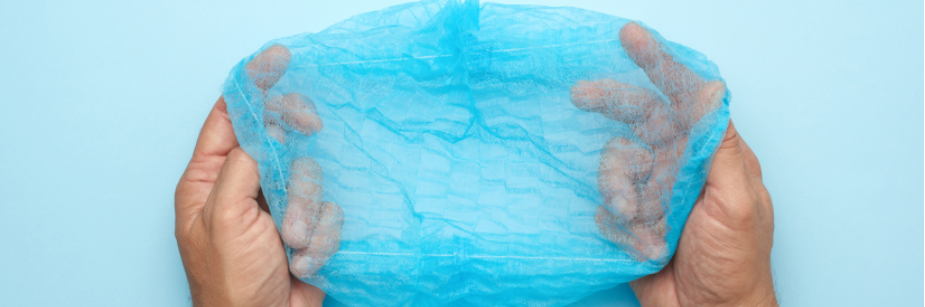
A blue bouffant cap is a loose-fitting, elasticised head cover made from nonwoven material that fully encloses the hair, scalp, and ears. Unlike a standard hairnet, which is made from nylon or polyester mesh with visible openings, a nonwoven bouffant cap has no gaps or perforations. Hair cannot slip through the material, making it far more effective at containing both stray hairs and fine particulate shed from the scalp.
Bouffant caps also stand out visually, which matters significantly for compliance. A hairnet blends into the hair and can be difficult to spot at a glance during a hygiene check. A blue bouffant cap is immediately visible, making it easy for supervisors to confirm compliance across an entire team without slowing down operations.
Which Industries Require Bouffant Caps as Standard PPE?
Disposable bouffant caps are not limited to any single industry. Their role is to manage the boundary between a contaminated outside environment and a controlled inside space, which is a challenge that applies across a wide range of Australian workplaces.
- Food processing and production facilities operating under HACCP or BRCGS certification
- Pharmaceutical manufacturing and compounding environments
- Laboratories, cleanrooms, and research facilities with ISO classification requirements
- Operating theatres, hospital wards, and healthcare settings
- Catering, commercial kitchens, and food service environments
- Electronic and medical device manufacturing where particulate control is mandatory
- Packaging operations and any production zone with direct or indirect product contact
What Does HACCP Certification Mean for a Bouffant Cap?
HACCP (Hazard Analysis and Critical Control Points) is the internationally recognised food safety management framework used across Australian food businesses. A HACCP-certified bouffant cap has been assessed and verified as fit for use in food production environments, confirming that the material and construction meet the hygiene standards required to prevent hair and particulate contamination from reaching food products.
For businesses operating under HACCP, BRCGS, or SQF certification, using a HACCP-certified bouffant cap is not just best practice. It is an auditable part of the hygiene programme. Supplying workers with uncertified or substandard head covers creates a gap in the food safety system that auditors will identify and that can put certification at risk.
What Features Matter in a Quality Disposable Bouffant Cap?
Nonwoven Material for Full Containment
The most critical feature of any bouffant cap is a nonwoven construction with no gaps or openings. Nonwoven polypropylene or similar material prevents hair from slipping through and blocks fine particulate shed from the scalp. This is fundamentally different from mesh-based hairnets, which allow fine particles to pass through freely.
Double Elastic Band for a Secure, Comfortable Fit
A single elastic band can loosen during a long shift, allowing the cap to slip and exposing hair at the neckline or forehead. A double elastic band creates a more secure fit that stays in place throughout the working day without causing discomfort. For workers wearing bouffant caps across extended shifts, this is the difference between a PPE item that gets worn correctly and one that gets adjusted or removed.
21-Inch Sizing for Universal Coverage
A 21-inch bouffant cap accommodates the majority of hairstyles and head sizes comfortably. The balloon-like fit of the bouffant design creates volume above the head to contain thick or long hair fully without the cap sitting tightly against the hair, which can cause loose strands to protrude at the edges.
Latex-Free Construction
Latex allergies are a recognised workplace health and safety concern. A latex-free bouffant cap is safe for all workers regardless of allergy status, eliminating the risk of allergic reactions from prolonged skin contact with the elastic band.
Why Does the Blue Colour Matter in a Workplace Setting?
Colour coding is a well-established contamination control strategy in food production and hygiene-sensitive environments. Blue is a particularly practical choice for disposable PPE because it is not a colour that naturally occurs in most food products, making any detached cap fragment or piece immediately visible against a product or production surface.
Blue also enables immediate visual compliance checking. A supervisor can confirm at a glance whether all workers in a zone are wearing their bouffant caps correctly without needing to stop production or conduct individual checks.
The Livingstone Bouffant Cap: Built for Compliance at Wholesale Volume
The Livingstone Disposable Bouffant Cap is designed to meet the full range of requirements for hygiene-critical Australian workplaces. HACCP certified and constructed from nonwoven material with a double elastic band, it provides reliable full-head coverage that stays in place across a full working shift. The latex-free construction makes it safe for all workers, and the blue colour supports visual compliance and colour-coded zone management.
Available in cartons of 1,000, it is ideal for workplaces requiring a consistent supply of wholesale medical consumables without compromising on quality or compliance. For a broader selection, explore the Livingstone Head Protection and Disposable Cap Collection.
Frequently Asked Questions
How often should disposable bouffant caps be changed?
Disposable bouffant caps are single-use items and should be replaced at the start of each shift, when re-entering a controlled zone after a break or bathroom visit, or whenever the cap has been touched, adjusted, or removed. Reusing a disposable cap undermines its contamination control function and introduces hygiene risks that a fresh cap is designed to prevent.
Are bouffant caps required under Australian food safety law?
Australia’s Food Standards Code Standard 3.2.2 requires food businesses to take all reasonable measures to ensure that people do not contaminate food. Wearing appropriate hair restraints such as a HACCP-certified bouffant cap is widely recognised as a reasonable measure in food handling and production environments.
Can a bouffant cap be worn over other head coverings?
Yes. A bouffant cap can be worn over religious head coverings, including hijabs and turbans, to ensure full compliance with workplace hygiene requirements while respecting workers’ religious and cultural practices. The 21-inch size and elastic design provides sufficient volume to accommodate most additional head coverings.
Tips for Getting the Best Results from Disposable Bouffant Caps
- Provide a mirror at the donning station so workers can confirm full hair coverage before entering a controlled zone
- Train all workers on correct donning technique: the cap should sit below the hairline at the front and fully cover the ears and nape of the neck
- Include bouffant cap replacement as a documented step in your re-entry procedure after breaks, bathroom visits, and zone changes
- Store caps in a clean, dry dispenser away from dust and direct sunlight
- Use the blue colour as a passive compliance check: if you can’t see a blue cap, the worker is not in compliance
- Purchase in carton quantities to ensure consistent supply and reduce the per-unit cost at wholesale pricing
In any workplace where hygiene matters, the bouffant cap is not a minor detail. It is the first line of defence against one of the most common and preventable sources of contamination. Choosing a HACCP-certified, nonwoven, latex-free bouffant cap with a double elastic band is the baseline for a hygiene programme that actually does what it is supposed to do.
For Australian workplaces that need consistent, reliable, and wholesale disposable bouffant cap supply, the Livingstone range delivers on quality, compliance, and value without compromise.
References
Food Standards Australia New Zealand 2024, Standard 3.2.2 food safety practices and general requirements, FSANZ, viewed June 2026.
HACCP Mentor 2024, Should you use hair nets or not?, HACCP Mentor, viewed June 2026.
Lab Pro Inc. 2021, Everything you need to know about bouffant caps, Lab Pro Inc., viewed June 2026.
Safe Work Australia 2024, Managing risks in the workplace, Safe Work Australia, viewed June 2026.