Selecting the right laboratory thermometer is more consequential than it might appear. In scientific research, healthcare, pharmaceutical storage, and industrial quality control, inaccurate temperature measurement can compromise results, breach compliance requirements, or put patient safety at risk. With a broad range of thermometer types available, each suited to specific applications, temperature ranges, and accuracy requirements, understanding the differences is essential before making a purchasing decision.
This guide breaks down the most common laboratory thermometer types found within a standard laboratory thermometer range, their appropriate applications, and the key factors to consider when selecting the right instrument. For those also reviewing broader equipment needs, the laboratory instruments collection covers a wider set of options that sit alongside temperature measurement in a complete laboratory setup.
What Are the Main Types of Laboratory Thermometers?
Liquid in Glass Thermometers
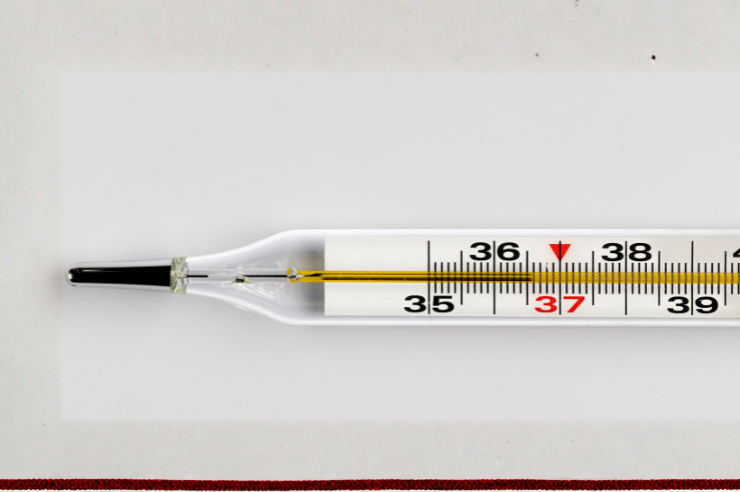
Liquid-in-glass thermometers are among the most traditional and widely used instruments in laboratory settings. They operate by measuring the expansion of a liquid, typically alcohol or a non-mercury alternative, within a sealed glass tube. These thermometers are valued for their simplicity, reliability, and relatively low cost.
They are well suited to general chemistry and biology applications where moderate precision is required, and electronic equipment is unnecessary or impractical. However, they are fragile, require careful handling, and are less suited to environments where rapid or continuous readings are needed.
Digital Thermometers with Probe
Digital thermometers paired with interchangeable probes are among the most versatile options for laboratory and healthcare environments. Depending on the probe type selected, they can measure the temperature of liquids, semi-solids, surfaces, or ambient air. Insertion probes are ideal for liquid samples and biological media, while surface probes are used for flat materials and equipment monitoring.
These thermometers offer fast readings, clear digital displays, and often include data logging functions useful for compliance documentation. They are commonly used in microbiology, pathology, pharmaceutical preparation, and food science laboratories.
Infrared Thermometers
Infrared thermometers allow non-contact temperature measurement by detecting thermal radiation emitted from a surface. They are particularly useful when measuring hot, hazardous, or difficult-to-access surfaces where physical contact is not practical or safe.
In laboratory settings, infrared thermometers are used for equipment monitoring, reagent storage checks, and surface temperature verification. They are not appropriate for measuring internal liquid temperatures, as they measure surface radiation only.
Platinum Resistance Thermometers (PRTs)
Platinum resistance thermometers offer a high degree of precision and are used in applications where measurement accuracy is critical. They operate by measuring changes in electrical resistance within a platinum element as temperature varies.
PRTs are commonly used in reference laboratories, pharmaceutical manufacturing, and calibration environments. The National Measurement Institute (NMI) calibrates and tests standard platinum resistance thermometers (SPRTs) and industrial platinum resistance thermometers (IPRTs) as part of Australia’s suite of temperature measurement services. For facilities requiring NATA-traceable accuracy, PRTs are often the instrument of choice.
Thermocouple Thermometers
Thermocouple thermometers measure temperature by detecting the voltage generated at the junction of two dissimilar metals. They are available in several probe types including type K, J, N, R, and T, and can measure a wide range of temperatures with precision. They are commonly used in scientific research, material testing, and industrial quality control processes.
What Factors Should You Consider When Choosing a Laboratory Thermometer?
Temperature Range and Accuracy Requirements
The first consideration is the temperature range your application demands. General laboratory work may only require a thermometer accurate within one degree Celsius, while pharmaceutical cold chain monitoring or calibration laboratories may need precision within a fraction of a degree. Always match the instrument’s stated accuracy and resolution to your specific application requirements.
Environment and Application Type
Consider whether your application requires contact or non-contact measurement, whether the thermometer will be used in wet or chemically aggressive environments, and whether portability or fixed installation is more appropriate. Digital thermometers with waterproof ratings are preferable in wet laboratory conditions, while infrared models are better suited to high-heat or hazardous environments.
What is the most accurate type of laboratory thermometer?
Platinum resistance thermometers (PRTs), particularly standard platinum resistance thermometers (SPRTs), offer the highest level of accuracy and are used as reference instruments in calibration laboratories and pharmaceutical manufacturing.
Do laboratory thermometers need to be calibrated?
Yes. Regular calibration is essential to maintain measurement accuracy and meet regulatory requirements. In Australia, calibration should be traceable to the National Measurement Institute (NMI) and documented with a certificate of accuracy, particularly for healthcare and pharmaceutical applications.
Can I use a digital thermometer instead of a glass thermometer in a laboratory?
In most modern laboratory settings, yes. Digital thermometers with appropriate probes offer faster readings, improved safety (no risk of glass breakage or mercury exposure), and often include data logging functionality that supports compliance and record-keeping requirements.
Where to Source Quality Laboratory Thermometers in Australia
When sourcing laboratory thermometers in Australia, look for suppliers that offer a clearly categorised range across thermometer types, relevant accessories, and supporting instruments. Availability of multiple product options within a single supplier simplifies procurement and supports consistent quality across the laboratory environment.
References
National Measurement Institute (NMI) 2024, Temperature and humidity measurement client services, Australian Government Department of Industry, Science and Resources, viewed June 2025, https://www.industry.gov.au/ja/node/76041
Zenith Sales and Calibrations Pty Ltd 2026, Thermometer calibration guide: ensuring industrial accuracy in Australia, viewed June 2025, https://zenithinstruments.com.au/blogs/news/thermometer-calibration-guide-ensuring-industrial-accuracy-in-australia