As the new school term begins across Australia, school administrators, nurses, and wellbeing staff face a familiar priority: making sure the sickbay is stocked, compliant, and ready for anything. A properly equipped school first aid kit is not just good practice in many states and territories, it is a legal requirement.
Whether you are setting up a sickbay for the first time or auditing your existing supplies, this guide covers exactly what needs to be in your school first aid kit, why each item matters, and how to meet your duty of care obligations from day one of term.
Why a Well-Stocked School Sickbay Matters
Schools are high-traffic environments where accidents, illness, and health incidents occur daily. From minor playground injuries to allergic reactions and asthma episodes, a trained staff member with the right supplies can make a critical difference in outcomes.
Safe Work Australia identifies schools as workplaces with specific obligations under WHS legislation, requiring that first aid equipment is provided, accessible, and appropriate to the hazards present (Safe Work Australia, 2024). State level education departments also publish minimum standards for school sickbay supplies, which vary slightly by jurisdiction.
Beyond compliance, a fully stocked sickbay signals to students, parents, and staff that the school takes wellbeing seriously, a key factor in building trust and confidence in your institution.
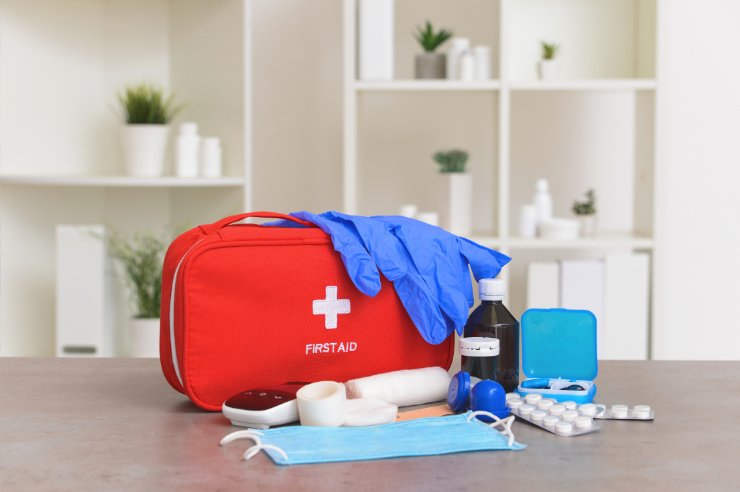
The School Sickbay First Aid Kit Checklist
The following checklist is structured around the most common categories of supplies required in Australian school sickbay settings. Cross reference with your state’s education authority guidelines to confirm jurisdiction-specific requirements.
Wound Care and Bleeding Control
Cuts, abrasions, and bleeding are among the most frequent sickbay presentations in any school. Your wound care supplies should include:
- Sterile wound dressings in multiple sizes (small, medium, and large)
- Adhesive dressings and fabric plasters in bulk quantities for daily use
- Non-adherent dressings for more sensitive or blistered skin
- Conforming and crepe bandages for securing dressings
- Triangular bandages (slings and immobilisation)
- Saline wound wash sachets or eyewash solution (sterile)
- Sterile gauze swabs for wound cleaning
- Medical-grade adhesive tape
Browse Livingstone’s wound care and first aid kit range for school appropriate options that meet Australian standards.
Infection Control Supplies
Sickbays regularly manage infectious presentations. Protecting students and staff from cross contamination is a core obligation.
- Disposable examination gloves (latex free, various sizes)
- Alcohol-based hand rub or hand sanitiser dispenser
- Surgical or procedure face masks
- Disposable aprons or protective gowns
- Resuscitation face shield or pocket mask (CPR use)
- Biohazard or clinical waste bags
- Surface disinfectant wipes for equipment and bed areas
Respiratory and Allergy Emergencies
Asthma is the most common chronic condition affecting Australian children, with approximately one in nine children currently managing the condition (Australian Institute of Health and Welfare, 2023). Schools must be prepared for both asthma and anaphylaxis events.
- Spacer device for use with metered-dose inhalers
- Written asthma and anaphylaxis action plans (individual student plans held on file)
- Adrenaline auto-injector, check your state policy for school stocked requirements
- Pulse oximeter for monitoring oxygen saturation
Pain, Temperature, and General Assessment
- Digital clinical thermometer (non-mercury)
- Cold packs (instant or reusable) for managing swelling and sprains
- Tweezers (splinter removal)
- Scissors (bandage-cutting, blunt-end preferred)
- Safety pins
- Penlight torch for pupil response and ear examination
- Student incident and first aid record forms
Rest and Recovery Supplies
- Disposable bed or examination table paper
- Disposable sick bags (emesis bags)
- Tissues and paper towels
- Blanket or disposable sheet for resting students
- Drinking cups (disposable)
What Should You Check Before the School Term Begins?
A school sickbay audit before term begins is the most efficient way to ensure readiness. Run through the following before students arrive:
- Check expiry dates on all dressings, saline sachets, and disposable items
- Confirm the first aid kit is locked, labelled, and accessible to authorised staff
- Verify that staff with first aid certifications are current (certificates are valid for three years in Australia, with CPR refreshed annually)
- Update the list of students with known medical conditions like asthma, anaphylaxis, epilepsy, and diabetes require specific protocols
- Review and replace any items used or expired during the previous term
- Confirm the location of the nearest AED (automated external defibrillator) on the school grounds
How Do You Choose the Right First Aid Kit for a School?
Schools should select kits that are purpose-built for educational environments rather than relying on generic workplace first aid kits. Key considerations include the number of students enrolled, the types of activities conducted (including sport and excursions), and whether a dedicated school nurse or first aid officer is on staff.
Purpose-built school first aid kits are available in clearly labelled, wall-mounted or portable formats and are designed to be restocked individually, reducing waste and lowering ongoing costs. Explore Livingstone’s school first aid and medical collection for a comprehensive range of kits and consumables designed for Australian school settings.
It is also worth aligning your sickbay kit with the Australian Red Cross First Aid guidelines and your relevant state education authority’s published sickbay standards to ensure full compliance (Australian Red Cross, 2024)
A school sickbay is only as effective as the supplies within it. With a new term underway, now is the optimal time to audit, restock, and organise your first aid resources. From wound care consumables to infection control supplies and emergency preparedness, each item on this checklist supports your school’s duty of care to every student and staff member on site.
Proactive preparation at the start of term reduces reactive pressure throughout the year and ensures that your team can respond with confidence when it matters most.
References:
- Australian Institute of Health and Welfare 2023, Asthma in Australia, AIHW, Canberra, viewed May 2025, < https://www.aihw.gov.au/reports/chronic-respiratory-conditions/asthma>
- Australian Red Cross 2024, First Aid Guidelines, Australian Red Cross, Melbourne, viewed May 2025, < https://www.redcross.org.au/firstaid/guides/>
- Australasian Society of Clinical Immunology and Allergy (ASCIA) 2024, ASCIA Action Plans for Anaphylaxis, ASCIA, Sydney, viewed May 2025, < https://www.allergy.org.au/hp/anaphylaxis/ascia-action-plan-for-anaphylaxis>
- Safe Work Australia 2024, First Aid in the Workplace: Code of Practice, Safe Work Australia, Canberra, viewed May 2025, < https://www.safeworkaustralia.gov.au/sites/default/files/2021-10/code_of_practice_-_first_aid_in_the_workplace_July%202019.pdf>