
When you are working with medical tubing, even a small connector can make a big difference. The way tubes join, split, or carry air matters more than you think. If you have ever seen different connectors and felt confused, you are not alone.
A T-connector tube is one of the most common options used in healthcare. It is simple, useful, and easy to handle. Trusted brands like Livingstone International offer reliable connectors that are widely used in hospitals and home care.
Before we go deeper, it helps to understand why connectors matter. Even a small part like a connector helps keep things running smoothly.
So, what makes a T-connector tube different from others? Let’s break it down in a simple way.
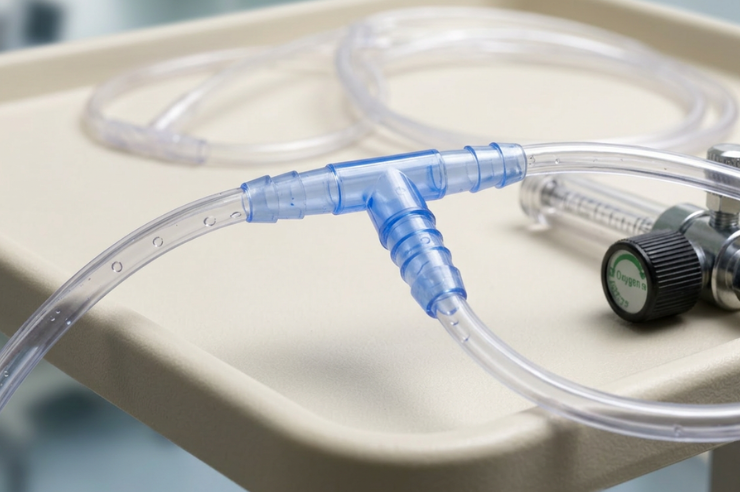
What Is a T-Connector Tube?
A T-connector tube is shaped like the letter “T”. It has three openings.
- One inlet
- Two outlets (or the other way around)
This design allows air or fluid to split into two directions or combine into one. That is why it is often used in oxygen systems and aerosol setups.
You might also hear names like:
- T-connector
- oxygen tubing connector
- oxygen tube connector
- Aerosol T Connector
They all refer to similar uses, but the main idea stays the same – connecting and directing flow.
Why Do You Need a Connector in the First Place?
Let’s keep it simple.
When you use medical tubing, you need a way to join different parts. You may also want to split the flow or control direction.
Without connectors, tubes cannot work together properly.
So yes, a small piece like an oxygen connector port plays a big role in making the system work safely. According to the World Health Organization, safe and proper medical equipment plays a big role in patient care
Types of Connectors You May See
Before we compare, it helps to know the common types:
1. T-Connector Tube
Used to split or combine flow into two directions.
2. Straight Connector
Joins two tubes in a straight line.
3. Y-Connector
Looks like a “Y” shape. Splits flow but at an angle.
4. Elbow Connector
Used to change direction, usually at 90 degrees.
5. Multi-Port Connector
Has more than three openings for complex setups.
T-Connector Tube vs Straight Connector
This is the easiest comparison.
A straight connector connects one tube to another in a simple line. That’s it.
But a T-connector tube does more.
- It can split one flow into two
- It can combine two into one
- It gives more flexibility
So if you just need a simple join, go for straight. But if you need control and branching, the T-connector is better.
T-Connector Tube vs Y-Connector
At first, they may look similar. Both split flow.
But there is a small difference.
A Y-connector splits flow at an angle. A T-connector tube splits it evenly, like a cross path.
Why does this matter?
- T-connectors give balanced flow
- Y-connectors may create uneven flow
So if you want equal distribution, a T-connector is a better choice.
T-Connector Tube vs Elbow Connector
An elbow connector is used when you need to turn the direction of tubing.
For example, if a tube needs to bend around a corner, this connector helps.
But it does not split flow.
A T-connector tube, on the other hand, allows multiple directions at once.
So:
- Elbow = change direction
- T-connector = split or combine flow
T-Connector Tube vs Multi-Port Connector
Multi-port connectors are used in complex systems.
They have many openings and can handle multiple lines at once.
But here is the thing – they are not always needed.
A T-connector tube is simple and easy. It is perfect for basic setups like oxygen delivery.
So unless you need a complex system, a T-connector is often enough.
Where Is a T-Connector Tube Used?
You will find it in many places, especially in healthcare.
Here are some common uses:
- Oxygen therapy systems
- Nebulizer setups
- Aerosol delivery
- Hospital tubing systems
- Home care equipment
That’s why terms like oxygen tubing connector and Aerosol T Connector are often used.
It plays a key role in helping patients get proper airflow.
Conclusion
When it comes to medical tubing, choosing the right connector can make your work easier and safer. A T-connector tube offers flexibility, balance, and simple use. It helps you manage airflow without any confusion.
If you are looking for a reliable option, Livingstone International provides quality connectors designed for safe and smooth performance. Our products, including oxygen tubing connectors and aerosol T Connectors, are made to meet everyday needs.
Choosing the right connector is not hard. You just need to understand your setup and pick what fits best.
FAQs
1. What is a T-connector tube used for?
It is used to split or combine airflow or fluid in medical tubing systems.
2. Is a T-connector tube better than a straight connector?
It depends on your need. If you want to split flow, then yes, it is better.
3. Can I use a T-connector tube for oxygen systems?
Yes, it is commonly used as an oxygen tube connector in oxygen therapy setups.
4. What is the difference between a T-connector and a Y-connector?
A T-connector splits flow evenly, while a Y-connector splits it at an angle.
5. How do I know if the connector will fit my tube?
Check the size of your tubing and match it with the connector size before use.