You know that feeling when you’re in the middle of a procedure, and your handpiece just doesn’t feel right? Or maybe your scaler isn’t cutting as cleanly as it used to. It’s frustrating, isn’t it?
Many dental practices face this challenge. You invest good money in quality dental equipment, but without proper care, even the best tools can let you down. The good news? A solid maintenance routine isn’t complicated.
Let’s walk through how to keep your dental instruments performing at their best for years to come.
Why Maintenance Matters More Than You Think
Here’s the thing: your dental cleaning tools work hard every single day. They’re exposed to blood, saliva, and constant wear. If you neglect them, you’ll notice the difference.
Dull instruments don’t clean properly. They can actually burnish calculus rather than remove it, leaving patients with a false sense of cleanliness.
Sharp scalers and curettes are much more effective. Studies show periodontal hand instruments can dull after just 15 to 45 scaling strokes. That means if you haven’t sharpened this week, your instruments probably aren’t performing at their best.
There’s also the safety factor. Dull tools require more pressure, which increases the risk of slipping and tissue damage. And let’s be honest – no one wants that.
The Daily Care Routine
Start with cleaning, not sterilisation. This is crucial. If you skip proper cleaning, debris can shield microorganisms during sterilisation. The Australian Dental Association guidelines emphasise that if an instrument cannot be cleaned, it cannot be safely reprocessed.
Here’s what you should do after each patient:
- Rinse instruments immediately with warm water (around 35°C). Hot water cooks proteins onto the surface. Cold water solidifies lipids. Warm water is your friend .
- Use mechanical cleaning where possible. Ultrasonic cleaners or instrument washers are far more effective than manual scrubbing. They also reduce the risk of needlestick injuries . The NSW Health guidelines recommend avoiding manual cleaning whenever you can use mechanical methods.
- If you must clean manually, hold instruments low in a dedicated sink filled with lukewarm water and instrument-grade detergent. Never use domestic dishwashing liquid.
Handpiece Maintenance: The Critical Part
Your dental handpieces are probably your most expensive tools. They need special attention.
Lubricate them regularly. Using an automated handpiece lubricating unit like the Assistina 3×3 is recommended over manual lubrication. Why? Because over-lubrication can actually inhibit steam penetration during sterilisation. It can also lead to grit buildup that wears your handpiece out faster.
Check your O-rings. Inspect them monthly and replace any that look worn or damaged. A small O-ring failure can cause big problems.
Don’t forget the waterlines. Test your dental unit water CFU level monthly and shock the waterlines as needed. Biofilm buildup in waterlines is a real concern that can affect patient safety.
Sterilisation Done Right
This is where many practices get confused. Let’s keep it simple.
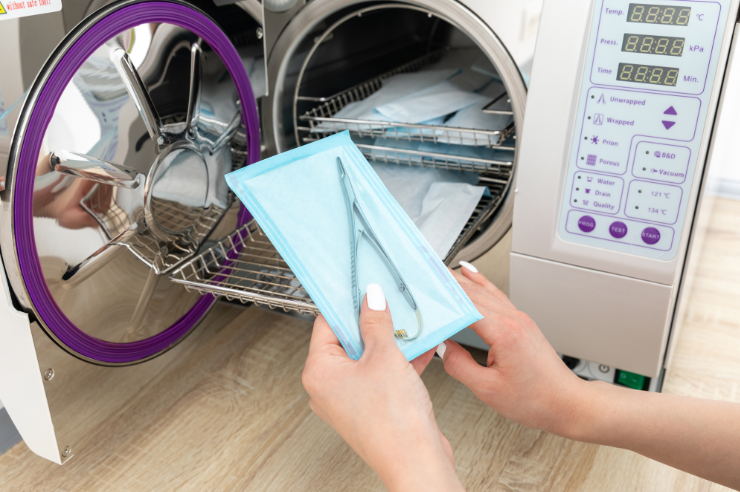
Use steam sterilisation (autoclaving). According to NSW Health guidelines, this is the most efficient and reliable method for sterilising dental instruments. Always follow the manufacturer’s instructions for your specific autoclave model.
Monitor every cycle. Use chemical indicators in every load. Biological indicators (spore tests) should be used at least weekly. The Australian Dental Association stresses that maintaining sterilisation records is essential for demonstrating quality management.
Follow the new standards. Standards Australia released AS 5369:2023 in December 2023, which replaces the older AS/NZS 4187:2014 and AS/NZS 4815:2006. This sets uniform minimum requirements for reprocessing reusable medical devices.
Batch Control: A Simple System
Here’s something many practices overlook. For critical instruments used in surgical procedures, you need batch control identification.
This links a pack of instruments to a specific sterilising cycle. If there’s ever a question about sterility, you can trace exactly which cycle that instrument went through.
The system is simple: record the steriliser number, date, cycle number, and batch numbers on each pack. Keep these records in the patient’s notes.
When to Replace, When to Sharpen
Sharpen regularly. Experts recommend sharpening dental hand instruments at least weekly. You can do this manually with an Arkansas stone and oil, or use a mechanical honing device.
Watch for wear. If an instrument has been neglected for months, bringing it back to a sharp edge can be difficult or impossible. Sometimes, it’s better to invest in new instruments and commit to a proper maintenance routine going forward.
Check ultrasonic inserts. Around 1mm of wear can reduce efficiency by 25%. At 2mm of wear, effectiveness drops by up to 50% . Replace them when needed.
Conclusion:
At Livingstone International, we understand the challenges of running a busy dental practice. We supply a comprehensive range of dental products designed to support precision, hygiene, and compliance.
Whether you need dental cleaning tools, dentist supplies, or infection control solutions, we’re here to help. Our collection includes everything from sterile instruments to disinfectants and gloves – all from reliable brands you can trust.
Frequently Asked Questions
1. How often should I sharpen my dental instruments?
Experts recommend sharpening at least weekly. Dull instruments are less effective and can cause patient discomfort.
2. What’s the best way to clean handpieces?
Use an automated cleaning and lubrication unit where possible. If cleaning manually, follow the manufacturer’s instructions carefully.
3. Why do I need batch control identification?
It links critical instruments to specific sterilisation cycles, allowing you to trace sterility records if needed.
4. What sterilisation standards apply in Australia?
AS 5369:2023 is the current standard. It replaced AS/NZS 4187:2014 and AS/NZS 4815:2006.
5. Can I use a dishwasher to clean dental instruments?
No. Domestic dishwashers are not permitted for cleaning dental instruments.