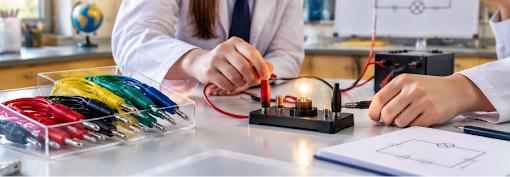
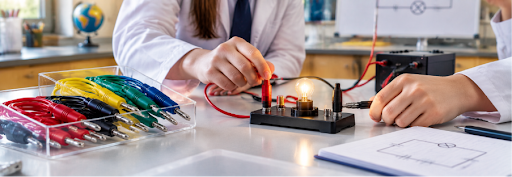
Conducting physics experiments with a pendulum involves setting up a suspended bob, measuring its oscillation period and changing variables such as pendulum length to investigate motion, forces and gravitational acceleration. By recording repeated swings and analysing the results, students can explore principles such as simple harmonic motion and calculate experimental values using basic physics relationships. Before setting up an experiment, it helps to browse a suitable school science physics range, and a dedicated pendulum provides the apparatus needed for classroom demonstrations and practical investigations.
What Is a Simple Pendulum and How Does It Work?
A simple pendulum consists of a mass, known as a bob, suspended from a fixed point by a string or light rod that is free to swing back and forth under the influence of gravity. As the bob moves, it completes repeated cycles called oscillations, and the time taken to complete one full cycle is known as the period.
For relatively small swing angles, the period depends mainly on the length of the pendulum and the local gravitational acceleration, while the mass of the bob has little effect on the timing. This predictable relationship makes pendulums useful for physics experiments because students can investigate motion, measure relationships between variables and compare experimental results against established physics principles.
Pendulums have been studied for centuries, with Galileo often associated with early observations of pendulum motion. The widely repeated story of Galileo observing a swinging lamp in a cathedral remains part of science history, although the exact details of this account are debated.
What Equipment Do You Need to Conduct a Pendulum Experiment?
A basic pendulum experiment requires a sturdy stand and clamp, a length of string or thin cord, a dense bob such as a metal ball, a stopwatch, a ruler or measuring tape, and ideally a protractor or angle indicator to maintain a consistent starting position.
Choosing suitable equipment helps improve the reliability and consistency of experimental results. A lightweight or unstable stand can introduce unwanted movement into the system, while a stretchy string may change length during the experiment and affect measurements. A bob with excessive surface area or an unsuitable shape can increase air resistance and introduce additional measurement error.
Using purpose-built apparatus rather than improvised alternatives helps reduce unnecessary variables before testing begins. Reliable equipment allows students to focus on understanding the relationship between pendulum movements, timing and physical principles.
How Do You Set Up and Run a Basic Pendulum Experiment?
Setting up a pendulum experiment begins with measuring the pendulum length accurately from the fixed pivot point to the centre of the bob. Measuring from the wrong point can create a consistent error across all results.
To begin testing, move the bob to a small starting angle and release it without adding any extra force. A push or uneven release can change the motion and make results less consistent. For more reliable measurements, avoid timing only one swing. Instead, measure the time taken for multiple complete oscillations, often around 20 cycles, then divide the total time by the number of swings to calculate the average period.
Repeating the experiment several times and averaging the results helps reduce the effect of reaction time and small variations between trials. This approach provides more dependable data than relying on a single stopwatch measurement.
How Can You Use a Pendulum to Measure Gravitational Acceleration?
A pendulum can be used to estimate gravitational acceleration by measuring the relationship between its length and period. The formula is expressed as:
T = 2π√(L/g)
Where T represents the pendulum period, L represents the pendulum length and g represents gravitational acceleration.
By rearranging this relationship, students can calculate an estimate of gravitational acceleration after measuring the pendulum length and timing its oscillations. A common method is to test several pendulum lengths and compare the results to identify the relationship between length and period.
This experiment allows students to compare their calculated results with the commonly accepted value of gravitational acceleration near Earth’s surface, which is approximately 9.8 metres per second squared. However, actual measurements may differ because of factors such as air resistance, timing errors, measurement limitations and small variations in local gravity.
What Factors Can Affect the Accuracy of Your Pendulum Results?
Pendulum accuracy is commonly affected by swing angle, air resistance, timing technique, measurement errors and the stability of the support system. Using a larger swing angle can reduce accuracy because the simple pendulum formula assumes relatively small oscillations.
Air resistance and movement in the supporting stand can introduce additional disturbances that affect the motion over time. Human reaction time when starting and stopping a stopwatch can also influence results, which is why measuring multiple oscillations and repeating trials generally produces more dependable data.
Careful measurement practices, consistent release techniques and stable equipment all contribute to improving the quality of experimental results. Small improvements in setup and testing methods can make a noticeable difference when comparing experimental findings.
What Safety and Practical Considerations Should You Keep in Mind?
Running a pendulum experiment safely mainly depends on maintaining a stable setup and ensuring the swinging area is clear. The stand and clamp should be firmly secured before releasing the bob, and the pendulum path should remain free from people, equipment and other obstructions.
Using a bob with suitable weight and smooth edges helps reduce unnecessary safety risks, while checking that all connections are secure prevents equipment from becoming detached during operation. A well-prepared workspace allows students to focus on observing motion and collecting accurate results without avoidable interruptions.
Following proper setup procedures also improves experiment quality by reducing unexpected movement and allowing students to repeat tests under consistent conditions.
Setting Physics in Motion
Conducting physics experiments with a pendulum may appear simple, but it demonstrates important concepts including oscillation, measurement, forces and gravitational acceleration. With appropriate equipment, careful setup and repeated testing, students can turn a basic swinging motion into a practical investigation of scientific principles.
Whether the goal is demonstrating simple harmonic motion or estimating gravitational acceleration, a steady stand, accurate measurements and careful observation will always produce better results than relying on a single rushed trial.
References
Physics LibreTexts, n.d. 15.5: Pendulums.
Physics LibreTexts, n.d. 27.8: Sample Lab Report (Measuring g Using a Pendulum).