Healthy nails are more than just an aesthetic feature, they are an important part of personal grooming, hygiene and professional presentation. Whether you are maintaining your nails at home, advising clients in a salon, or managing a beauty business offering manicure and pedicure services, a consistent nail care routine is essential for achieving strong, smooth and naturally beautiful nails. The foundations of healthy nails remain the same across both personal and professional settings: regular maintenance, quality nail care products, correct techniques and an understanding of what nails need to stay strong.
For individuals, a structured natural nail care routine at home can help create a polished, salon-quality appearance between appointments. For nail technicians and beauty professionals, understanding nail health supports better treatment recommendations, improved client results and a more trusted professional service. The Livingstone At-Home Nail Kit, Sofeel Buffer block and Nail Polish range provide practical solutions for both audiences, supporting everyday home maintenance as well as professional manicure, pedicure and nail treatment services.
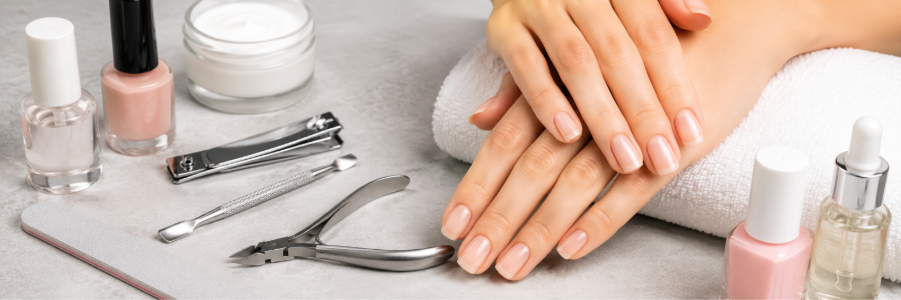
What Do Healthy Nails Look Like?
Healthy natural nails typically have:
- A smooth nail surface without excessive ridges, cracks, pitting or uneven texture
- A consistent pale pink to translucent colour across the nail bed
- A firm but flexible structure that resists everyday breakage
- Hydrated cuticles that sit neatly around the nail base
- A natural shine that becomes more visible with gentle buffing
Understanding these signs helps both personal users and nail professionals identify whether nails require simple maintenance, strengthening treatments or additional attention.
For nail professionals, recognising changes such as persistent discolouration, unusual texture changes, pitting or structural irregularities is an important part of responsible nail care. Certain nail concern may require advice from a GP or dermatologist rather than cosmetic treatment alone (Australasian College of Dermatologists, 2022).
What Are the Main Causes of Nail Damage?
The most common causes of weak, brittle or peeling nails include moisture exposure, chemicals, mechanical stress and nutritional factors. Healthy nails depend on protecting the nail plate from repeated stress, dehydration and physical damage.
Excessive Water Exposure
Frequent exposure to water causes the nail plate to repeatedly expand and contract. Activities such as washing dishes, cleaning, swimming and frequent hand washing can gradually weaken the nail structure, contributing to peeling and splitting.
Chemical Exposure
Certain chemicals can affect nail strength over time. Acetone-based removers, household cleaning products and repeated exposure to some nail enhancement systems may reduce moisture levels within the nail plate. Using nourishing nail treatments, moisturisers and cuticle oils can help support healthier-looking nails.
Incorrect Nail Filing and Mechanical Damage
Using nails as tools, aggressive filing and excessive buffing can weaken the nail surface.
For stronger nails:
- File gently in one direction
- Avoid over-buffing
- Do not pick or peel nail products from the surface
- Protect nails from unnecessary pressure
Nutrition and Nail Health
Nutrition also plays a role in maintaining healthy nails. Low protein intake, iron deficiency and certain nutrient deficiencies may contribute to brittle nails, slower growth or changes in nail appearance (Healthdirect Australia, 2023).
A balanced diet containing sufficient protein, iron and essential nutrients supports normal nail growth and strength.
Frequently Asked Questions About Healthy Nail Care:
How often should professional nail treatments be scheduled?
A professional nail service every two to three weeks maintains nail health and groomed appearance between visits. Clients in a recovery period from chemical treatments may benefit from more frequent shorter appointments focused on nourishing treatments rather than decorative services until nail integrity improves.
What nutrition supports healthy nail growth?
Adequate dietary protein provides the building blocks for keratin, the structural component of the nail. Iron deficiency is a common nutritional contributor to brittle or slow-growing nails and is worth investigating through a GP if nail changes persist. Biotin supplementation has been associated with improvements in nail thickness in individuals with documented deficiency (Floersheim, 1989). A balanced diet with adequate protein, iron, and hydration provides the most comprehensive nutritional foundation for healthy nails.
How long does it take for nails to recover after gel or acrylic removal?
The nail grows approximately 3 to 4 millimetres per month, meaning a full nail plate turnover takes around six months. With consistent moisturising, protective clear coating and avoiding mechanical damage, most people notice meaningful improvement within six to eight weeks of beginning a regular care routine.
Healthy nails are achieved the same way in any context: through consistent care, quality products and a clear understanding of what nails need at each stage. Whether you are building a personal home routine, advising salon clients on nail health between appointments, or stocking a professional nail station with a comprehensive product range, the principles remain the same and the results follow from applying them consistently.
Livingstone’s at-home nail kit with soft feel buffer block and professional nail care range provide the products to support healthy nail care at every level, from the client maintaining their nails at home between visits to the nail professional building a service offering that delivers genuinely better nail health over time.
Reference:
- Australasian College of Dermatologists. (n.d.). A to Z of Skin: Nails.