Medical gloves play an important role in healthcare, but not every glove is made for the same job. Surgical gloves and examination gloves can look alike at first, yet they differ in fit, sterility and intended use.
For hospitals, clinics and healthcare workers, using the right glove for each task matters. The wrong type may not provide the level of protection or control needed for a procedure. Livingstone International provides a range of medical gloves to suit different healthcare needs.
So, what is the difference between surgical gloves and examination gloves? Let’s compare their uses, materials, fit and other key features to help you understand which type is right for different medical tasks.
Medical gloves may look similar, but they are not all made for the same purpose. Surgical gloves and examination gloves are two common options used in healthcare, yet their fit, sterility and intended use can be quite different.
For hospitals, clinics and healthcare workers, selecting the right glove matters. The correct choice can support hygiene, protection and better control during a procedure. Livingstone International offers a range of medical gloves to suit different healthcare needs.
So, what is the difference between surgical gloves and examination gloves? Let’s look at how they compare and what you should consider before selecting them.
Surgical Gloves vs Examination Gloves: What Is the Difference?
The main difference between surgical gloves and examination gloves is their intended use.
| Feature | Surgical Gloves | Examination Gloves |
| Main use | Surgery and sterile procedures | Routine examinations and patient care |
| Sterility | Supplied sterile | Usually non-sterile |
| Fit | Close and precise | Designed for general clinical use |
| Hand sensitivity | High | Suitable for routine tasks |
| Common users | Surgeons and operating teams | Doctors, nurses, and other healthcare workers |
What Are the Main Types of Gloves for Medical Use?
There are several types of gloves for medical use, and each can have a different purpose.
- Surgical gloves are used for surgery and procedures that require sterile gloves.
- Examination gloves are commonly used for routine patient care and examinations.
- Nitrile gloves are made from synthetic rubber and are a popular choice where latex needs to be avoided.
- Latex gloves are made from natural rubber and are known for their flexibility and close fit. However, latex may cause allergic reactions in some people.
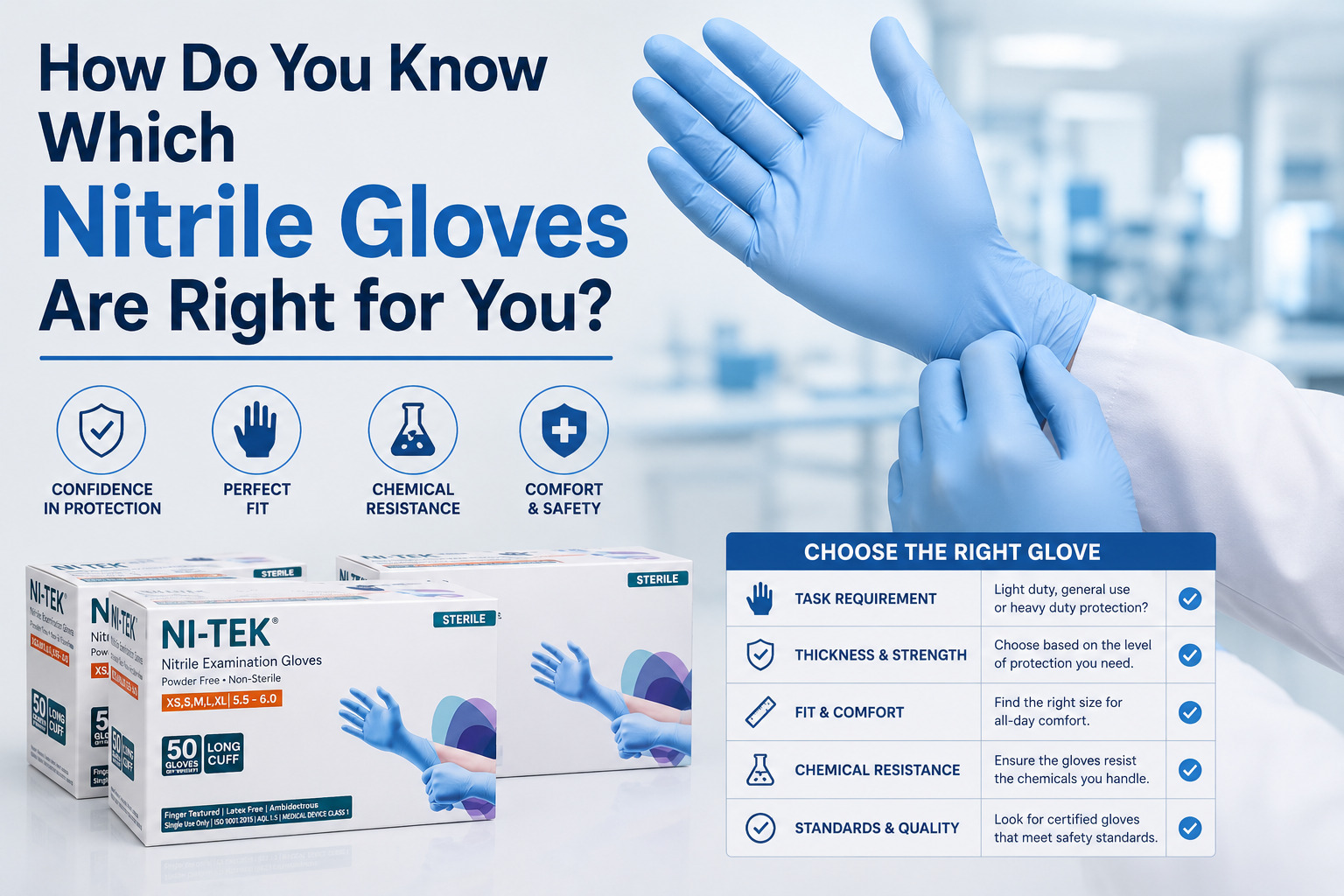
Your choice should depend on the task, required protection, material requirements, and whether sterile gloves are needed.
Nitrile vs Latex Gloves: Which Is Better?
When looking at nitrile vs latex gloves, there is no single option that is best for every situation.
Latex gloves are flexible and can provide a close fit with good hand sensitivity. They may be suitable for tasks where these features are important, provided there are no latex allergy concerns.
Nitrile gloves are made from synthetic rubber. They are a common latex-free option and can be useful in healthcare settings where latex exposure needs to be avoided.
If your workplace has staff or patients with a known latex allergy, consider a suitable latex-free alternative. You should also follow the manufacturer’s instructions and select gloves intended for the work being performed.
How Do You Choose the Right Disposable Gloves?
Knowing how to choose the right disposable gloves starts with identifying the task.
First, ask whether the procedure requires sterile gloves. If you are working in surgery or carrying out a procedure where a sterile barrier is needed, surgical gloves may be suitable.
For routine examinations and general patient care, examination gloves are generally used.
Next, consider the material. Nitrile may be a suitable choice where latex needs to be avoided. Latex may be suitable where there are no allergy concerns and its fit and flexibility meet your needs.
Size is also important. Gloves that are too tight can feel uncomfortable, while loose gloves may affect grip and hand movement.
Why Does Glove Size Matter?
A good fit helps you work comfortably and maintain control.
Use the manufacturer’s glove size guide when selecting your size. Do not assume that the same size will fit in every brand, as sizing can vary between products.
Your gloves should fit comfortably around your fingers and palm. They should not restrict movement or feel excessively loose.
For surgical work, a suitable fit is especially important because precise hand movements are often required.
Are Powder-Free Gloves Better for Medical Use?
Powdered gloves were once used to make gloves easier to put on. However, powder can create problems in healthcare environments.
The TGA states that the World Health Organization recommends powder-free examination gloves as a general policy because powdered gloves can react with alcohol-based hand rubs used in healthcare facilities.
For this reason, powder-free gloves are commonly preferred for medical use. When comparing powder free vs powdered gloves, check your workplace requirements and the manufacturer’s product information.
When Should You Change Disposable Gloves?
Medical gloves are not designed to be worn throughout an entire shift.
You should change gloves between patients and between tasks when there is a risk of transferring contamination. Gloves should also be changed if they become damaged, visibly soiled or contaminated.
The TGA states that medical gloves are single-use items and that their condition should be monitored. It also advises following local hand hygiene procedures before applying gloves and when removing or changing them.
Gloves also do not replace hand hygiene. Clean your hands according to your workplace’s infection control procedures.
How Should You Properly Remove Gloves?
Knowing how to properly remove gloves is important because the outside of a used glove may be contaminated.
Avoid touching the outside surface with your bare hand. Carefully peel the first glove away from your hand. Then use your gloved hand to remove the second glove without touching its contaminated outer surface.
Dispose of the gloves correctly and clean your hands afterwards. Always follow your workplace’s infection control procedures.
Which Gloves Should You Choose?
The right choice depends on the job.
If you need a sterile barrier for surgery or another procedure, surgical gloves are designed for that purpose. For routine examinations and general patient care, examination gloves are generally more suitable.
You should also consider material, size, comfort and allergy concerns. In Australia, medical gloves that are presented or claimed for therapeutic use are regulated by the TGA and may need to be included in the Australian Register of Therapeutic Goods (ARTG) before they can be supplied.
Always check the manufacturer’s instructions and make sure the gloves are suitable for the intended task.
Final Thoughts
Understanding surgical gloves vs examination gloves can make glove selection much easier. Surgical gloves are designed for sterile procedures, while examination gloves are mainly used for routine examinations and patient care.
Material, fit, sterility and allergy concerns should all be considered before making your choice.
At Livingstone International, you can find a range of medical and protective gloves for different healthcare needs. Selecting the right glove for the right task can help support safe and hygienic everyday practice.
FAQs
1. Can examination gloves be used for surgery?
Standard examination gloves should not replace sterile surgical gloves when a procedure requires sterility. Always follow the procedure requirements and manufacturer’s instructions.
2. Are surgical gloves always sterile?
Surgical gloves are supplied as sterile gloves for surgical procedures. Check the product packaging and manufacturer’s information to confirm sterility before use.
3. Are nitrile gloves suitable for medical examinations?
Yes. Nitrile examination gloves can be used for routine medical examinations and patient care when the product is intended and approved for the required medical use.
4. Are latex gloves better than nitrile gloves?
Neither material is always better. Latex offers flexibility and sensitivity, while nitrile is a common latex-free option. Your task and allergy requirements should guide your choice.
5. When should disposable medical gloves be changed?
Change gloves between patients or tasks when required, and whenever they become damaged, contaminated or visibly soiled. Follow your workplace’s infection control procedures.
6. Do medical gloves replace hand hygiene?
No. Gloves do not replace hand hygiene. Follow your workplace procedures for cleaning your hands before putting gloves on and after removing or changing them.