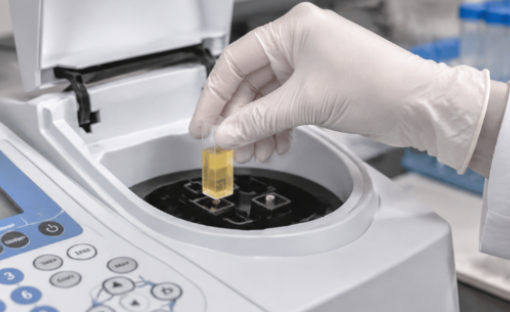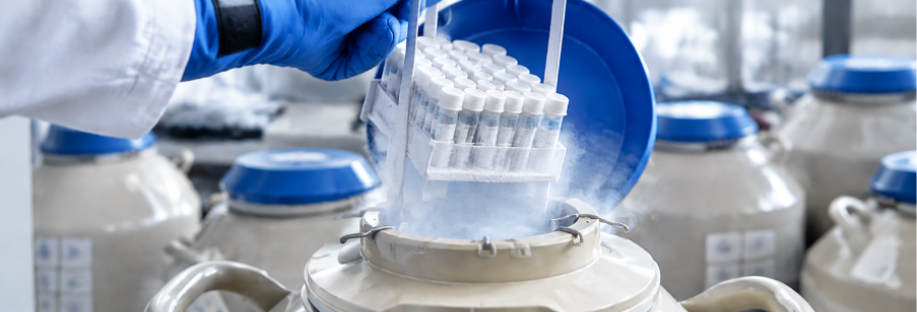
A centrifuge separates components within a liquid sample by applying relative centrifugal force (RCF), while the centrifuge tube contains the sample and must remain compatible with the rotor, force and sample type. The two therefore work as a matched system rather than as separate pieces of equipment. In pathology, research and school science settings, reliable separation depends on choosing a suitable centrifuge, using tubes rated for the required conditions and following the correct loading and run procedure. This guide explains how the separation process works, how RPM differs from RCF, how to match tubes to the centrifuge and what laboratories should consider before a run.
How Does a Centrifuge Separate a Sample by Density?
Centrifugation applies relative centrifugal force, expressed as multiples of gravity (×g), so components with different densities separate more quickly than they would under gravity alone. Denser particles or cells move toward the bottom of the tube, while lighter liquid remains above. The required force and run time depend on the sample and the separation goal.
Blood provides a clear example. After centrifugation, blood can separate into red blood cells, plasma and a thin buffy coat containing white blood cells and platelets. Australian Red Cross Lifeblood describes this separation as part of blood processing, and the same general principle is used for cell pellets, precipitates and urine sediment in laboratory workflows.
What Is the Difference Between RPM and RCF?
RPM measures how fast the rotor turns, while RCF describes the relative force applied to the sample during centrifugation. RCF is generally the more useful value when comparing centrifuge procedures because it accounts for both rotor speed and the distance from the rotor axis to the sample. As a result, two centrifuges operating at the same RPM can apply different forces.
Because RCF depends on rotor specifications as well as speed, laboratories should follow the RCF and run time specified in the relevant procedure or manufacturer guidance rather than relying on RPM alone. Selecting the correct settings for the centrifuge model, rotor and sample type helps support consistent separation results.
Which Type of Centrifuge Suits Different Laboratory Settings?
The most suitable centrifuge depends on the sample type, workload, required control and operating environment. Benchtop electric centrifuges are common in pathology and clinical laboratories because they allow operators to control force and run time, while simpler hand-operated models may suit classroom demonstrations and low-speed separation activities where clinical precision is not required.
Before purchasing or assigning a centrifuge, laboratories should consider sample volume, rotor or bucket capacity, required RCF range and expected workload. Matching equipment capability to the procedure helps avoid over- or under-specifying the instrument.
How Long and How Fast Should a Sample Be Spun?
Centrifuge speed and run time should be taken from the method or protocol for the sample being processed. Higher force or longer run times can produce a firmer pellet, but settings that are too aggressive may damage fragile cells or compromise the sample. Conditions that work for one specimen should not be assumed to suit another.
Why Do Centrifuge Tubes Matter as Much as the Centrifuge?
Centrifuge tubes must be suitable for the centrifuge, rotor or bucket being used, the required RCF, and the sample type being processed. Tube specifications such as material, wall strength, cap design and maximum RCF rating should be checked against the manufacturer’s recommendations to help ensure safe operation and maintain sample integrity during separation.
How Do Tube Shape and Material Affect Separation?
Conical tubes concentrate a pellet at the tapered tip, which can make it easier to remove the liquid above without disturbing the solids. Polypropylene is commonly used for centrifuge tubes because it provides good durability and resistance for many routine laboratory applications. However, suitability depends on the sample contents, temperature conditions, required RCF and the manufacturer’s specifications for the tube. A 10 mL polypropylene conical tube may suit general separations when its specifications match the centrifuge and sample requirements. Where sterility is required, a sterile tube should be selected.
What Should Laboratories Consider When Choosing Centrifuge Tubes?
Laboratories should check five factors before standardising a centrifuge tube: rotor or bucket compatibility, maximum RCF rating, tube volume, sample compatibility and sterility requirements. Cap security and tube dimensions also matter, and some smaller tubes may require an approved adapter.
Standardising suitable tube sizes can simplify stock control, but one tube type should not be used across every workflow. Grouping tubes by routine application can help staff identify suitable products more quickly.
Which Blood Collection Tubes Are Used Before Centrifugation?
Different blood collection tubes are selected according to the test method and laboratory protocol. Pathology Queensland lists serum separator tubes for chemistry and serology, EDTA tubes for full blood counts and molecular testing, and lithium heparin tubes for selected biochemistry procedures. Serum separator tubes contain gel that moves during centrifugation to create a barrier between serum and cells.
Collection staff should follow the handling instructions for the tube and test being performed. Pathology Queensland advises correct tube recognition and handling, including appropriate inversion after collection and avoiding expired tubes. Some tests require whole blood rather than separated serum or plasma.
How Do You Load and Run Centrifuge Tubes Safely?
Safe loading depends on correct tube condition, secure caps, balanced placement and following the centrifuge manufacturer’s operating instructions. Tubes should be arranged according to the rotor or bucket configuration, with opposing positions balanced by mass to minimise vibration and support safe operation. Before starting a run, confirm that each tube fits the rotor or bucket, is rated for the required RCF and is filled within the manufacturer’s stated limit.
If an odd number of samples is processed, a suitable balancing tube may be required in the opposite position according to the centrifuge configuration. After the run, allow the rotor to stop completely before opening the lid and handle tubes carefully to avoid remixing separated layers. Follow the facility’s spill response procedures and PPE requirements when handling samples.
Can Any Centrifuge Tube Be Used in Any Centrifuge?
No. Centrifuge tubes are not universally interchangeable. A tube must fit the rotor or bucket, be rated for the required RCF and be suitable for the sample being processed. Laboratories should compare the tube specifications with the centrifuge requirements and use only appropriate adapters where smaller tubes are intended to sit in larger buckets.
What Is the Difference Between Serum and Plasma?
Serum is the liquid remaining after blood has clotted and been centrifuged, while plasma is obtained when an anticoagulant prevents clotting before centrifugation. Plasma therefore retains clotting proteins such as fibrinogen, whereas serum does not. The required sample type depends on the test being performed.
Why Does Matching the Centrifuge and Tube Matter?
Reliable sample separation depends on the centrifuge, tube and procedure working together. Laboratories should select equipment according to the required force, sample type, tube compatibility and workload rather than treating tubes as interchangeable consumables. A consistent matching process can support safer runs, clearer procedures and more dependable day-to-day sample handling.
References
Australian Red Cross Lifeblood (n.d.) What happens to donated blood? (Accessed: 21 September 2026).
Pathology Queensland (2026) Blood tube recognition: order of draw. Queensland Health. (Accessed: 21 September 2026)