A cup of tea, coffee or water is easy to overlook when a workplace is ordering hundreds of other essentials. Yet disposable drinkware is used across staff rooms, waiting areas, training sessions and catered meetings. If cups are flimsy, poorly stored or unsuitable for the drink, a small supply item can quickly become an everyday nuisance.
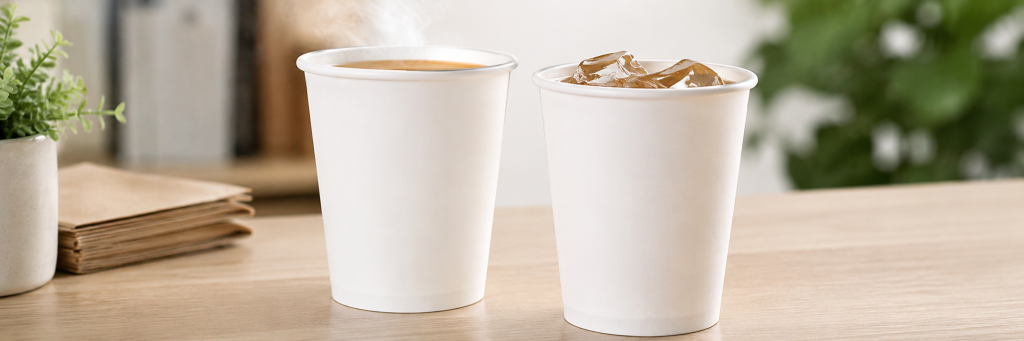
For healthcare, aged care, education, government, and commercial workplaces, the practical questions are simple. Will the cup handle both hot and cold drinks? Is the wall construction suitable for the way it will be used? How much storage space will a carton require, and what disposal instructions apply after use?
The Livingstone Biodegradable Paper Cups provide one example of a paper coffee cup designed for routine beverage service. Livingstone describes the cups as sturdy and single-polycoated, with a rolled rim for added strength. Those details are useful starting points, but the right choice still depends on how and where the cups will be used. Related disposable cup options can also be compared through Livingstone’s Portion Control Cup Collection.
Why Does Paper Coffee Cup Construction Matter for Hot and Cold Drinks?
Cup construction matters because the wall, coating and rim influence how a disposable cup performs with different drinks. A suitable cup should remain stable during normal use, resist leaking and provide enough structural strength for handling, while still matching the temperature and serving conditions expected in the workplace.
Single-wall paper cups are light and easy to store, making them practical where drinks are served quickly. Livingstone describes the cups as single-polycoated with a rolled rim. The coating helps the paper resist liquid penetration, while the rolled edge adds stiffness around the part most often handled.
Wall design also matters with hot beverages. A single-wall cup does not provide the same insulation as a double- or triple-wall format, so very hot coffee or tea may require a sleeve or a different cup type. For cold drinks, the main priorities are usually strength, leak resistance and maintaining shape during normal use.
What Should You Check Before Choosing a Biodegradable Hot and Cold Cup?
Before choosing a biodegradable hot and cold cup, check the supplier’s product description, intended use, wall construction, coating and disposal guidance. The term biodegradable should not be treated as a complete end-of-life instruction, because local recycling and composting systems may handle coated paper cups differently.
Environmental language can sound simple, but disposal is often more complicated. Livingstone lists the cups as biodegradable and also describes them as single-polycoated. Buyers should therefore avoid assuming the cup automatically belongs in kerbside recycling, home compost or a commercial organics stream. The correct pathway depends on verified product guidance and local collection services.
Suitability matters just as much. Food Standards Australia New Zealand advises food businesses to use packaging that is fit for its intended purpose, clean and undamaged. For beverage cups, that means confirming the product is intended for the drinks being served and protecting the food-contact surface during storage and handling.
Where Are Paper Coffee Cups Useful in Healthcare and Workplace Settings?
Paper coffee cups are useful in shared areas where single-use beverage service is practical, including staff rooms, reception spaces, meetings, training rooms, waiting areas and catered functions. Their value is greatest when the cup size, drink temperature, storage method and expected daily volume match the setting.
In a medical centre or dental practice, cups may be kept in a staff kitchen, used during meetings or offered with drinking water in non-clinical reception areas. Aged care facilities, schools, laboratories, warehouses and government offices may use them in break rooms, conference spaces or event catering.
Single-use cups can simplify serving when many people need a drink over a short period, but normal hygiene practices still apply. Clean storage and careful handling remain important. In settings with specialised infection-control requirements, beverage service should also stay separate from clinical work zones and other areas where food or drink is restricted.
How Should Paper Cups Be Stored and Handled Before Use?
Paper cups should be stored in a clean, dry location where they are protected from dust, splashes, chemicals and unnecessary handling. Staff should avoid touching the drinking rim or inside surface, keep opened packs covered where practical and discard cups that become wet, crushed, dirty or otherwise damaged.
Cartons should be kept off damp floors and away from sinks, cleaning chemicals or areas where splash contamination is possible. Once a pack is opened, the remaining cups should stay protected from routine handling. This is especially useful in shared kitchens and busy service areas where many people access supplies throughout the day.
Stock rotation also helps when several cartons are stored at once. Put older stock where it will be used first, keep packaging labels visible and avoid crushing sleeves under heavier supplies. If a cup is distorted, contaminated or damaged, discard it. Disposable cups are intended for single use and should not be washed for repeated use.
What Should Buyers Consider When They Bulk Buy Paper Cups Online?
When you bulk buy paper cups online, compare carton quantity, cup capacity, wall type, hot and cold suitability, storage space and expected usage. Buying by the carton can simplify replenishment, but the most economical choice is one that matches real consumption instead of simply offering the largest available pack size.
Start with a realistic estimate of daily use. A workplace serving drinks only during meetings has different needs from a busy staff cafeteria or training centre. The cups are supplied as 25 cups per pack, 20 packs per carton, giving 500 cups in total. Smaller inner packs can also make stock distribution between departments easier.
Check whether the 266ml or 9oz capacity suits the beverages normally served and whether single-wall construction is appropriate for the expected temperature. Buyers managing several service areas can also review Livingstone’s portion control cup collection when smaller disposable formats are needed. A simple reorder point can help prevent both shortages and unnecessary overstocking.
How Should Used Paper Coffee Cups Be Disposed of Responsibly?
Used paper coffee cups should be disposed of according to verified packaging instructions and local collection options. Many paper cups include a waterproof lining that can affect kerbside recyclability, so a biodegradable claim does not automatically mean the cup belongs in a household recycling or composting bin.
The Australian Packaging Covenant Organisation notes that paper cups can be challenging for standard kerbside recycling because of their waterproof lining. Some qualifying cups can use approved drop-off programs such as Simply Cups. Workplaces should therefore check the Australasian Recycling Label where available and review local council guidance rather than applying one rule to every paper cup.
A practical waste plan is more useful than a broad sustainability claim. Clearly labelled bins, staff instructions and knowledge of local services can reduce confusion. Cups should be emptied before disposal where required. If a dedicated recovery option is unavailable, follow the disposal direction that applies locally rather than placing cups in a stream that cannot process them.
What Is the Practical Takeaway When Choosing Paper Coffee Cups?
The best paper coffee cup is one that suits the drink, the people using it and the workplace’s storage and disposal arrangements. Buyers should compare construction, capacity, pack quantity and end-of-life guidance rather than relying on a single feature such as price, appearance or an environmental claim.
For routine beverage service, the Livingstone Biodegradable Paper Cups, Hot & Cold, Single Wall, 266ml or 9oz offer a straightforward format with a rolled rim, single-polycoated construction and a carton quantity suited to higher-volume purchasing. Their role is practical: providing a disposable cup option for workplaces that need consistent supplies for everyday hot and cold drinks.
The wider decision should still consider how quickly stock is used, where cups will be stored, how hot drinks are served and what disposal services are available locally. Matching those factors to the product is more useful than choosing on one specification alone. A well-selected cup should fit naturally into the workplace routine without creating extra handling, storage or waste problems for staff each day.
References
Food Standards Australia New Zealand FSANZ) (2025, Food packaging, viewed 26 August 2026.
Department of Climate Change, Energy, the Environment and Water DCCEEW) (2026, Taking responsibility for our packaging, viewed 26 August 2026.
Australian Packaging Covenant Organisation APCO) (2024, APCO and Simply Cups Launch new ARL logo for paper cups, viewed 26 August 2026.