A 2 mL dose may look simple on a medication chart, but the device selected to measure and administer that volume matters. In enteral care, the syringe needs to suit both the amount being delivered and the connection through which it will be given. Facilities reviewing this product can refer to Livingstone Enliv Enteral Syringe for product specifications and purchasing details.
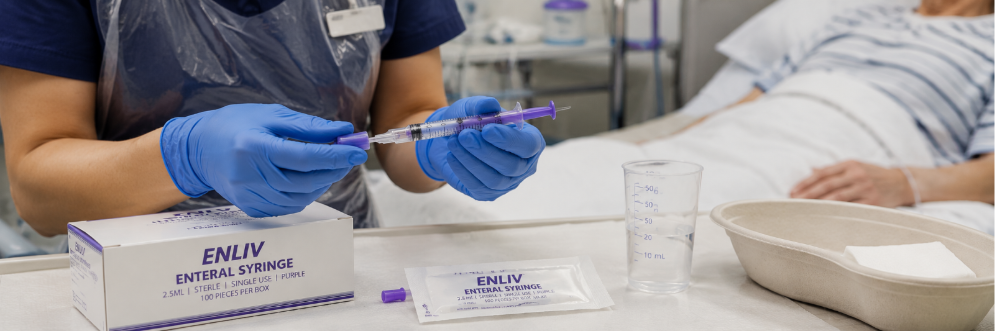
For small volumes, this is where an Enliv enteral syringe with a low-dose format has a specific role. The Livingstone range includes the 2.5 mL ENFit Low Dose Enteral Syringe, supplied sterile and single use in purple, with 100 pieces per pack.
Rather than treating every enteral syringe as interchangeable, staff need to consider dose volume, connection type and the intended route. This is particularly relevant when small medication volumes are being administered through an ENFit feeding system. Facilities comparing different capacities can also review Livingstone’s Syringe and Filter Collection for other enteral and clinical syringe options.
What Is a 2.5 mL ENFit Low Dose Syringe Used For?
A 2.5 mL ENFit low dose syringe is designed for small-volume enteral administration through a compatible ENFit connection. Low-dose formats are particularly relevant when measuring and delivering relatively small medication quantities where using an unnecessarily large syringe may make the required volume more difficult to measure accurately.
Enteral syringes have several potential functions depending on their size, design and manufacturer instructions. These can include delivering medication, enteral feed and water through a feeding tube, as well as other enteral procedures specified for the particular device.
The important distinction is the route. An ENFit syringe is designed to connect with compatible enteral equipment rather than being treated as a general-purpose syringe. The ENFit connection is based on ISO 80369-3, a connector standard for enteral applications.
For the Livingstone product, the key characteristics are straightforward:
- 2.5 mL capacity
- low-dose format
- ENFit enteral connection
- purple identification
- sterile supply
- single-use format
- 100 pieces per pack.
Why Does Syringe Size Matter When Giving Small Enteral Medication Doses?
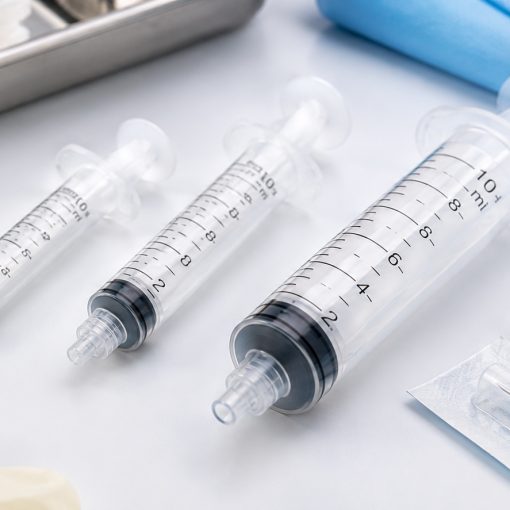
Syringe size should be matched to the volume being administered. For small enteral medication quantities, a low-dose syringe can provide graduations and a format better suited to measuring the required amount than a much larger syringe. Device selection should always follow the medication order and local clinical procedures.
Using a bigger syringe simply because it is available is not necessarily the best approach.
The Royal Children’s Hospital Melbourne provides a useful practical example in its ENFit education material: for a 2 mL medication volume, it identifies a 2.5 mL ENFit Low Dose Tip syringe as the appropriate selection in that example.
Low-dose ENFit designs are specifically available in smaller capacities. Depending on the manufacturer, these commonly include sizes such as 1 mL and 2.5 mL, with some systems also providing a 5 mL low-dose option.
This makes syringe selection a clinical decision rather than a stockroom decision. Staff should check the ordered volume first, then select an appropriate compatible syringe in accordance with the device instructions and their organisation’s medication administration procedures.
How Does an ENFit Connection Differ from a Standard Syringe Connection?
ENFit is a dedicated enteral connector system designed for feeding tubes and related enteral equipment. Its connector geometry is different from connections used for other clinical applications, helping distinguish the enteral route and reduce the potential for inappropriate connections between incompatible medical delivery systems.
That distinction is one of the most important features of the system.
ENFit connectors are associated with ISO 80369-3, the small-bore connector standard for enteral applications. Compatible enteral syringes connect with ENFit feeding tubes and other devices carrying the corresponding connection.
Purple is also widely used to make enteral devices visually recognisable. Colour alone, however, should never determine whether a device is suitable.
Before use, check:
- intended route
- connector compatibility
- syringe capacity
- prescribed volume
- graduations
- packaging integrity
- Sterility and single-use status where applicable.
When Should a Low-Dose ENFit Syringe Be Chosen Instead of a Larger Syringe?
A low-dose ENFit syringe may be appropriate when the prescribed enteral volume is small and requires a syringe suited to measuring that quantity. Larger syringes have different roles, including larger medication volumes, water flushes, and feeds. Selection should reflect the volume, procedure, and instructions for the enteral system.
One syringe size does not cover every enteral task equally well.
A 2.5 mL low-dose syringe, for example, occupies a different place in practice from a 20 mL or 60 mL enteral syringe. Larger ENFit syringes are commonly available for activities such as water flushing and bolus enteral feeding, while low-dose formats address smaller quantities.
Before choosing a syringe, ask:
- What volume needs to be delivered?
- Is the intended route enteral?
- Does the syringe connect correctly with the feeding device?
- Is a low-dose format appropriate for this quantity?
- Is the device intended for single use or reuse?
Who Commonly Uses 2.5 mL ENFit Low Dose Syringes?
Small-volume ENFit syringes may be used wherever prescribed medicines or other appropriate small volumes are administered through compatible enteral feeding systems. Depending on clinical requirements, this can include hospital, paediatric, aged care, disability, community, and home enteral nutrition settings.
Patient age alone does not determine the syringe.
ENFit enteral systems are used across neonatal, paediatric and adult care, and syringe selection depends on what is being administered and how much is required.
In practice, a smaller syringe may therefore appear in:
- hospital medication rounds
- paediatric enteral care
- aged care medication administration
- disability and community care
- enteral nutrition services
- home enteral feeding programs.
What Should Facilities Check Before Bulk Buying Medical Consumables for Enteral Care?
Before purchasing enteral syringes in quantity, facilities should confirm the required capacities, ENFit compatibility, low-dose requirements, single-use or reusable format, packaging quantity and expected consumption. Purchasing decisions should reflect actual clinical use so appropriate syringe sizes remain available without creating unnecessary or unsuitable stock.
A bulk buy medical consumables decision should start at the point of care, not with carton quantity.
Review which syringe sizes staff actually use and how frequently they are required. A facility administering many small-volume enteral medicines may have different stock requirements from one predominantly using larger syringes for feeds or flushing.
Useful purchasing checks include:
- ENFit compatibility
- required syringe capacities
- low-dose versus standard-tip requirements
- sterile status
- single-use or reusable design
- units per pack
- average monthly usage
- storage capacity
- stock rotation requirements.
The Livingstone 2.5 mL ENFit Low Dose Enteral Syringe is supplied as 100 pieces per pack. Facilities comparing this with other capacities can also review Livingstone’s range of syringes and related products according to their clinical requirements.
How Can Facilities Use ENFit Syringes More Appropriately in Everyday Practice?
Appropriate ENFit syringe use begins with matching the device to the prescribed volume and enteral connection. Staff should confirm the route before administration, use the correct syringe capacity, inspect the device and packaging, follow local medication procedures, and dispose of single-use syringes according to applicable requirements.
Good practice starts before the syringe is open.
Keep enteral devices organised so the correct capacities can be identified without searching through unrelated equipment. Where multiple syringe sizes are stocked, clearly separated storage can also make selection easier during medication preparation.
The connector still needs to be checked each time. ENFit equipment should only be connected to compatible devices intended for enteral use.
For single-use products, do not assume that a syringe can be cleaned and retained simply because reusable ENFit syringes also exist. Follow the instructions supplied with the specific product.
References
Royal Children’s Hospital Melbourne 2018, ENFit Education Presentation, Royal Children’s Hospital Melbourne, viewed 27 August 2026.
Nutricia Australia 2020, ENFit Enteral Syringes, Nutricia Australia, viewed 27 August 2026.
B. Braun Australia n.d., Enteral Syringes, Type ENFit, B. Braun Australia, viewed 27 August 2026.