The most important hair straightener features to consider include plate material, temperature control, plate size, heating speed, ionic technology and safety functions. These features determine styling performance, heat distribution and hair protection, helping users choose the right tool for home use, salons or professional training environments.
Browse the Livingstone Hair Straightener range and the Sofeel Hair Brush range to find the right tools for your setting once you know what you are looking for.
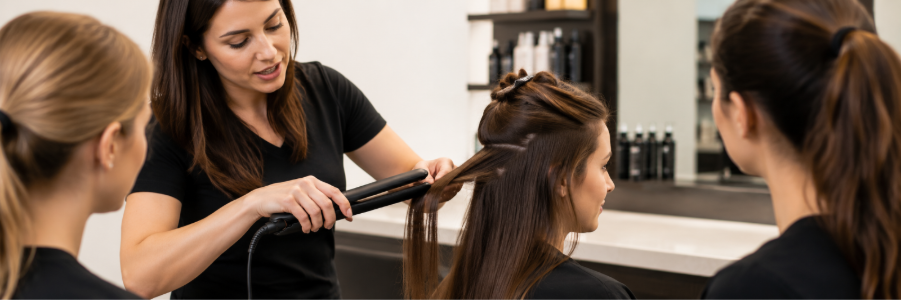
Why is choosing the right hair straightener and brush important?
Choosing the right hair straightener and brush helps improve styling results, reduce unnecessary heat exposure and create longer-lasting finishes. A quality straightener provides consistent heat, while the correct brush prepares the hair for smoother styling and better control.
A good straightener delivers even heat across the full plate and smooths the hair cuticle in a single pass. A good brush creates the right tension during blow-drying to shape the hair before the straightener ever touches it. The two tools work together, and understanding what each one does makes it easier to choose both.
Which hair straightener features matter most?
Plate Material: Why Ceramic Is the Professional Standard
The most important hair straightener features include plate material, temperature control, heating speed, plate size, ionic technology and safety functions. These features affect how evenly heat is distributed, how effectively the tool styles different hair types and how well it protects hair during use.
Which hair straightener plate material is best?
Ceramic plates distribute heat evenly across the full surface, which means every strand in the section receives the same temperature rather than being exposed to hot spots. Ceramic also emits infrared heat that penetrates the hair shaft gently, sealing the cuticle as it smooths. The result is a shinier finish with less damage over time. Ceramic is the right choice for fine, normal and colour-treated hair and for anyone prioritising finish quality and long-term hair health.
Titanium plates heat up faster and retain higher temperatures, making them better suited to thick, coarse or resistant hair that needs more heat to respond. They are a professional choice for specific hair types but are not the best default for general salon use because the higher operating temperatures increase the risk of heat damage on finer hair.
Tourmaline-coated plates emit negative ions that reduce frizz and add shine by smoothing the cuticle from the outside. Tourmaline is often applied as a coating over ceramic or titanium plates and adds an extra layer of finish quality to the result.
For most users and most salon applications, ceramic is the right starting point.
What temperature should you use on different hair types?
The ideal hair straightener temperature depends on hair thickness, condition and treatment history. Lower temperatures are recommended for fine or colour-treated hair, while thicker and more resistant hair may require higher heat settings for effective styling.
A practical guide for temperature selection:
- Fine, fragile or colour-treated hair: 150°C to 170°C
- Normal, medium-thickness hair: 170°C to 190°C
- Thick, coarse or resistant hair: 190°C to 230°C
For most everyday straightening and glass hair applications, 180°C is a reliable starting point for fine to medium hair types.
What safety features should a hair straightener have?
A safe hair straightener should include features that reduce the risk of burns, overheating and accidental damage. Automatic shut-off, heat-resistant materials and a flexible swivel cord are important features for both professional salons and personal use.
Automatic shut-off powers the tool down after a period of inactivity. This is the most important safety feature for any setting where the tool may be left unattended between clients or forgotten after a home session.
Heat-resistant housing keeps the outer casing safe to handle even when the plates are at operating temperature.
Swivel cord prevents the power cord from tangling during use and extends the life of the cord.
Which hair brush works best with a straightener?
The best brush to use with a hair straightener depends on the styling stage. Paddle brushes help detangle and smooth, round brushes create shape and tension during blow-drying, while finishing brushes enhance shine after straightening.
Paddle Brushes: For Smoothing and Detangling
Paddle brushes are ideal for detangling, smoothing long hair and evenly distributing products, making them perfect for preparing hair before blow-drying or straightening.
Round Brushes: For Volume and Direction
Round brushes create volume, shape and movement during blow-drying, with different barrel sizes producing different styling results.
Boar and Mixed Bristle Brushes: For Finishing Gloss
Boar and mixed bristle brushes help distribute natural oils, leaving hair smoother, shinier and well-conditioned after straightening.
Vent Brushes: For Quick Rough-Drying
Vent brushes speed up rough-drying by allowing better airflow, making them best suited for the initial drying stage rather than styling or finishing.
How do you use a brush and straightener together?
Using a brush and straightener together creates a smoother, more polished finish than using either tool alone. Preparing the hair with the correct brush reduces styling effort, while the straightener refines the shape and creates the final smooth result.
Step 1: Detangle with a paddle brush.
Before applying any heat, detangle the hair thoroughly with a cushioned paddle brush. This removes knots and distributes any heat protectant product evenly through the lengths before blow-drying begins.
Step 2: Apply heat protectant.
Always apply a heat protectant spray or serum before any heat styling. This is non-negotiable regardless of the temperature setting or hair type.
Step 3: Blow-dry with a round or paddle brush.
Section the hair and blow-dry section by section, using the round brush to create tension and direction as each section is dried. Pull the brush through the section while directing the dryer nozzle downward along the hair shaft. This smooths the cuticle during drying and reduces the work the straightener needs to do.
Step 4: Straighten in sections.
Once the hair is fully dry, work through the same sections with the straightener. Starting close to the root, pass the plates slowly and steadily in one continuous motion through each section. Multiple short passes create less consistent results than one controlled movement.
Step 5: Finish with a boar bristle brush.
Once the hair is fully straightened, a final pass with a boar or mixed bristle brush distributes oils through the lengths, adds gloss and removes any remaining static. Follow with a small amount of shine serum worked through the ends if needed.
Conclusion
A hair straightener and the right brush are not separate decisions. They are two parts of the same toolkit, and each one makes the other work better. A paddle brush detangles and preps. A round brush shapes during blow-drying. The straightener seals and finishes. A boar bristle brush adds the final gloss. Together, they produce results that neither could achieve alone.
Browse the Livingstone Hair Straightener range and the Sofeel Hair Brush range to find the right combination for your hair type, your team or your salon station.
References
- Adore Beauty (2026) Best hair straighteners Australia: expert guide.
- TAFE NSW (2024) Certificate III in Hairdressing: course overview and industry pathways.
- Australian Competition and Consumer Commission (ACCC) Product Safety (2012) Straight off, straight out of reach! Staying safe with hair straighteners.
- Queensland Government (2020) Hair straighteners Understand the risk.