Reaching a higher bed, examination table or shelf can create avoidable risk when people use unsuitable objects or overreach. A purpose-designed step can provide a stable access point when the user, task and environment have been assessed. Facilities can also explore Livingstone’s Safety Step Stools range.
Why Is a Safety Step Stool Useful in Healthcare and Aged Care?
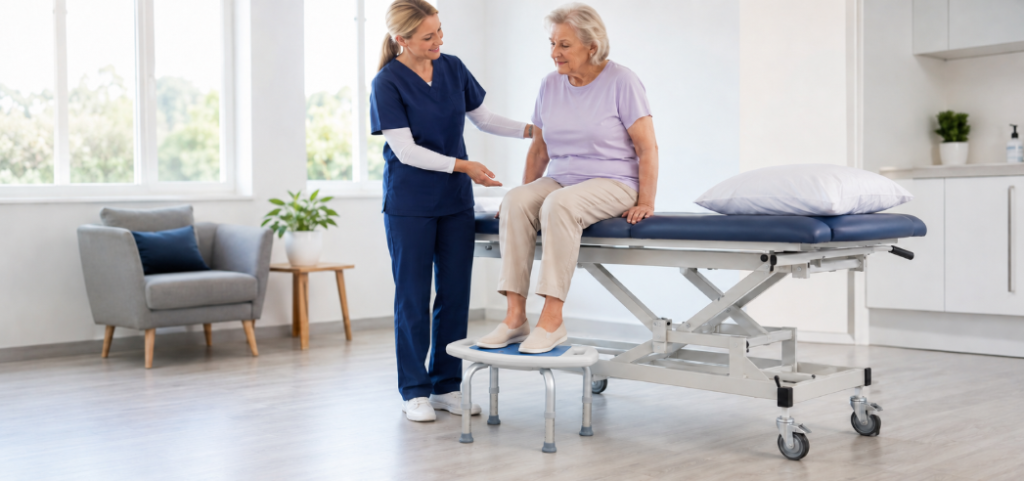
A safety step stool provides a designated, stable surface for suitable users who need to access higher beds, examination tables or storage. It can reduce unsafe climbing and overreaching when correctly selected and positioned. User mobility, balance, footwear and supervision needs must still be assessed before use.
A step stool is only one part of falls prevention. Clear pathways, suitable lighting, staff training and appropriate assistance remain important.
People with poor balance, reduced strength or cognitive impairment may require another access method or direct staff support.
The Livingstone Aluminium Dual Use Safety Foot Step and Stool combines a single anti-slip platform with adjustable height from 24 to 29 cm.
What Features Does the Livingstone Safety Step Stool Provide?
The Livingstone safety step stool has a single anti-slip platform measuring 41 x 22.5 cm, adjustable height from 24 to 29 cm and aluminium construction. Its dual-use design allows suitable step or seating applications, subject to product instructions, local procedures and the user’s assessed needs.
- Anti-slip standing surface
- Adjustable 24 to 29 cm height
- Compact 41 x 22.5 cm platform
- Aluminium construction
- Single-step format
- Dual-use step and stool design
How Does an Anti-Slip Aluminium Step Reduce Risk?
An anti-slip aluminium step improves grip and provides a clearly defined platform for stepping up or down. Aluminium offers a practical, durable structure, while the anti-slip surface helps limit foot movement. The stool must still be level, stable, clean and appropriate for the user and task.
Moisture, dust and worn footwear can reduce grip. Clean the surface according to the manufacturer’s directions and inspect it regularly for damage.
Adjustment components should be secure before anyone steps onto the platform.
Where Can a Safety Step Stool Be Used?
Safety step stools may support access to examination tables, higher beds, linen storage, shelves and selected work areas in hospitals, aged care and clinics. Each use should be risk assessed. A stool must not replace suitable ladders, lifting equipment or mobility assistance for tasks beyond its intended design.
- Assisting an appropriate patient onto an examination surface
- Supporting access to a higher bed
- Reaching frequently used supplies on suitable shelving
- Accessing linen storage
- Completing approved cleaning or maintenance tasks
- Providing a compact seat where the product permits
What Should Buyers Check When Sourcing Wholesale Safety Equipment?
When sourcing wholesale safety equipment, buyers should assess dimensions, weight rating, stability, adjustment method, surface grip, material and cleaning compatibility. Equipment must match the intended users and tasks. Procurement teams should also consider inspection frequency, staff training, storage and procedures for removing damaged items from service.
Check the product specification and weight rating before purchase and use. Facilities should avoid assuming that every step stool suits every patient, resident or workplace task.
Standardising equipment may simplify staff training, but local risk assessments remain essential.
How Often Should a Safety Step Stool Be Inspected?
A safety step stool should be checked before use and inspected regularly within the facility’s equipment maintenance program. Reviews should identify worn anti-slip material, loose adjustment components, bent parts, instability or contamination. High-use environments may require more frequent documented inspections and timely removal of damaged equipment.
- Confirm the platform is clean and dry
- Check that adjustable components are secured
- Look for bending, cracking or corrosion
- Test for rocking on a level floor
- Inspect the anti-slip surface for wear
- Remove unsafe equipment from use promptly
Are Safety Step Stools Suitable for Every Patient or Resident?
No. Safety step stools are not suitable for every patient or resident. Balance, strength, cognition, footwear and ability to follow instructions must be considered. People at increased risk of falling may need staff assistance, a different access method or specialised mobility equipment selected through an appropriate assessment.
Staff should follow the person’s care plan and facility procedures. If the user appears unsteady, stop the activity and select a safer alternative.
Supporting Safer Everyday Access
The Livingstone safety step stool combines an adjustable single platform with an anti-slip aluminium step for suitable access tasks. Correct selection, positioning and inspection are essential to safe use.
Facilities purchasing wholesale safety equipment should consider the full work system around the product, including training, risk assessment, cleaning and maintenance.
References
- Australian Commission on Safety and Quality in Health Care (2025) Preventing harm from falls with the updated Falls Guidelines.
- Safe Work Australia (n.d.) Slips, trips and falls.