Successful tooth extractions depend on selecting the appropriate surgical instruments as much as clinical technique. A dental root elevator plays an essential role in loosening teeth and retained root fragments before forceps are applied, reducing extraction force while helping preserve surrounding bone and soft tissue.
Dental root elevators are available in a range of designs, each developed for specific clinical applications. Choosing the correct instrument improves access, enhances control and supports more predictable surgical outcomes during routine and complex extractions. Livingstone offers a comprehensive range of reusable surgical elevators, including the Cryer Root Elevator Left, manufactured from high-quality stainless steel for reliable performance and repeated sterilisation. Explore the complete Dental Surgical Elevators collection to find the right instruments for your practice.
Why Is a Dental Root Elevator Essential During Tooth Extractions?
A dental root elevator is designed to loosen teeth and root fragments before removal, reducing extraction force while improving clinician control. Selecting the correct elevator supports atraumatic extraction techniques, protects surrounding tissues and contributes to more predictable surgical outcomes across a wide range of dental procedures.
Root elevators are often the first instrument used once adequate access has been established during an extraction. Rather than relying solely on extraction forceps, clinicians use elevators to widen the periodontal ligament space and gently mobilise the tooth or retained root before final removal.
Using a dental root elevator correctly offers several advantages, including:
- Reduced extraction force
- Improved clinician control
- Preservation of surrounding alveolar bone
- Reduced risk of root fracture
- Easier removal of retained root fragments
By gradually luxating the tooth before forceps application, elevators help minimise unnecessary trauma while improving procedural efficiency.
When Should a Cryer Root Elevator Left Be Used?
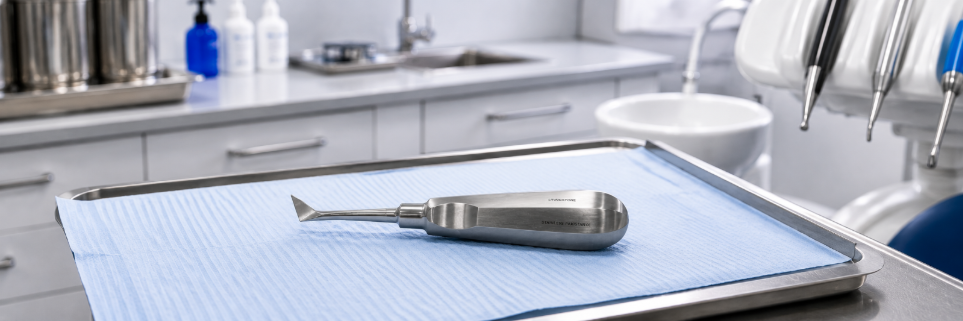
The Cryer Root Elevator Left is specifically designed for engaging retained roots and multi-rooted teeth where conventional straight elevators provide limited access. Its angled triangular blade allows clinicians to apply controlled leverage during surgical extractions while maintaining excellent visibility and instrument control.
Unlike straight elevators, Cryer elevators feature a distinctive triangular blade that engages root surfaces from the side.
The Cryer Root Elevator Left is commonly used for:
- Removing fractured root fragments
- Elevating roots after molar sectioning
- Accessing furcation areas
- Surgical removal of retained roots
- Luxating roots where straight elevators cannot obtain adequate purchase
Because left and right Cryer elevators are mirror images of one another, clinicians typically keep both patterns available to accommodate different extraction sites throughout the mouth.
How Does the Design of a Cryer Root Elevator Improve Surgical Control?
Purpose-designed surgical elevators improve precision by matching instrument geometry to tooth anatomy. The Cryer Root Elevator Left features an angled blade that allows controlled leverage while reducing unnecessary pressure on adjacent teeth and supporting more predictable extraction techniques.
The effectiveness of a surgical elevator depends on its design.
Key features include:
Angled triangular blade
The blade is designed to engage root surfaces securely while allowing controlled rotational force.
Precise working tip
A fine working tip improves access into narrow periodontal spaces and furcation areas.
Stainless steel construction
High-quality stainless steel provides excellent durability while maintaining rigidity during repeated clinical use.
Ergonomic handle
A balanced handle improves grip and tactile feedback throughout surgical procedures.
Together, these features allow clinicians to work more confidently during both routine and complex extractions.
What Clinical Techniques Help Reduce Trauma When Using a Dental Root Elevator?
Correct handling techniques improve extraction efficiency while reducing the risk of damage to surrounding bone, soft tissues and adjacent teeth. Controlled force, stable finger support and appropriate fulcrum placement remain fundamental principles when using any surgical elevator.
Safe elevator use depends on technique as much as instrument selection.
Good clinical practice includes:
Establish a stable finger rest
Finger support improves instrument control while reducing accidental slippage.
Apply gradual controlled pressure
Slow, progressive luxation is safer than excessive force.
Maintain a suitable fulcrum
Controlled leverage helps protect adjacent teeth and surrounding bone.
Reassess resistance
If the tooth or root does not begin to mobilise, reassess access or consider sectioning rather than increasing force.
These simple principles help preserve surrounding anatomy while supporting predictable extraction outcomes.
How Should Dental Root Elevators Be Cleaned and Reprocessed?
Reusable surgical elevators require validated cleaning, disinfection and sterilisation between every patient. Proper instrument maintenance supports infection prevention, preserves instrument performance and extends the service life of valuable dental surgical equipment.
Following every procedure, dental root elevators should undergo the practice’s validated reprocessing protocol.
Routine maintenance includes:
Prompt cleaning
Remove blood and tissue debris immediately after use to minimise staining and corrosion.
Thorough inspection
Inspect the working tip regularly for wear, chipping or deformation.
Validated sterilisation
Autoclave instruments according to Australian infection prevention guidelines and manufacturer recommendations.
Appropriate storage
Store elevators in clean, dry instrument trays to protect working tips from unnecessary damage.
Regular maintenance helps ensure consistent performance throughout the life of the instrument.
What Should Practices Consider Before They Buy Dental Root Elevators Online?
Practices that buy dental root elevators online should consider instrument quality, blade patterns, stainless steel construction and supplier reliability. Maintaining a comprehensive range of elevators improves surgical flexibility while supporting efficient treatment across a variety of extraction procedures.
Before deciding to buy dental root elevators online, consider:
- Available elevator patterns
- Left and right Cryer designs
- Straight and luxating elevators
- Stainless steel quality
- Autoclavable construction
- Ergonomic handle design
- Long-term durability
Maintaining a complete surgical elevator set allows clinicians to select the most appropriate instrument for each clinical situation rather than adapting a single elevator for every procedure.
Supporting Predictable Surgical Extractions Every Day
Successful extractions begin with selecting the right surgical instruments for the procedure. Choosing the appropriate dental root elevator, applying controlled luxation techniques and following validated instrument reprocessing protocols all contribute to safer, more efficient extractions and improved patient outcomes.
High-quality instruments such as the Cryer Root Elevator Left provide clinicians with the precision, durability and control needed for routine and complex surgical procedures. When practices buy dental root elevators online, selecting reusable stainless steel instruments from a trusted supplier helps support long-term clinical performance and dependable workflows.
Explore the Livingstone International Dental Surgical Elevators collection to discover professional-grade surgical elevators designed to support precision, reliability and consistent performance across everyday oral surgery.
References
Standards Australia 2023, AS 5369:2023 Reprocessing of Reusable Medical Devices and Other Devices in Health and Non-Health Related Facilities. Sydney: Standards Australia.