How does choosing the right isolation gown support safer clinical care?
Choosing the right isolation gown helps match personal protective equipment (PPE) to the anticipated exposure risk. Appropriate protective clothing supports infection prevention, reduces contamination risks and helps protect healthcare workers, patients and visitors across a wide range of healthcare and clinical environments.
Healthcare professionals make hundreds of decisions during every shift, many of them within seconds before patient care begins. One of the most important is selecting the appropriate personal protective equipment (PPE).
Every clinical task presents a different level of exposure risk. Routine consultations may require minimal protection, while wound care, specimen collection, environmental cleaning or procedures involving bodily fluids require additional protective clothing. Selecting the correct PPE is an essential part of infection prevention and workplace safety.
A yellow isolation gown, such as the Livingstone AAMI Level 3 Knitted Wrist Isolation Gown, provides a fluid-resistant barrier when there is a foreseeable risk of exposure to blood, body fluids or infectious materials. Suitable for hospitals, medical centres, aged care facilities, pathology laboratories, community healthcare and emergency response environments, it combines practical comfort with dependable protection.
For organisations reviewing their protective clothing requirements, the Healthcare Apparel Collection offers a comprehensive range of PPE for healthcare and workplace safety.
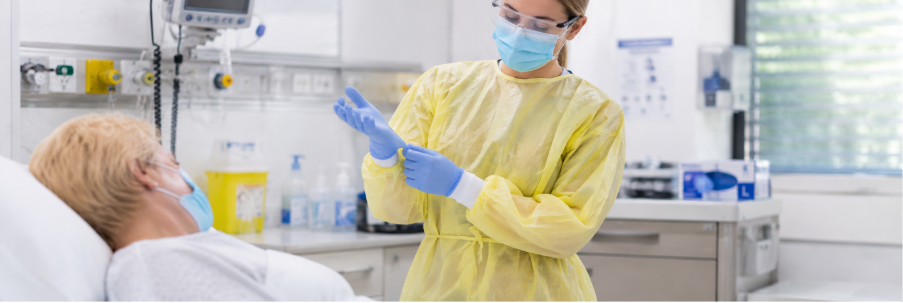
Why do healthcare workers assess PPE before every patient?
Healthcare workers assess PPE before each patient interaction to ensure protection matches the expected exposure risk. Selecting appropriate equipment supports infection prevention practices, improves workplace safety and helps healthcare teams use PPE efficiently while following organisational procedures.
Before putting on gloves or reaching for a gown, healthcare professionals perform a quick risk assessment.
They consider questions such as:
- Will this procedure involve blood or body fluids?
- Is there a possibility of splashes or sprays?
- Does clothing require additional protection?
- Does the patient require transmission-based precautions?
- What PPE is recommended under workplace infection prevention procedures?
This simple assessment ensures PPE is selected according to the clinical task rather than habit. Australian infection prevention guidance recommends choosing personal protective equipment based on the anticipated level of exposure, helping protect staff while supporting appropriate use of healthcare resources.
Why is selecting the correct isolation gown important?
Isolation gowns provide an additional protective barrier when fluid exposure is anticipated. When selected appropriately and worn correctly, they help reduce contamination of clothing and skin while supporting broader infection prevention strategies in healthcare environments.
Isolation gowns protect more than uniforms. They help reduce contamination during procedures where exposure to fluids is expected and form part of a layered approach to infection prevention.
This approach also includes:
- Hand hygiene
- Appropriate glove selection
- Face and eye protection where required
- Environmental cleaning
- Safe removal and disposal of PPE
A yellow isolation gown supports these measures by helping reduce opportunities for cross-contamination between patients, healthcare workers and clinical environments.
When is an AAMI Level 3 gown the appropriate choice?
An AAMI Level 3 knitted wrist gown is intended for clinical activities where moderate fluid exposure may occur. Selecting the appropriate level of protection helps healthcare professionals perform procedures confidently while maintaining infection prevention standards across different healthcare settings.
Common applications include:
Wound management
Dressing changes and wound irrigation may generate splashes that require additional body protection.
Emergency and urgent care
Busy clinical environments often require PPE that combines fluid-resistant protection with freedom of movement.
Pathology and specimen collection
Some laboratory and specimen handling procedures require enhanced protective clothing, depending on organisational protocols.
Aged care
Personal care involving bodily fluids may require isolation gowns as part of standard or transmission-based precautions.
Environmental cleaning
Cleaning contaminated treatment areas may expose workers to infectious materials, making protective clothing an important part of safe work practices.
Selecting an appropriate gown helps healthcare professionals perform these tasks with confidence while maintaining workplace safety.
What features improve comfort during long clinical shifts?
Comfortable PPE encourages consistent use throughout the day. Features such as knitted cuffs, lightweight materials and secure fastenings help improve mobility, reduce distractions and support healthcare workers during extended clinical shifts.
The Livingstone AAMI Level 3 Knitted Wrist Isolation Gown includes practical features designed for everyday clinical use, including:
- Full-back design for greater body coverage
- 50gsm PP with PE coating for fluid resistance
- Comfortable knitted cuffs that integrate well with examination gloves
- Secure neck and waist ties
- Lightweight construction for greater freedom of movement
- Single-use design that supports infection prevention protocols
Comfortable professional PPE gowns help healthcare workers maintain compliance without unnecessarily restricting mobility during busy clinical shifts.
How does PPE support safer clinical workflows?
Keeping appropriate PPE readily available encourages healthcare workers to select suitable protection before patient contact. Consistent stock management, staff training and correct donning and doffing procedures help reduce workflow interruptions while supporting infection prevention across healthcare facilities.
Healthcare organisations can strengthen PPE compliance by:
- Positioning gown dispensers near treatment areas
- Monitoring PPE stock levels regularly
- Training staff in appropriate gown selection
- Following documented donning and doffing procedures
- Replacing PPE immediately after use
Simple practices such as these help maintain efficient clinical workflows while reinforcing safe infection prevention practices.
References
Australian Commission on Safety and Quality in Health Care 2026, Australian Guidelines for the Prevention and Control of Infection in Healthcare, Australian Commission on Safety and Quality in Health Care, viewed July 2026.
National Health and Medical Research Council 2019, Australian Guidelines for the Prevention and Control of Infection in Healthcare, viewed July 2026.