Ask most workers about personal protective equipment, and they will list gloves, hard hats, and high-visibility vests without hesitation. Yet eye protection consistently ranks among the most neglected items on the PPE checklist, which can be a costly oversight.
Whether you manage a clinical setting, a construction site, a laboratory, or a veterinary practice, the risks of unprotected eyes are real and varied. This article unpacks why eye safety deserves more attention than it typically receives, and how choosing the right anti-fog, anti-scratch safety glasses at the best price makes compliance practical for organisations of every size.
The Hidden Cost of Ignoring Eye Protection at Work
Eye injuries in the workplace do not only cause physical harm. The same ILO and IAPB report reveals that workers living with vision impairment are 30 per cent less likely to be employed compared to those with full sight (ILO & IAPB, 2023). For businesses, this translates into lost productivity, increased workers compensation claims, and potential liability under Australian Work Health and Safety legislation.
Any unwanted flying debris, a chemical splash, or an airborne pathogen can cause irreversible damage in a fraction of a second. Many eye injuries leave no margin for recovery to baseline.
Vision lost is often vision gone.
Which Industries Face the Highest Eye Injury Risk?
High-risk environments for eye injury include, but are not limited to:
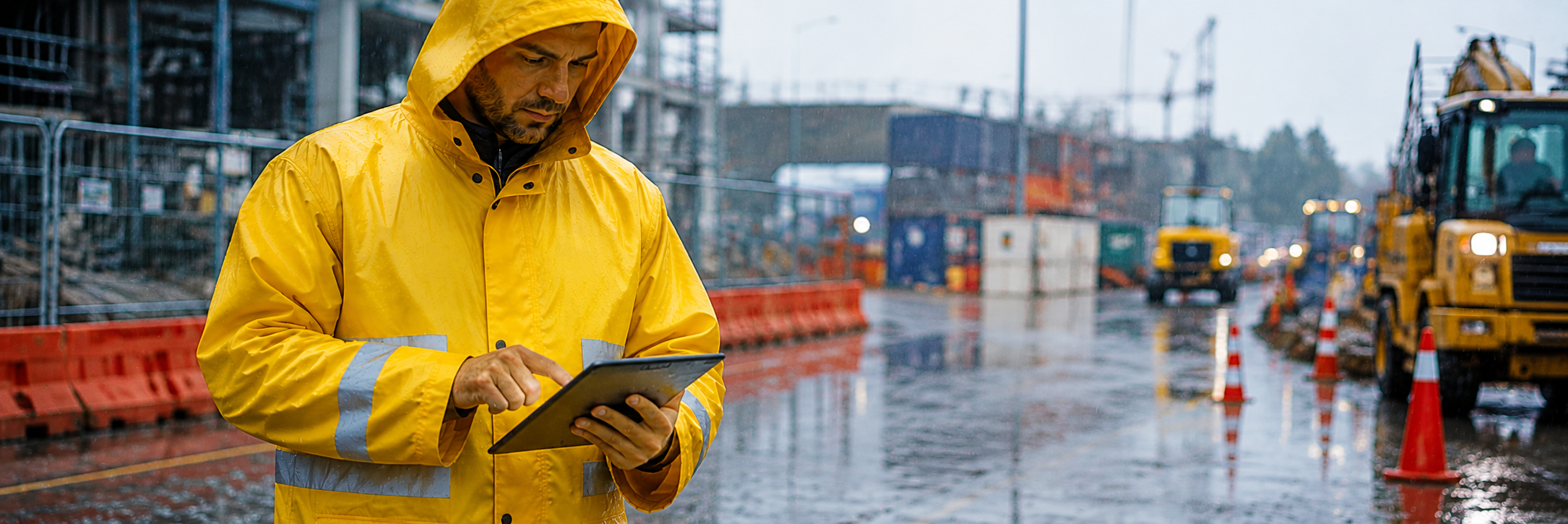
- Construction and carpentry, where sawdust, nails, and debris are constant hazards
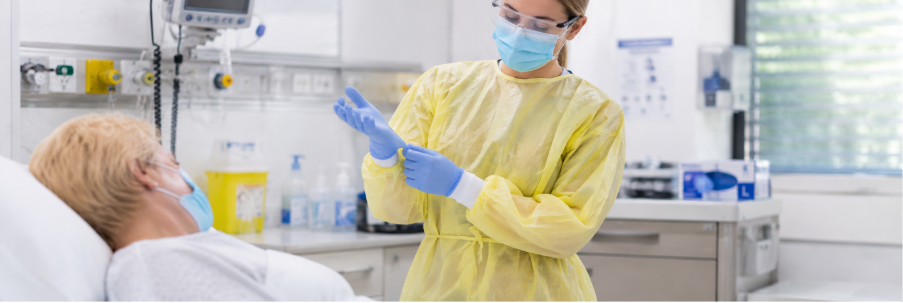
- Healthcare and veterinary settings, where bodily fluid splashes and sharps carry infection risk
- Manufacturing and engineering, involving sparks, metal filings, and chemical vapours
- Laboratory and research environments, with exposure to corrosive chemicals and UV light
- Agriculture, where pesticide spray, dust, and plant material frequently affect eyes
The common thread across all these industries is that most injuries are preventable with appropriate, consistently worn eye protection.
What Makes Safety Glasses Actually Effective?
Many workers avoid wearing their protective eyewear because lenses fog up, scratch easily, or feel uncomfortable over long shifts. When PPE is uncomfortable or impractical, compliance drops. This is precisely where the design of modern safety glasses becomes a workplace safety issue, not just a comfort preference.
Why Anti-Fog Lenses Matter More Than You Think
One of the most cited reason that workers remove their safety glasses while working is Fogging. When lenses obscure vision, workers face a perceived choice between seeing clearly and staying protected. Anti-fog coatings eliminate this trade-off by maintaining lens clarity during physical exertion, temperature changes, or humid conditions. In clinical and laboratory environments, this is particularly critical, as any reduction in visual acuity can compromise precision and patient safety.
How Anti-Scratch Coating Extends Protective Life and Value
Scratched lenses are more than a visual nuisance. They reduce optical clarity, distort the wearer’s field of vision, and indicate structural wear that may compromise the lens’s impact resistance. Anti-scratch polycarbonate lenses retain their optical integrity over a longer service life, reducing replacement frequency and providing better value per unit.
Introducing the Chimera Safety Glasses: Built for the Demands of Real Workplaces
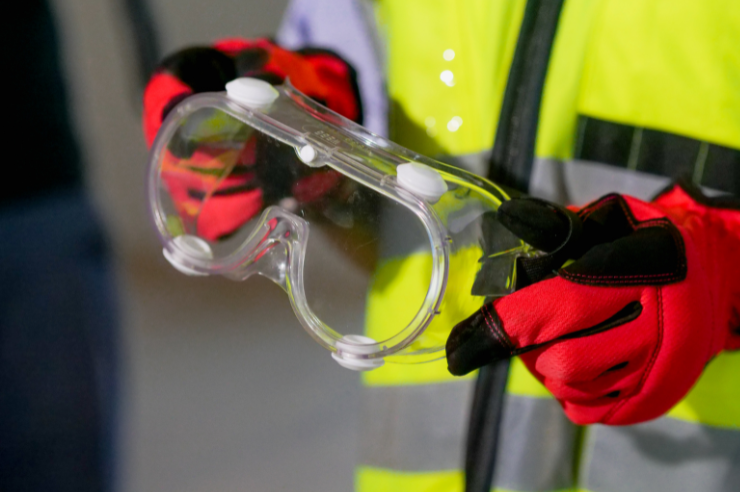
For healthcare, veterinary, laboratory, and industrial settings seeking reliable eye protection at the best price, the Chimera Safety Glasses from Livingstone are a practical, standard-compliant solution. Supplied in a convenient box of 10, they are designed for settings where eyewear is replaced regularly or distributed across a team.
Key Features at a Glance
- Clear polycarbonate lenses with anti-fog and anti-scratch dual coating for lasting clarity
- Lightweight wraparound design that maintains a secure fit during extended wear
- Meets AS/NZS 1337.1:2010, the Australian and New Zealand standard for eye protectors used in occupational settings
- Available as a box of 10, making them cost-effective for team distribution or stock rotation
- Suitable across veterinary, clinical, laboratory, and general industrial environments
Compliance with AS/NZS 1337.1:2010 is not just a quality badge. Under Australian Work Health and Safety Regulations, employers are obligated to provide PPE that meets relevant Australian Standards for the identified hazard. Selecting glasses that carry this certification protects both workers and organisations.
Is There a Business Case for Investing in Quality Eye Protection?
Organisations sometimes resist upgrading PPE because of upfront cost. However, the calculus changes quickly when factoring in the downstream expenses of a single eye injury: medical treatment, rehabilitation, workers compensation, productivity loss, and potential regulatory penalties. Safe Work Australia identifies workplace injuries as a significant driver of business cost, with musculoskeletal and eye injuries among the most frequent in high-risk industries.
Purchasing quality safety glasses in bulk at the best price, distributes the cost of compliance across the team and ensures eyewear is always available when needed. When glasses are scratched, fogged, or missing, workers go unprotected. A readily available, affordable supply removes the barriers to consistent compliance.
Where Can I Source Certified Safety Eyewear for My Team?
For veterinary clinics, allied health practices, and industrial workplaces seeking dependable eye protection, Livingstone’s protective eyewear and spectacles collection offers a range of compliant options suited to diverse occupational hazards. From clear-lens anti-fog glasses for clinical settings to tinted options for outdoor environments, the collection is curated for professional procurement needs.
Purchasing directly from an established healthcare supplier such as Livingstone ensures authenticity, standards of compliance documentation, and the logistical support that underpins a reliable PPE programme.
Protecting Eyes Is Protecting Livelihoods
Workplace eye safety is a fundamental component of occupational health that affects individual wellbeing, workforce retention, and organisational liability. The data is unambiguous: millions of workers worldwide sustain preventable eye injuries every year, and the consequences extend far beyond the incident itself.
Selecting a safety glass that meet Australian Standards, purchased at the best price through a trusted supplier, is one of the most straightforward risk-reduction decisions an insitution can make. The Chimera Safety Glasses offer a combination of performance, compliance, and value for workplaces.
Your workers’ vision is irreplaceable. The protection that preserves it does not need to be expensive, uncomfortable, or hard to source
References
International Labour Organization (ILO) & International Agency for the Prevention of Blindness (IAPB) 2023, Eye Health and the World of Work, ILO, Geneva. Available at: https://www.ilo.org/publications/eye-health-and-world-work [Accessed 25 June 2026].
Unify Project Australia 2023, The Consequences of Not Wearing Eye Protection, Unify Project, Australia. Available at: http://unifyproject.com.au/the-consequences-of-not-wearing-eye-protection/ [Accessed 25 June 2026].
World Health Organization (WHO) 2023, ILO-IAPB: Eye Health and the World of Work, WHO, Geneva. Available at: https://www.who.int/news/item/15-09-2023-ilo-iapb-eye-health-and-the-world-of-work [Accessed 25 June 2026].