Red and blue litmus paper are pH indicators used to test whether a substance is acidic or alkaline: red turns blue in the presence of a base, blue turns red in the presence of an acid. Both remain everyday tools in Australian classrooms, pathology settings, and quality control labs, with red litmus paper used to confirm alkalinity and blue litmus paper used to confirm acidity. Using the wrong colour risks a false reading, so this guide covers how each reacts, when to use which, and where litmus testing falls short.
What Is Litmus Paper and How Does It Work?
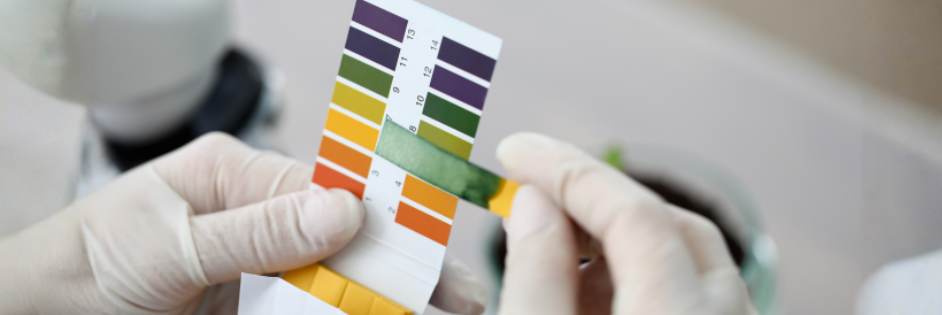
Litmus paper is a pH indicator strip coated in a natural dye extracted from lichen. When exposed to an acidic or alkaline substance, the dye undergoes a chemical change that alters its colour, giving a fast, low-cost, visual read on whether a solution is acidic or basic.
The dye responds to hydrogen ion concentration, shifting colour over a pH range of roughly 4.5 to 8.3. Because the result is a simple colour change rather than a numerical value, litmus paper is described as a qualitative indicator. It cannot tell you exactly how acidic or alkaline a substance is, only which side of neutral it falls on. This simplicity is precisely why litmus paper has remained a staple in school science laboratories, healthcare training environments, and everyday quality checks for well over a century.
What Do Red and Blue Litmus Papers Test For?
The core difference lies in the starting colour and what a change signals. Red litmus paper is used to detect alkalinity, turning blue in the presence of a base. Blue litmus paper is used to detect acidity, turning red when it contacts an acidic solution.
How Does Red Litmus Paper React to Acids and Bases?
Red litmus paper stays red when it contacts an acidic or neutral substance, showing no visible change. It shifts colour, turning blue, only when the tested solution is alkaline, making it the standard strip for confirming basicity in a sample.
This one-way change is useful when you already suspect a substance is basic and just need confirmation. Consistent, reliable strips matter most in settings that regularly test alkaline solutions, where results are recorded or compared over time.
How Does Blue Litmus Paper React to Acids and Bases?
Blue litmus paper remains unchanged when dipped into a basic or neutral liquid. It turns red only when the substance being tested is acidic, which makes it the standard choice whenever a technician or student needs to confirm acidity.
Because blue litmus paper only reacts to acids, it is the more commonly stocked variant in settings that routinely handle acidic solutions, such as vinegar-based cleaning agents, diluted acids used in practical lessons, or skin pH checks in clinical training.
When Should You Use Red vs Blue Litmus Paper?
Choosing between red and blue litmus paper depends on what you already suspect about the sample. If you are unsure, testing with both colours side by side gives a complete picture and avoids the risk of a false or inconclusive reading.
Testing an Unknown Substance: Why Use Both Colours?
A single strip only tells half the story. If you dip an unknown liquid into red litmus paper and see no change, the substance could be acidic or neutral, you cannot be sure which. Running the same sample past blue litmus paper resolves the ambiguity. If neither strip changes colour, the substance is neutral. If only the blue strip turns red, the substance is acidic. If only the red strip turns blue, the substance is alkaline. This paired approach is standard practice whenever the pH of a sample is genuinely unknown.
Common Applications in Healthcare, Education and Laboratories
Litmus paper is used well beyond the school science bench. Pathology and nursing training programs use it to demonstrate basic acid-base concepts before students move on to quantitative pH meters. Food and beverage quality control teams use it for rapid spot checks during production. Water testing, agricultural soil sampling, and cleaning product dilution checks in aged care, and hospitality settings also rely on the same simple red and blue strips, largely because the test requires no power source, no calibration, and produces a result within seconds.
What Are the Limitations of Litmus Paper Testing?
Litmus paper only confirms whether a substance is acidic, alkaline, or neutral, it cannot measure an exact pH value. For quantitative results, laboratories typically pair litmus testing with a calibrated pH meter or a universal indicator strip.
Litmus paper also cannot indicate the strength or concentration of an acid or base, only its presence. A weak acid and a strong acid will both turn blue litmus paper red, even though their safety handling requirements differ significantly. Substances at the extreme ends of the pH scale are classified as corrosive under Australia’s workplace chemical labelling framework, which is why any sample producing a strong or rapid litmus reaction should be handled with appropriate gloves and eye protection and treated according to the relevant safety data sheet.
Litmus Paper vs Universal Indicator: What’s the Difference?
Universal indicator paper uses a blended dye that produces a spectrum of colours corresponding to a numerical pH scale, while litmus paper offers a simpler red or blue result. Litmus is faster and cheaper to use; universal indicator gives more detail.
Where litmus paper answers the question of acidic, alkaline, or neutral, universal indicator paper goes a step further by estimating where on the 0 to 14 pH scale a sample sit, using a colour chart for comparison. Many school and workplace laboratories keep both on hand. Litmus paper is used for a fast first pass, and universal indicator or a digital pH meter is brought in when a more precise reading is required for reporting or compliance purposes.
Does Litmus Paper Expire or Lose Accuracy Over Time?
Yes. Litmus paper can lose sensitivity if it is exposed to humidity, direct sunlight, or airborne fumes over an extended period. To preserve accuracy, store strips in their original sealed container, away from moisture and heat, and replace stock periodically rather than relying on paper that has been open for many months.
Can Litmus Paper Tell You the Exact pH of a Substance?
No. Litmus paper only indicates whether a substance is acidic, alkaline, or neutral through a colour change. It does not provide a numerical pH value. For precise measurements, use a universal indicator strip with a colour chart or a calibrated digital pH meter alongside your litmus testing.
What Colour Does Litmus Paper Turn for a Neutral Substance?
Neither red nor blue litmus paper changes colour when tested against a truly neutral substance, such as distilled water. Red litmus paper remains red and blue litmus paper remains blue. The absence of any colour change on both strips is what confirms a neutral result.
References:
SafeWork NSW 2023, Chemical labelling, NSW Government, accessed 20 August 2026, <https://www.safework.nsw.gov.au/hazards-a-z/hazardous-chemical/chemical-labelling>.
Department of Industry, Science and Resources 2024, National Association of Testing Authorities, Australia, Australian Government, accessed 20 August 2026, <https://www.industry.gov.au/publications/australias-standards-and-conformance-infrastructure-essential-foundation/national-association-testing-authorities-australia>.