
Effective cleaning depends as much on the right tools as it does on technique. Livingstone’s Household Flocklined Rubber Gloves protect hands from harsh chemicals and prolonged moisture exposure, while their detergent wipes offer a TGA listed option for wiping down surfaces quickly and effectively. Together, they form a practical, everyday cleaning combination suited to homes, clinics and commercial settings.
Not all gloves and wipes are created equal. Material, thickness and chemical compatibility all affect how well gloves protect the skin, while wipe composition determines how effectively surfaces are cleaned and disinfected.
What Type of Gloves Are Best for Cleaning?
Rubber or nitrile gloves are generally best for cleaning, as they offer strong resistance to water, detergents and household chemicals while protecting the skin from prolonged moisture exposure and irritation during cleaning tasks.
Flocklined rubber gloves, such as those used for household and light commercial cleaning, have a soft cotton lining that improves comfort and absorbs perspiration during extended wear. This makes them well suited to tasks like dishwashing, bathroom cleaning or handling diluted disinfectants. Nitrile gloves are often preferred in clinical or healthcare settings due to their puncture resistance and lower allergy risk compared to latex.
Should Cleaning Gloves Be Reusable or Disposable?
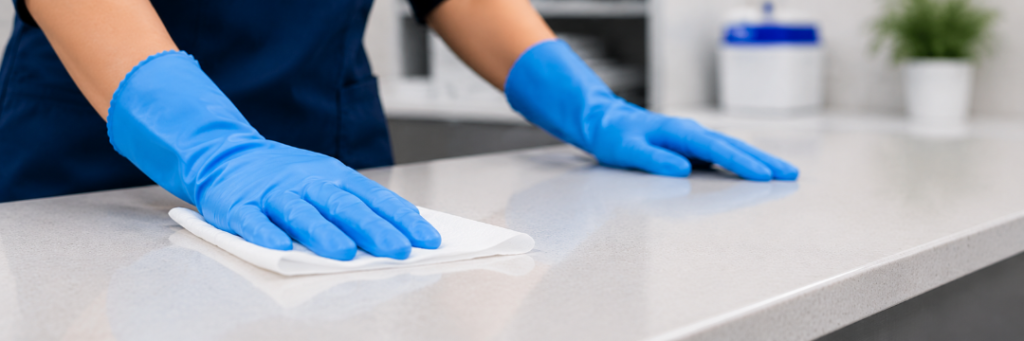
Reusable rubber gloves suit repeated household or commercial cleaning tasks, while disposable gloves suit single use clinical or high-risk cleaning tasks where cross-contamination between areas or patients must be avoided.
Reusable gloves should be rinsed, dried and stored properly after each use to maintain their integrity and prevent bacterial buildup inside the glove. Disposable gloves are the safer choice in healthcare or aged care settings, where gloves are typically changed between tasks, rooms or patients to reduce the risk of spreading contamination.
What Should You Look for When Choosing Cleaning Wipes?
Cleaning wipes should be chosen based on their intended use, with detergent wipes suited to general surface cleaning and TGA listed disinfectant wipes required for surfaces that need validated antimicrobial performance.
Detergent wipes are formulated to lift dirt, grease and organic material from surfaces, making them effective for routine cleaning of benchtops, equipment and frequently touched areas. For surfaces requiring disinfection rather than general cleaning, a TGA listed wipe should be used, as this indicates the product has met regulatory requirements for claimed antimicrobial activity. Wipe size and texture also matter, since a durable, appropriately sized wipe reduces the number of wipes needed to clean a given surface.
What Is the Difference Between Detergent Cleaning and Disinfection?
Detergent cleaning physically removes dirt, dust and organic matter from a surface, while disinfection uses a chemical agent to reduce or eliminate microorganisms, and both steps are often needed for effective infection control.
Disinfectants are not intended to replace detergent cleaning, since organic material left on a surface can reduce a disinfectant’s effectiveness (Clinical Excellence Commission, 2026). Best practice generally involves cleaning a surface with detergent first, then applying disinfectant where required, particularly in clinical, food handling or high-touch environments.
How Do Gloves and Wipes Work Together for Effective Cleaning?
Gloves protect the skin from chemical exposure and cross-contamination while wipes physically remove dirt and microorganisms from surfaces, making the pairing more effective and hygienic than using either product alone.
Wearing gloves while using cleaning or detergent wipes reduces direct skin contact with chemicals and any contaminants present on the surface being cleaned. This is particularly relevant when cleaning shared equipment, bathrooms or high-touch surfaces where hand hygiene alone is not sufficient. Consistent use of gloves also helps prevent the transfer of dirt or pathogens from a cleaning task back onto the hands. A practical cleaning routine typically includes:
- Wearing appropriate gloves for the chemical or task
- Using a detergent wipe to remove visible dirt and organic matter
- Applying a disinfectant wipe where surface disinfection is required
- Disposing of or laundering gloves and wipes correctly after use
How Often Should Gloves Be Changed During Cleaning Tasks?
Gloves should be changed between different cleaning tasks or areas, and immediately if they are torn, punctured or heavily soiled, to avoid transferring contamination from one surface to another.
Using the same pair of gloves across multiple unrelated tasks, such as cleaning a bathroom then a kitchen bench, risks spreading bacteria between areas. Reusable gloves used for a single ongoing task can generally be worn for the duration of that task, provided they remain intact and are cleaned and dried afterwards.
What Should Australian Households and Facilities Consider When Selecting Cleaning Gloves and Wipes?
Households and facilities should consider chemical compatibility, glove material, wipe type and TGA listing status when selecting cleaning gloves and wipes, ensuring products match the specific cleaning or disinfection task at hand.
Cleaning products should always be used according to the manufacturer’s instructions, with safety data sheets available where required (Department of Health WA, 2026). Facilities managing higher risk environments, such as clinics or aged care settings, should prioritise TGA listed disinfectant wipes and puncture resistant gloves, while household cleaning tasks can generally be managed with standard flocklined rubber gloves and detergent wipes.
Which Combination of Gloves and Wipes Is Best for Cleaning?
Flocklined rubber gloves paired with detergent wipes suit most general household and commercial cleaning tasks, while nitrile gloves and TGA listed disinfectant wipes are better suited to clinical or high-risk environments requiring validated infection control.
The right combination depends on the surfaces being cleaned, the level of contamination risk involved and how frequently the task is repeated. Matching glove material and wipe type to the task supports both effective cleaning and better protection for the person doing it.
References
- Clinical Excellence Commission 2026, Environmental cleaning, viewed 10 August 2026, https://cec.health.nsw.gov.au/infection-prevention-and-control/practices/environmental-cleaning
- Department of Health Western Australia 2026, Infection prevention and control advice on cleaning and disinfection, viewed 10 August 2026, https://www.health.wa.gov.au/Articles/U_Z/WA-health-infection-prevention-and-control-policies